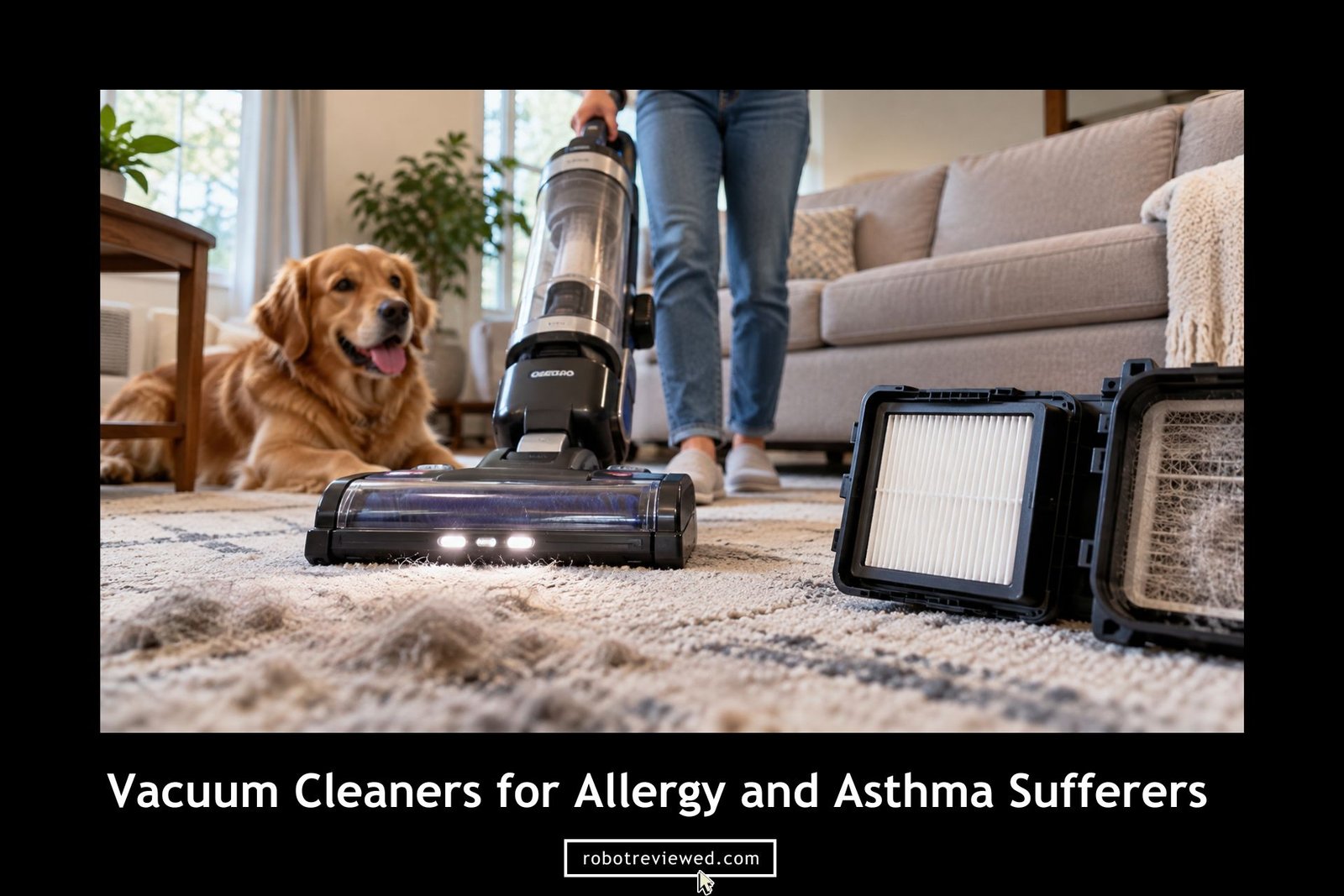
Quick Summary: The best vacuum cleaners for allergy sufferers and people with asthma are the Kenmore Intuition BU4050, Kenmore 600 Series 81615, Shark Navigator NV356E, and eufy Omni E35 due to their HEPA filtration, sealed allergen containment, strong dust and dander pickup, and cleaner disposal systems.
Affiliate Disclosure: This page contains Amazon affiliate links. We may earn a small commission if you buy through these links, at no extra cost to you. Our reviews and rankings are based on our own research, not on affiliate payments.
You can vacuum a whole house and still feel worse when you finish. Well, a weak vacuum cleaner stirs up dust mites, pet dander, pollen, and fine dust, then blows them back through the exhaust. You can breathe that cloud while you clean, and it hangs in the room after you put the machine away.
A True HEPA vacuum with a sealed system does the opposite job. It pulls those particles out of carpet, rugs, and hard floors, then traps them so they stay trapped. You still have to buy the right machine, though. The word HEPA on a box is not a promise by itself.
This guide walks you through top 5 best vacuum cleaners for Allergy sufferers. You will see how True HEPA differs from HEPA-type, why a sealed body matters as much as the filter, and when a bagged vacuum beats a bagless one. You will also get honest picks by allergy trigger, plus a method that keeps dust from flying back into your face.
TABLE OF CONTENTS Quickly jump to a section
- 5 Best Vacuum Cleaners for Allergy Sufferers Ranked – My Top Picks
- Comparison of My Best HEPA Vacuum Cleaners for Allergies
- Buyer’s Guide: Best Anti-Allergen Vacuums Reviews
- 1. Kenmore Intuition BU4050: Best Vacuum Cleaner for Allergy Sufferers Overall
- 2. Kenmore 600 Series 81615: Best Vacuum for Pet Dander Allergy Sufferers
- 3. Kenmore Elite 31150: Best Vacuum for Dust Mites, Carpets and Embedded Allergens
- 4. Shark Navigator Lift-Away Professional NV356E: Budget-Friendly HEPA Vacuum with Sealed Allergen Containment
- Key specifications
- 5. eufy Robot Vacuum Omni E35: Best Robot Vacuum for Asthma and Allergy Sufferers (Certified)
- What Actually Makes a Vacuum Good for Allergies?
- Which Vacuum Should You Choose for Your Allergy Trigger?
- How to Vacuum Without Sending Allergens Back Into the Air
- FAQs
- Do HEPA vacuum cleaners really help with allergies?
- What type of vacuum is best for someone with asthma?
- Can vacuuming make allergies worse?
- How often should you replace a vacuum HEPA filter?
- Can a HEPA vacuum remove dust mites?
- Does a HEPA vacuum remove pet dander?
- Is a HEPA vacuum better than an air purifier for allergies?
5 Best Vacuum Cleaners for Allergy Sufferers Ranked – My Top Picks
- Best Vacuum Cleaner for Allergy Sufferers Overall: Kenmore Intuition BU4050
- Best Vacuum for Pet Dander Allergy Sufferers: Kenmore 600 Series 81615
- Best Vacuum for Dust Mites, Carpets, and Embedded Allergens: Kenmore Elite 31150
- Budget-Friendly HEPA Filter Vacuum with Sealed Allergen Containment: Shark Navigator Lift-Away Professional NV356E
- Best Robot Vacuums for Asthma and Allergy Sufferers (Officially Certified): eufy Robot Vacuum Omni E35
Comparison of My Best HEPA Vacuum Cleaners for Allergies
Here is a quick comparison between my 5 best vacuum cleaners for Allergy sufferers…
| Vacuum | Filtration / Allergen Control | Dust Disposal | Power / Weight | Pet & Carpet Ability | Main Drawback |
|---|---|---|---|---|---|
| Kenmore Intuition BU4050 | HEPA + sealed AllergenSeal; 99.97% to 0.3 microns | Self-sealing HEPA bag | Corded; under 15 lb | Hair Eliminator + Pet HandiMate | Ongoing bag cost |
| Kenmore 600 Series 81615 | HEPA + sealed AllergenSeal; 99.97% to 0.3 microns | Replaceable HEPA bag | Corded; about 22.6 lb | Motorized Pet PowerMate + carpet height control | Heavy to carry |
| Kenmore Elite 31150 | HEPA filtration + bagged containment | Replaceable dust bag | Corded; about 21 lb | Strong inducer motor + 5 height settings | Heavy and bulky |
| Shark Navigator NV356E | HEPA + Anti-Allergen Complete Seal; 99.9% claim | Bagless 2.2-qt cup | Corded; 13.7 lb | Brushroll control + pet tools | Dust exposure while emptying |
| eufy Omni E35 | asthma & allergy friendly® certified; AeroTurbo filtration | Auto-empty sealed bag | Cordless robot; 35,000 Pa claimed | Up to 98% carpet allergen reduction in certification testing | Expensive |
Buyer’s Guide: Best Anti-Allergen Vacuums Reviews
1. Kenmore Intuition BU4050: Best Vacuum Cleaner for Allergy Sufferers Overall
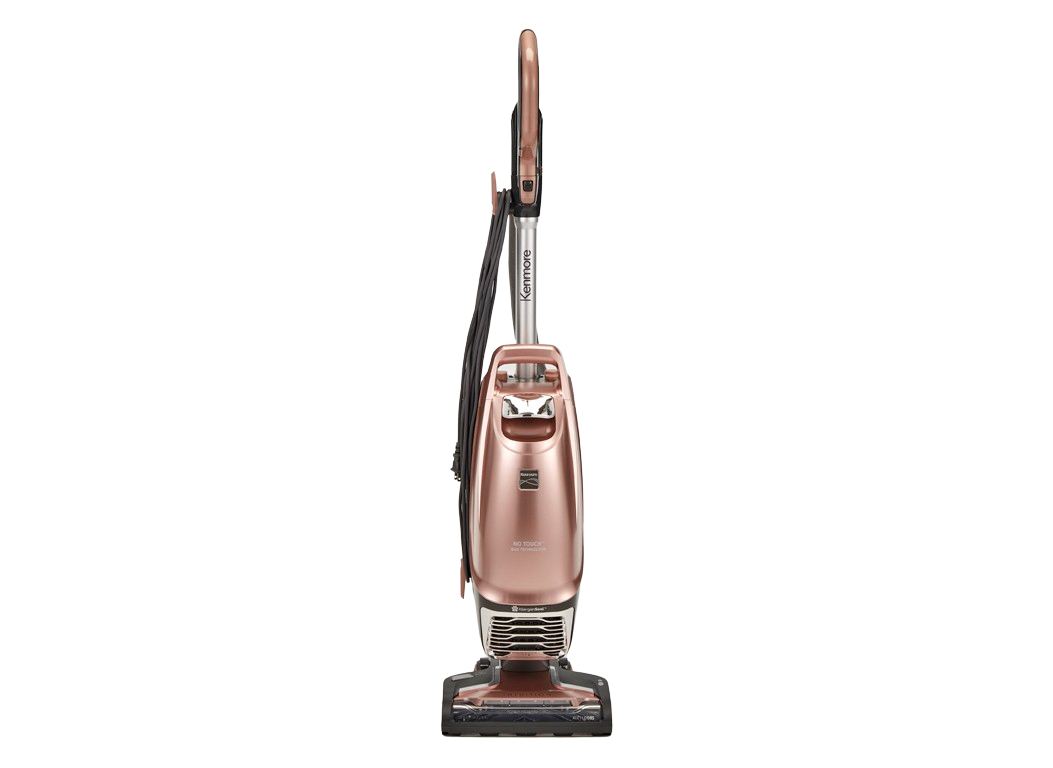
The Kenmore Intuition BU4050 gets the overall spot because it covers the two things allergy sufferers should care about most: capturing fine particles and keeping collected dust contained afterward.
It uses its AllergenSeal system to create a sealed air path. The system traps 99.97% of dust and particles down to 0.3 microns inside the vacuum. You see, that matters because a HEPA filter alone is less useful when dusty air can escape through gaps elsewhere in the machine. Next, the other big advantage is the bag. Instead of opening a dusty bin over your trash can, the BU4050 uses “No Touch self-sealing HEPA bags”. You can press the release and dispose of the bag without handling its contents. Well, for someone sensitive to dust, pollen, or pet dander, that is a real advantage over most bagless vacuums.
Cleaning performance is also suitable for an everyday main vacuum. Its two-motor system works across carpets, rugs, and hard floors, while the Hair Eliminator brushroll helps prevent long hair from building up around the roller. The detachable Lift-Up section lets you clean stairs, furniture, shelves, and other places where allergens collect.
Obviously, it is not the cheapest upright, and you need to keep buying bags. Still, that ongoing bag cost makes sense for many allergy sufferers because you get cleaner, more contained disposal. At under 15 pounds, it is also easier to handle than many heavy bagged allergy vacuums.
Key specifications
| Filtration | HEPA |
| Sealed system | AllergenSeal |
| Particle capture claim | 99.97% down to 0.3 microns |
| Dust collection | Self-sealing HEPA bag |
| Weight | Under 15 lb |
| Cord length | 30 ft |
| Cleaning width | 11 in |
| Attachments | Pet HandiMate, dusting brush, crevice and upholstery tools |
2. Kenmore 600 Series 81615: Best Vacuum for Pet Dander Allergy Sufferers
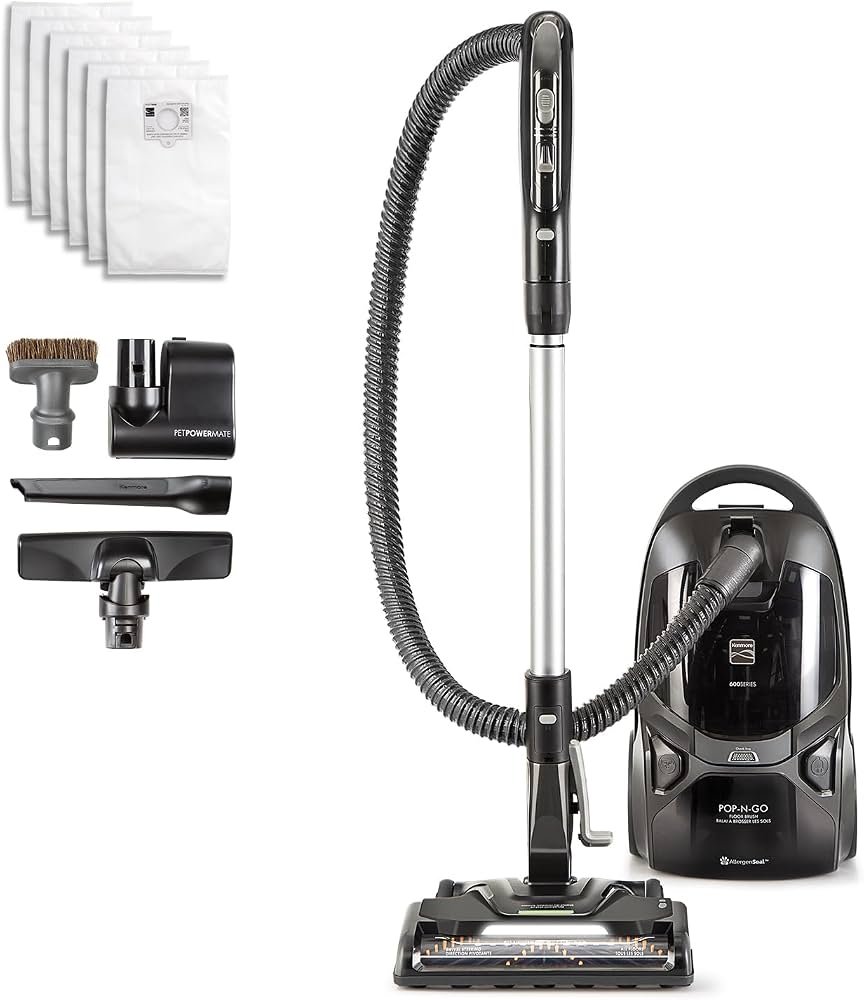
Pet allergies make vacuum selection harder because you are not only cleaning visible hair. You also want to pick up fine dander from carpet, furniture, stairs, and other fabric surfaces without blowing it back into the room.
That combination is where the Kenmore 600 Series 81615 makes sense. It uses Kenmore’s completely sealed AllergenSeal system that traps 99.97% of dust and particles down to 0.3 microns. It is also a bagged machine, so collected pet hair, dust, and dander stay inside a replaceable HEPA bag rather than sitting in an open dust cup.
Now, more important for pet owners is the motorized Pet PowerMate. It is made for pulling stubborn pet hair and dander from furniture, carpet, and stairs. You see, a standard floor head may remove loose hair from the surface, but pet allergens often settle into upholstery and carpet fibers. So, having a separate powered attachment makes the 81615 much more useful around sofas, pet beds, and carpeted stairs.
The downside is size, as at about 22.6 pounds, this is not a light cordless vacuum. It makes more sense for deep cleaning than quick grab-and-go jobs.
Key specifications
| Filtration | HEPA |
| Sealed system | AllergenSeal |
| Particle capture claim | 99.97% down to 0.3 microns |
| Collection | Replaceable HEPA bag |
| Pet tool | Motorized Pet PowerMate |
| Weight | About 22.6 lb |
| Cord | 28 ft, retractable |
| Above-floor reach | Up to 10.5 ft |
3. Kenmore Elite 31150: Best Vacuum for Dust Mites, Carpets and Embedded Allergens
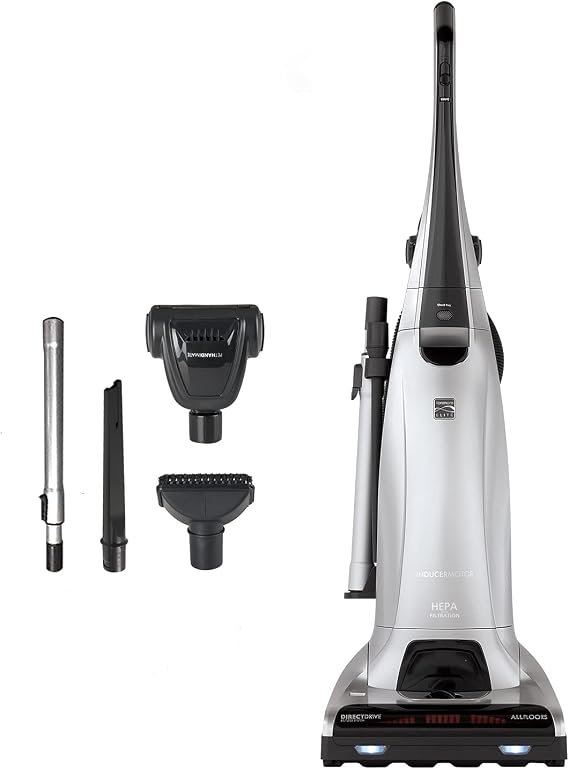
The Kenmore Elite 31150 is the pick I would use when the main problem is carpet rather than quick everyday floor cleaning. You know, carpet can hold fine dust, pollen, pet dander, and dust-mite debris deep between its fibers. A vacuum needs more than a HEPA filter here; it also needs enough airflow and brush agitation to get that material out of the carpet in the first place.
Kenmore equips the 31150 with a powerful inducer motor. So it produces 20% more air power than its conventional upright motor. It also has manual height adjustment, allowing you to position the floor head correctly for different carpet piles. Hence, better nozzle contact and airflow can make a noticeable difference on thicker carpet.
For allergy control, the important parts are the bagged collection system and HEPA filtration. The HEPA filter is designed to trap dust, pollen, and other allergens. The Pet Handi-Mate tool can also remove hair and dander from upholstery and stairs.
Now, the big drawback is weight. It weighs around 21 pounds, making it much heavier than the BU4050. It is therefore better viewed as a powerful weekly deep-cleaning vacuum than a lightweight machine you constantly carry around.
Key specifications
| Filtration | HEPA |
| Collection | Bagged |
| Motor | Inducer motor |
| Air-power claim | 20% more than conventional Kenmore upright motor |
| Carpet adjustment | 5-position height system |
| Dirt detection | Infrared dirt sensor |
| Weight | About 21 lb |
| Cord length | About 35 ft |
4. Shark Navigator Lift-Away Professional NV356E: Budget-Friendly HEPA Vacuum with Sealed Allergen Containment
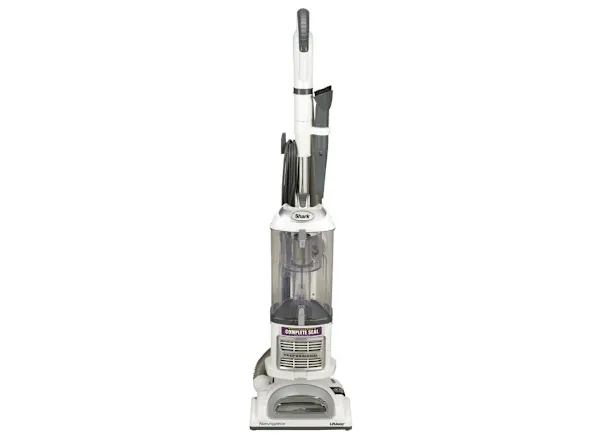
The Shark Navigator Lift-Away Professional NV356E is a sensible lower-cost choice because it gives you something many inexpensive bagless uprights do not: HEPA filtration combined with a sealed air system.
Its Lift-Away design is also useful for allergy cleaning. You can detach the canister section and use the hose around stairs, furniture, and harder-to-reach areas where fine household dust collects. The main head has a brushroll shutoff, so you can use brush agitation on carpet and switch it off on hard flooring. Hence, that helps prevent the rotating brush from unnecessarily scattering larger debris across smooth floors.
The weakness for allergy sufferers is the bagless dust cup. Although the air path is sealed during vacuuming, you still have to open the cup to dispose of the dirt. Yes, that’s the trade-off of getting the cheapest vacuum. Someone with a strong dust allergy should empty it outdoors rather than over an indoor trash can.
Key specifications
| Filtration | HEPA |
| Sealed system | Anti-Allergen Complete Seal |
| Dust/allergen claim | 99.9% trapped |
| Collection | Bagless |
| Dust cup | 2.2 dry quarts |
| Weight | 13.7 lb |
| Floor control | Brushroll on/off |
| Design | Detachable Lift-Away pod |
5. eufy Robot Vacuum Omni E35: Best Robot Vacuum for Asthma and Allergy Sufferers (Certified)
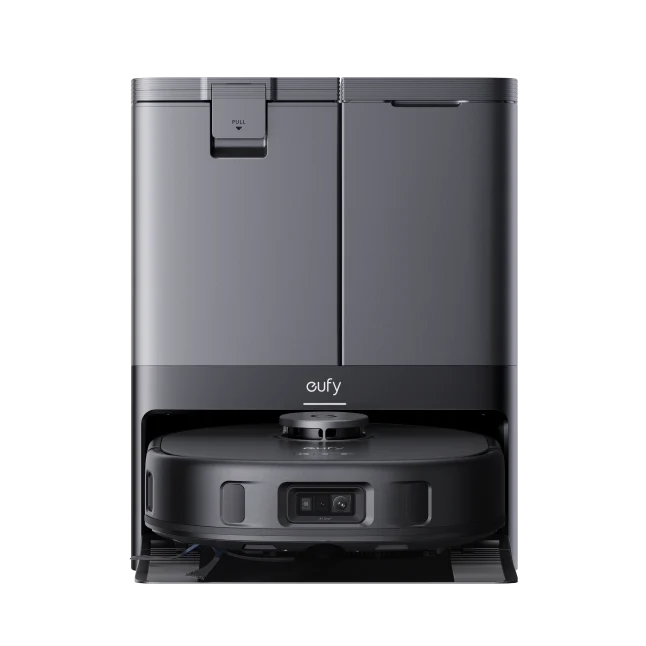
The eufy Omni E35 stands apart from most robot vacuums because its allergy claims go beyond suction numbers and a generic filter description. The E35 received asthma & allergy friendly® certification on August 5, 2026.
Now, under the certification testing, it reduced dust-mite and cat allergens by up to 98% on carpets and 99.9% on hard floors. Those numbers apply specifically to those allergens and surfaces under the certification test. It also has unusually high claimed suction for a robot at 35,000 Pa. Eufy combines that with AeroTurbo 2.0 multi-cyclone filtration, which separates fine dust before it reaches the filter. Eufy’s laboratory material says its high-performance filtration captures 99.99% of particles as small as 5 microns.
The automatic emptying station is particularly useful for allergy sufferers. After cleaning, debris moves from the robot into a sealed disposable dust bag, meaning you are not emptying a tiny open robot bin every day. A bag can typically last roughly two to three months in an average household.
Key specifications
| Certification | asthma & allergy friendly® |
| Certified | August 5, 2026 |
| Peak suction | 35,000 Pa |
| Carpet allergen reduction | Up to 98% in certification testing |
| Hard-floor allergen reduction | 99.9% in certification testing |
| Filtration | AeroTurbo 2.0 multi-cyclone |
| Disposal | Automatic emptying into sealed dust bag |
| Navigation | LiDAR with room, zone and no-go controls |
What Actually Makes a Vacuum Good for Allergies?
Most people shop for suction power first. That’s a natural habit, but for allergies it’s the wrong place to start. A good allergy vacuum needs three things working together. If one is missing, the other two can’t make up for it.
- True HEPA filtration on the air that leaves the machine, so tiny particles get trapped instead of released.
- A sealed body, so air can’t leak out through gaps, seams, or loose doors before it reaches the filter.
- Safe dust containment, meaning a bag or bin you can empty without a cloud of dust in your face.
Here is a simple way to judge a model before you spend the money.
| What you check | What you want | What to skip |
|---|---|---|
| Filter wording | True HEPA, H13, or 99.97% at 0.3 microns | “HEPA-type,” “HEPA-like,” “HEPA-style” |
| Body design | Sealed HEPA system, gaskets, “complete seal” | A HEPA pad sitting in a cheap open housing |
| Dirt collection | Self-sealing bags for severe allergies | A dusty bin you dump indoors |
| Proof | AAFA mark, lab filtration scores | Star ratings with no test data |
| Floor tool | Powerhead for carpet, soft brush for hard floors | One stiff brush for every surface |
True HEPA Filter vs “HEPA-Type” Filter
This is the first place shoppers get tripped up. True HEPA is a tested standard. HEPA-type is mostly a sales phrase.
- A True HEPA filter (often called HEPA H13 in Europe) captures at least 99.97% of particles at 0.3 microns. That 0.3-micron size is called the most penetrating particle size. So, if a filter can catch that size, it usually catches bigger pollen and smaller ultrafine dust even better.
- HEPA-type, HEPA-like, and HEPA-style filters often capture around 85% to 90% of those same particles. That leftover 10% to 15% is the fine stuff that gets into your nose, throat, and lungs. For asthma and year-round allergies, that gap is not small.
Look at what you are actually trying to trap…
| Allergen | Typical size | Can True HEPA catch it? |
|---|---|---|
| Pet dander | About 1–10 microns | Yes, very well |
| Dust mite feces | About 10–40 microns | Yes |
| Pollen | About 10–100 microns | Yes |
| Mold spores | About 1–30 microns | Yes |
| Fine household dust | Down to 0.3 microns | That is the HEPA test point |
How do you spot the real thing on a product page? You look for the exact number, not a vibe. “99.97% at 0.3 microns,” “True HEPA,” “HEPA H13,” or a named filter like Miele’s AirClean HEPA (SF-HA 50) are useful clues. “Allergy filter,” “micro filter,” and “HEPA-type media” are not enough.
You should treat “HEPA” on the carton the way you treat “natural” on food. The word is popular. The standard is specific. You should ask for the 99.97% number, then check whether the whole vacuum is sealed around that filter.
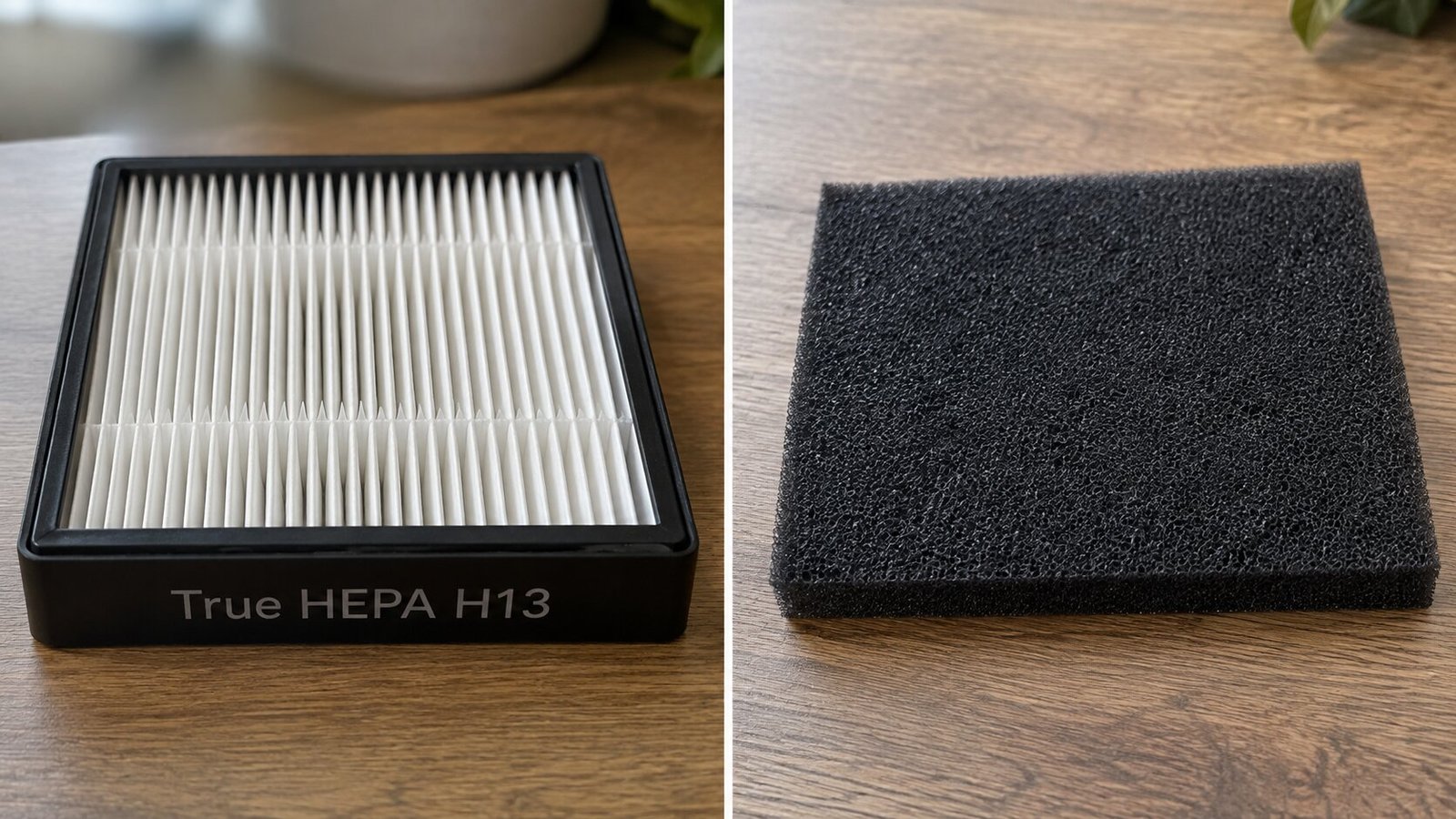
A Sealed Vacuum System Matters as Much as the Filter
You can buy a vacuum with a perfect HEPA filter and still get poor results. The reason is air always takes the easiest path. If the machine has cracks around the motor housing, the bag door, or the hose connection, dirty air slips out through those gaps and never touches the filter.
That’s why experts talk about whole-machine sealing. A fully sealed system forces every bit of air through the HEPA filter before it leaves the vacuum.
Quick Tip: The best proof is independent testing instead of a marketing phrase. The Asthma & Allergy Friendly® Certification Program, run by the Asthma and Allergy Foundation of America with Allergy Standards Limited, checks whether a vacuum removes dust from carpets, releases airborne allergens, leaks through seals or filters, and clears allergen-containing dust from crevices. Certified models must also remove at least 90% of allergens, limit airborne particles, and keep their suction even when the dust container is full.
Bagged vs Bagless Vacuums for Allergy Sufferers
This is the part where you might feel a little torn, because bagless machines are so convenient. You can see the dirt, you don’t buy bags, and emptying takes a few seconds.
The problem shows up at that exact moment. When you tip an open bin over the trash, fine dust drifts up into your face. For someone with asthma or a strong dust allergy, that moment can undo the whole cleaning session.
| Feature | Bagged vacuum | Bagless vacuum |
|---|---|---|
| Dust containment | Dust stays inside a sealed bag until you throw it away | Dust sits in an open bin, so emptying can release a cloud |
| Emptying | Pull out the bag and toss it | Tip the bin into the trash, often with some mess |
| Running cost | You buy bags regularly | No bags, but filters need cleaning or replacing |
| Filter upkeep | Needed less often | Needed more often |
| Best for | Asthma, severe allergies, or anyone who empties it themselves | Mild allergies, or when someone else empties it |
The honest answer: if you have asthma or a serious allergy, a bagged vacuum with a sealed HEPA system is the safer choice. You pull out the bag, close it, and bin it without touching the dust.
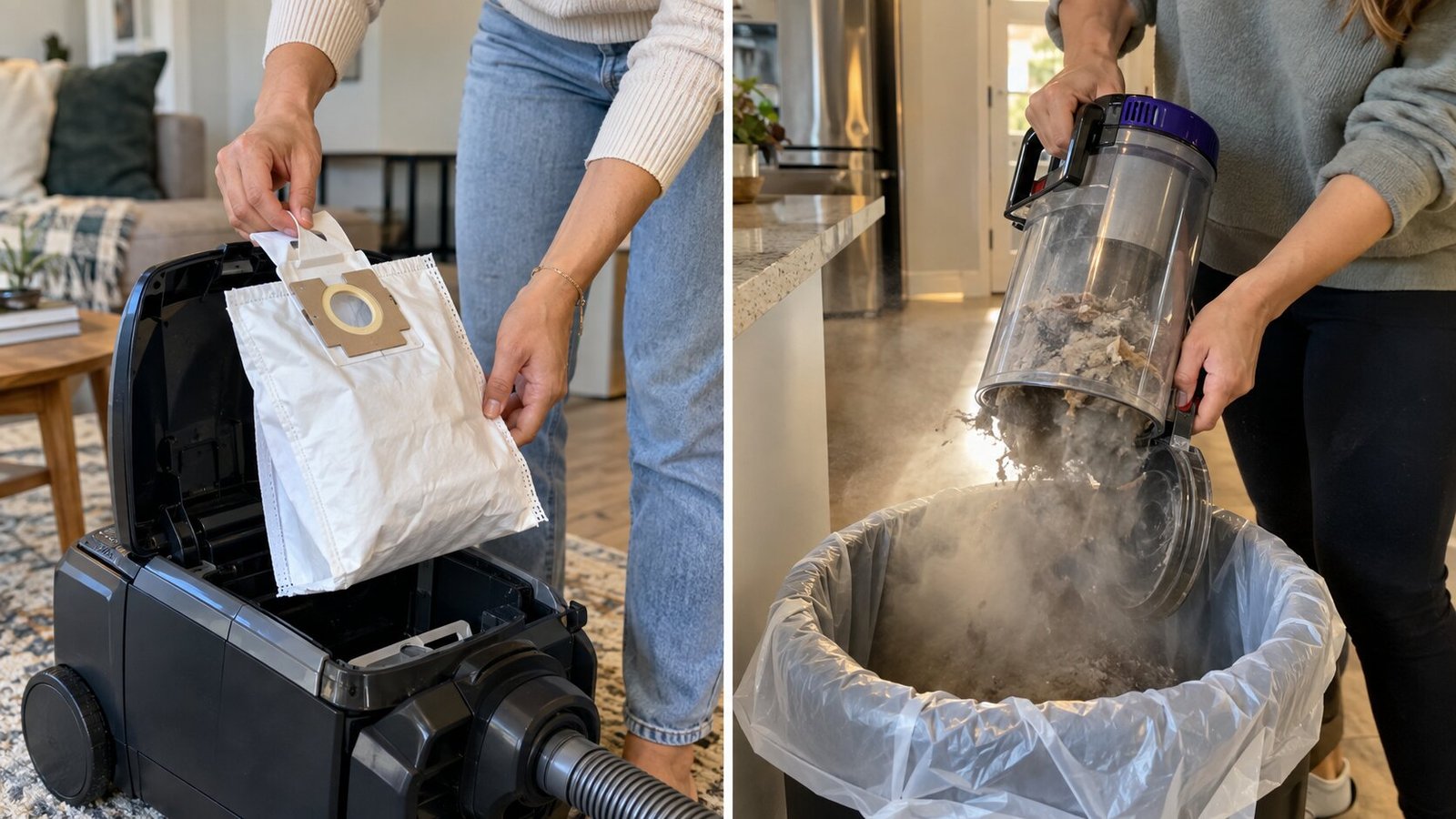
Now, Bagless can still make sense in two cases. First, you have mild dust issues, not asthma, and you will empty the cup outside. Second, you want a cordless stick for daily crumbs, and you already own a sealed bagged machine for weekly deep cleaning. That pairing is common and pretty smart.
Robot vacuums with a sealed dock bag, like some Shark and older Roomba models with allergen bags, sit in the middle. The robot itself is a light daily sweeper. The dock bag is the allergy-friendly part, because you are not dumping a dirty cup twice a week.
Which Vacuum Should You Choose for Your Allergy Trigger?
| Your trigger | What matters most | Machine type to look at |
|---|---|---|
| Dust mites | Sealed bagged HEPA, powered brush, mattress tool | Bagged canister or upright |
| Pet dander | Tangle-resistant brush, sealed HEPA, clean emptying | Sealed upright or bagged canister |
| Pollen | Frequent light cleaning, good hard-floor tool | Lightweight cordless or robot, plus a sealed main vacuum |
| Mold | Fixing the moisture first, HEPA second | Sealed HEPA, but not for visible mold |
| Severe asthma | Maximum containment and low weight | Sealed bagged HEPA or water-filtration |
How to Vacuum Without Sending Allergens Back Into the Air
- Dust first, vacuum last. Wipe surfaces with a damp cloth so dust falls to the floor, and then vacuum it up. Dry dusting mostly pushes particles into the air.
- Go slowly. Fast passes leave dust behind. Move in slow, overlapping strokes, and go over carpets twice.
- Vacuum often enough. Once a week is the usual minimum, and bedrooms or pet areas do better with two or three times.
- Let someone else do it if possible. If that isn’t an option, wear a well-fitted N95 mask while you clean and while you empty the vacuum.
- Empty it at the right time. Replace the bag when it’s about two-thirds full, or whenever the manual says so. A packed bag cuts suction.
- Empty outside. Seal the bag inside a plastic bag before it goes in the trash.
- Take care of the filters. Follow the manual for cleaning and replacing them. A clogged filter hurts both suction and sealing.
- Give the room a rest. Stay out for a short while after cleaning, and open a window if the weather allows it.
A vacuum is only one part of the picture. Wash your bedding weekly in hot water, around 130°F (54°C), which is the temperature commonly advised for killing dust mites. You must use allergen-proof mattress and pillow covers, and keep indoor humidity between 30 and 50 percent so mites and mold struggle to thrive.
FAQs
Do HEPA vacuum cleaners really help with allergies?
Yes, when the vacuum is a True HEPA machine with a sealed system. Independent tests show far less dust coming out of the exhaust compared with ordinary vacuums. You still need to vacuum slowly and often enough.
A HEPA vacuum cleaner cannot help much if the filter is clogged or the body leaks. Studies and allergist guidance treat HEPA vacuums as one part of allergen avoidance, not a standalone cure. You should notice less of that “just vacuumed” tickle in the throat if the machine is doing its job.
What type of vacuum is best for someone with asthma?
A sealed bagged vacuum with True HEPA or SEBO S-Class filtration is the safest default. Canister models are often quieter and keep exhaust lower, which many people with asthma prefer.
You must avoid cheap bagless vacuums that puff dust when emptied. Also, if you already get tight-chested while cleaning, shorten the session and run a HEPA purifier after you finish. You should look for the Asthma & Allergy Friendly mark when you can, because that program tests emissions during use and during emptying.
Can vacuuming make allergies worse?
Yes. A leaky vacuum turns settled dust into airborne dust. You then breathe a higher dose of pollen, pet dander, and dust mite fragments. That is why some of you sneeze more after cleaning than before. The fix is not to stop vacuuming. The fix is a sealed HEPA machine, slow passes, and outdoor emptying if your vacuum is bagless.
How often should you replace a vacuum HEPA filter?
In a typical allergy home, plan on every 6 to 12 months. With pets, daily use, or visible gray clogging, stay closer to 6 months. Washable pre-filters need rinsing much more often, often monthly, then a full dry before they go back in.
Can a HEPA vacuum remove dust mites?
It can remove dust mite waste and some mites from the surface of carpets and fabric, and the filter will trap those particles. It can’t kill the mites or reach every one buried deep in a mattress. That’s why hot washing and allergen-proof covers matter just as much.
Does a HEPA vacuum remove pet dander?
Yes. Pet dander particles are usually 1 to 10 microns, well within True HEPA range. A sealed machine will keep that dander in the bag or well-filtered bin instead of blowing it around the room. You still will not “dander-proof” a home with a cat or dog in it. Hair on furniture, dander on walls, and the animal’s bedding need regular cleaning too.
Is a HEPA vacuum better than an air purifier for allergies?
A HEPA vacuum removes allergens from floors, rugs, and fabric before feet and airflow stir them up. A HEPA air purifier cleans particles already floating in the room. You get the best indoor air when you use both.