Affiliate Disclosure: This page contains Amazon affiliate links. We may earn a small commission if you buy through these links, at no extra cost to you. Our reviews and rankings are based on our own research, not on affiliate payments.
I have used many weak vacuum cleaners over the years, so I know how annoying it is when a machine loses suction power halfway through cleaning. Well, if you have steps, low tables, or different floor types, finding the best canister vacuum cleaner can fix your daily mess.
So, I personally reviewed top canister vacuums like the Miele Classic C1 and Kenmore 600 series on real hardwood, thick carpets, and stubborn pet hair. I checked their HEPA filtration, suction power, and lightweight build to see which ones actually work well without breaking quickly.
In this guide, I have narrowed everything down to 6 models that stand out for different needs. You will find options for budget buyers, pet owners, hard-floor homes, and mixed surfaces…
Quick Summary: The best canister vacuums for every home type are the Miele Classic C1 Turbo Team, Bissell Zing 2156A, Miele Classic C1 Pure Suction, Eureka WhirlWind NEN110A, Kenmore 600 Series 81615, and Eureka Mighty Mite 3670M due to their strong cleaning performance, useful attachments, floor versatility, easy handling, and overall value.
TABLE OF CONTENTS Quickly jump to a section
- Top 6 Best Canister Vacuums for Powerful Home Cleaning
- Comparing Top Canister Vacuum Cleaners
- 6 Best Canister Vacuum Cleaners Reviewed & Tested
- Best Canister Vacuum Cleaner Overall
- Miele Classic C1 Turbo Team
- Best Canister Vacuum for Stairs
- Bissell Zing 2156A
- Best Canister Vacuum for Kitchen and Hard Floors
- Miele Classic C1 Pure Suction
- Best Canister Vacuum for Cleaning Under Furniture
- Eureka WhirlWind NEN110A
- Best Canister Vacuum for Pet Hair
- Kenmore 600 Series 81615
- Best Budget Canister Vacuum for Edge and Corner Cleaning
- Eureka Mighty Mite 3670M
- Where Do Canister Vacuum Cleaners Work Best?
- Canister Vacuum vs Upright Vacuum: Which Is Better for Different Areas?
- Canister Vacuum vs Cordless Stick Vacuum
- Bagged vs Bagless Canister Vacuum Cleaners
- What Should You Look for in a Canister Vacuum Cleaner?
- FAQs
- What is a canister vacuum cleaner? How does it work?
- What are the advantages of a canister vacuum cleaner?
- What are the drawbacks of using canisters?
- Who should buy a canister vacuum?
- Do canister vacuums work on carpet?
- Do canister vacuum cleaners come with HEPA filters?
- Are canister vacuum cleaners heavy?
- Are canister vacuum cleaners noisy?
- What is the typical lifespan of a canister vacuum?
- What should I avoid doing with a canister vacuum cleaner?
Top 6 Best Canister Vacuums for Powerful Home Cleaning
I have reviewed over 30 top-rated canister vacuum cleaners based on their cleaning performance, suction power, floor compatibility, ease of use, attachments, reliability, and overall value. Here are my 6 best canister vacuum cleaners for different homes and cleaning needs.
- Best Canister Vacuum Cleaner Overall: Miele Classic C1 Turbo Team
- Best Canister Vacuum for Stairs: Bissell 2156A Zing
- Best Canister Vacuum for Kitchen and Hard Floors: Miele Classic C1 Pure Suction
- Best Canister Vacuum for Cleaning Under Furniture: Eureka WhirlWind NEN110A
- Top-Rated Canister Vacuum for Cleaning Pet Hair: Kenmore 600 Series 81615
- Best Budget Canister Vacuum for Edge and Corner Cleaning: Eureka Mighty Mite 3670M
Comparing Top Canister Vacuum Cleaners
Here is a side-by-side quick comparison between the most reliable canister vacuum cleaners right now…
| Model | Best Floor Use | Dust Collection | Pet Hair Setup | Reach / Cord | Weight |
|---|---|---|---|---|---|
| Miele Classic C1 Turbo Team | Hard floors + low/medium-pile rugs | 4.5 L bag | Air-driven turbo brush | 29 ft operating radius | 13 lb |
| Bissell Zing 2156A | Hard floors + low-pile carpet + stairs | 2 L bagless bin | No motorized pet tool | 16 ft cord + 4 ft 8 in hose | 12.35 lb |
| Miele Classic C1 Pure Suction | Hard floors + thin rugs | 4.5 L bag | No powered brush | 29 ft operating radius | 12 lb |
| Eureka WhirlWind NEN110A | Hard floors + rugs | 2.5 L bagless bin | No motorized pet tool | 16 ft retractable cord | 8.2 lb |
| Kenmore 600 Series 81615 | Carpet + hard floors | 2.8 L bag | Motorized Pet PowerMate | 10.5 ft extended cleaning reach | 22.6 lb |
| Eureka Mighty Mite 3670M | Hard floors + light rug cleaning | 2.5 L bag | No motorized pet tool | Extension wands + hose | 8.6 lb |
You can also check out my list of the most reliable vacuum cleaners overall for every home type.
6 Best Canister Vacuum Cleaners Reviewed & Tested
Best Canister Vacuum Cleaner Overall
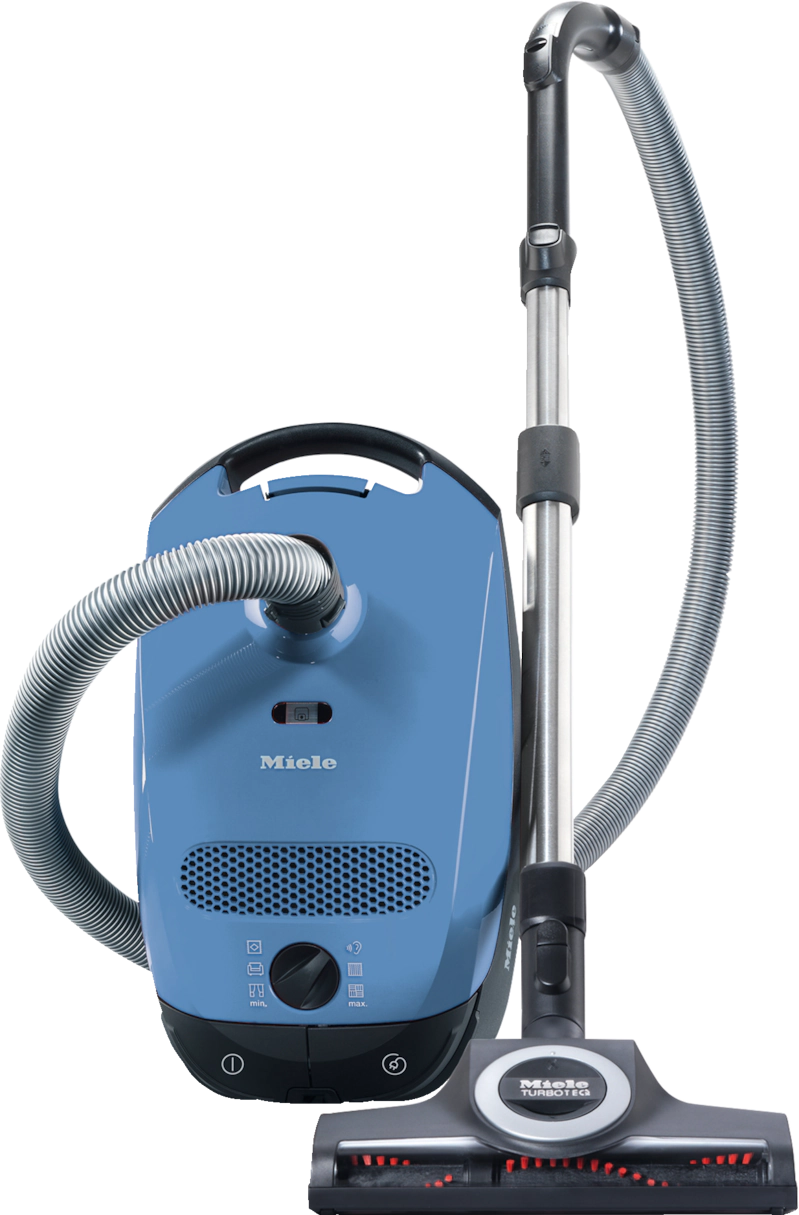
Miele Classic C1 Turbo Team
Two floorheads make it a useful pick for rugs and hard floors in the same home.
What I like/What I don’t like
What I like
- Air-driven turbo brush for low- and medium-pile rugs
- Separate parquet brush for wood and tile
- Six suction settings and a 29.5-foot operating radius
What I don’t like
- The air-driven brush is a poor match for thick, plush carpet
- GN bags need replacing, and the vacuum costs more than the budget picks
Why I Picked It
The Classic C1 Turbo Team is my overall pick in this list of the best canister vacuum cleaners because its two floorheads cover the floors many buyers actually have. I would use the turbo brush on a low- or medium-pile rug, then switch to the soft parquet brush for wood or tile. You get a proper tool for each surface instead of asking one head to do both jobs.
Its 1,200-watt motor has six suction settings, so you can turn it down for a small rug or upholstery. The 29.5-foot operating radius also means fewer trips to change outlets. A 4.5-liter bag gives you more room for dust than the small bagless models here. There is one limit to know before you buy: the turbo brush runs on airflow, not its own motor. Thick carpet can slow it down. If most rooms have deep-pile carpet, look for an electric floorhead instead.
Key specifications
- Type
- Bagged, corded canister
- Motor
- 1,200 W
- Floorheads
- STB 305-3 turbobrush; SBB 300-3 parquet brush
- Suction control
- Six settings
- Bag capacity
- 4.5 L; HyClean GN bag
- Operating radius
- 29.5 ft
Best Canister Vacuum for Stairs
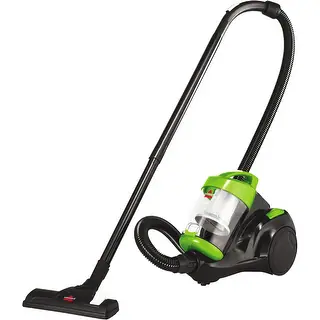
Bissell Zing 2156A
A compact bagless canister with a carry handle and simple tools for stair edges.
What I like/What I don’t like
What I like
- Carry handle and hose make stair cleaning easier to manage
- Crevice and dusting tool reaches stair corners
- No replacement bags; the 16-foot cord rewinds
What I don’t like
- The cord is short for stairs across several levels
- No motorized stair brush for hair pressed into carpet
Why I Picked It
Stairs are easier when the canister stays on a stable landing and you move only the hose and tool. That is why I picked the Zing 2156A. It has a carry handle, a 4-foot-8-inch hose, an extension wand, and a combined crevice and dusting tool. You can follow the edge of each step without trying to push a wide floorhead into every corner.
The 2-liter cup means you do not have to buy bags. Its 16-foot cord rewinds when you finish, and the suction control lets you lower the pull on a stair runner or raise it for loose dirt. The cord may still force an outlet change if your staircase covers more than one level. This model also lacks a powered stair brush, so hair worked into carpeted steps will need extra attention. For wooden steps, edges, and everyday dust, it is one of the best canister vacuum cleaners here for stair cleaning.
Key specifications
- Type
- Bagless, corded canister
- Dirt cup
- 2 L
- Cord
- 16 ft; automatic rewind
- Hose
- 4 ft 8 in
- Included tools
- Extension wand; crevice/dusting tool
- Filtration
- Three-stage
Best Canister Vacuum for Kitchen and Hard Floors
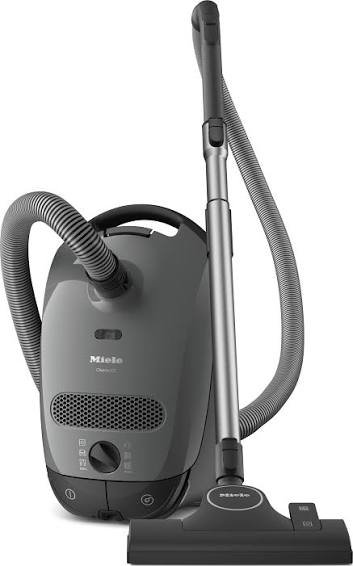
Miele Classic C1 Pure Suction
A straight-suction floorhead suits kitchen tile, wood, and thin rugs.
What I like/What I don’t like
What I like
- No brush roll for hair to wrap around on the floorhead
- Six suction settings for floors and above-floor cleaning
- Large 4.5-liter bag and 29.5-foot operating radius
What I don’t like
- The included head cannot deep-clean thick carpet
- Replacement GN bags add an ongoing cost
Why I Picked It
The Classic C1 Pure Suction is the one I would reach for after dinner in a kitchen with tile or wood. Its SBD 365-3 floorhead cleans with suction rather than a spinning brush, so hair cannot wind around a roller. Flip the floorhead switch when you move from hard floor to a thin rug. The crevice nozzle also helps along baseboards and in the narrow gap beside a cabinet.
This pick gives you six suction settings, a 4.5-liter GN bag, and a 29.5-foot operating radius. Those details matter when you want to finish several rooms without emptying a small cup or changing outlets. I would keep it for a home with mostly hard floors. The included floorhead has no powered brush, so it is a poor choice for thick carpet or pet hair buried deep in a rug. You also need to budget for new bags. For kitchen crumbs and normal hard-floor dust, I would call it the best canister vacuum cleaner option in this group.
Key specifications
- Type
- Bagged, corded canister
- Motor
- 1,200 W
- Floorhead
- SBD 365-3 combination floorhead
- Suction control
- Six settings
- Bag capacity
- 4.5 L; HyClean GN bag
- Operating radius
- 29.5 ft
Best Canister Vacuum for Cleaning Under Furniture
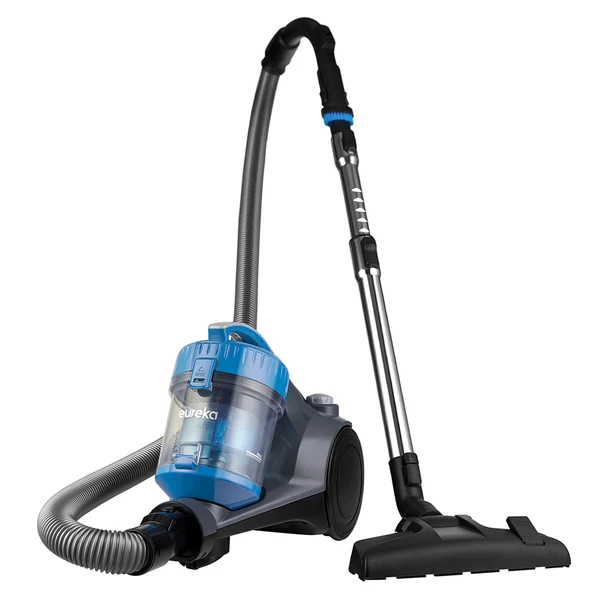
Eureka WhirlWind NEN110A
A turning floorhead and telescoping wand help you reach below beds and sofas.
What I like/What I don’t like
What I like
- Swivel steering and a telescoping wand for awkward spaces
- Crevice/dusting tool is built into the handle
- Bagless 2.5-liter bin, washable filters, and cord rewind
What I don’t like
- The 16-foot cord can mean more outlet changes
- A suction-only floorhead is limited on deep carpet
Why I Picked It
The WhirlWind NEN110A makes sense if your main problem is dust beneath a couch, bed, or low cabinet. Leave the canister in the open and guide the wand and floorhead under the furniture. Its swivel steering helps you turn around chair legs, while the telescoping wand lets you adjust your reach without moving the whole vacuum.
The built-in crevice and dusting tool is handy when you spot dirt along a baseboard or sofa edge. You do not have to look for a loose attachment. The 2.5-liter bin is bagless, and you can wash the filters. Its 16-foot cord rewinds, which is nice in a tight room, but you may need to switch outlets in a large home. Among the best canister vacuum cleaners for low furniture, this one stands out for its easy reach and storage. If you have thick carpet with hair deep in the pile, its floorhead does not give you the powered brushing that job needs.
Key specifications
- Type
- Bagless, corded canister
- Dirt bin
- 2.5 L
- Cord
- 16 ft; automatic rewind
- Steering
- Swivel floorhead
- Wand
- Telescoping metal wand
- Tools
- Integrated crevice/dusting tool
Best Canister Vacuum for Pet Hair
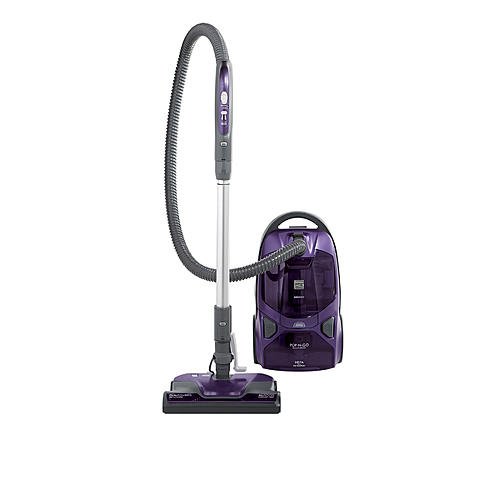
Kenmore 600 Series 81615
A powered floor nozzle and small motorized pet tool cover carpets and furniture.
What I like/What I don’t like
What I like
- Motorized Pet PowerMate tool for sofas and stairs
- Powered floor nozzle and four height settings for carpet
- Stored POP-N-GO hard-floor brush and sealed filtration
What I don’t like
- Bulkier to carry and store than a compact canister
- Bags and several attachments add upkeep
Why I Picked It
The 81615 is the one I would choose when pet hair sticks to a sofa and also works into carpet. Its small motorized Pet PowerMate tool is made for upholstery and stairs, while the powered floor nozzle handles carpet. That two-tool setup answers a real problem: fur caught in fabric often needs a moving brush to loosen it before the suction can lift it.
The POP-N-GO hard-floor brush stores inside the canister and clips onto the wand when you move to wood or tile. Four height settings let you adjust the main nozzle for different carpet piles. Kenmore also lists a sealed AllergenSeal system that filters 99.97% of particles 0.3 microns and larger. The trade-off is a bigger machine with more parts to store and replacement bags to buy. If you only clean kitchen tile, it is more vacuum than you need. For a pet home with carpet, stairs, and furniture, it is a strong pick if you are looking for the best canister vacuum cleaner for pet hair.
Key specifications
- Type
- Bagged, corded canister
- Floor nozzle
- Powered; four height settings
- Pet tool
- Motorized Pet PowerMate
- Hard-floor tool
- POP-N-GO brush
- Filtration
- Sealed AllergenSeal system
- Other tools
- Crevice tool; dusting brush
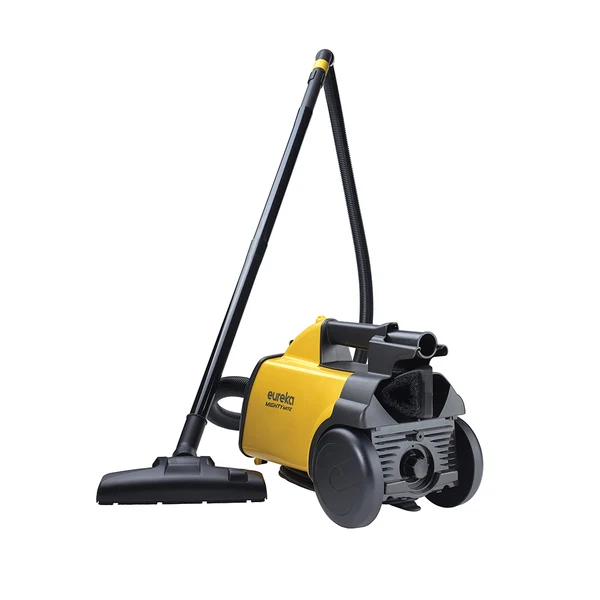
Best Budget Canister Vacuum for Edge and Corner Cleaning
Eureka Mighty Mite 3670M
A small bagged canister with a crevice tool for baseboards and tight corners.
What I like/What I don’t like
What I like
- Crevice tool gets beside baseboards and cabinet toe kicks
- 8.6-pound canister is easy to carry between rooms
- Two extension wands and a 2.5-liter dust bag
What I don’t like
- No motorized floor brush for carpeted pet hair
- The cord wraps on a hook instead of rewinding
Why I Picked It
Edges and corners need a narrow tool, not just a wide floorhead. I picked the Mighty Mite 3670M because its crevice tool fits beside baseboards, behind a bin, and along the toe kick below kitchen cabinets. The 8.6-pound canister is easy to carry, and the extension wands help you reach from floor edges to higher shelves.
This is a simple bagged vacuum. Its 2.5-liter bag holds dry dirt, and the 1,200-watt motor gives you suction for quick hard-floor jobs. You can use the floor nozzle on rugs too, but it has no motorized brush to pull hair from thick carpet. The cord wraps on a hook rather than winding itself back in. You will also need replacement bags. Those are fair trade-offs if you want a lower-cost canister for dust along walls, corners, and small rooms instead of a large carpet-cleaning machine.
Key specifications
- Type
- Bagged, corded canister
- Motor
- 1,200 W
- Bag capacity
- 2.5 L
- Weight
- 8.6 lb
- Included tools
- Crevice tool; combination tool; extension wands
- Cord storage
- Manual wrap on hook
Where Do Canister Vacuum Cleaners Work Best?
Canister vacuums work really well if your home has tight spots, stairs, or furniture that is too heavy to move around. The main machine sits on the floor with wheels, and you only hold a light hose with a stick attached to it. Because of this, you can easily clean small areas where an upright vacuum cannot go at all.
The biggest difference you will feel is when you clean stairs. Lifting a heavy upright vacuum up and down the steps is super awkward and makes your arms tired. But with a canister, you can leave the main box sitting at the bottom or top of the stairs, and then you just pull the long hose to clean step by step. It makes the whole job way easier.
Also, if your house has many different floor types, canisters are very handy. Say you have wood floors in the living room, ceramic tile in your kitchen, and small carpet rugs inside bedrooms. A canister vacuum cleaner handles all of them easily. You only have to change the floor attachment tool or click a button to change settings when you walk into a new room.
They are also great for cleaning inside your car, or dusting curtains, window blinds, and cloth couches. The long flexible hose lets you stretch high up or reach into dark corners that big heavy uprights cannot reach. So if your house has lots of small corners, low sofas, or soft things to clean, a canister style is usually better than other types.
Where do canisters struggle, then?
Mostly in giant open houses where you have to clean huge open floors in one run. You see, dragging the canister box behind you across a massive open room can get annoying after a few minutes. If you have a huge house like that, you might want to use a couple of different cleaning tools for different rooms. I would suggest going for robotic vacuum cleaners for this type of house.
Canister Vacuum vs Upright Vacuum: Which Is Better for Different Areas?
| Feature | Canister Vacuum | Upright Vacuum |
| Stairs | Easy to clean using the long hose | Hard and tiring to lift up and down |
| Under furniture | Low flat cleaning head goes under easily | Usually too tall or bulky to fit |
| Storage | Takes up more closet space, hose needs coiling | Stands straight up, takes less floor space |
| Carpet cleaning | Good if it has a powered brush roll | Usually better for deep cleaning thick carpets |
| Maneuverability | Great for squeezing into small tight spots | Better for big open flat floors |
| Weight while pushing | Lighter feeling because main weight is on floor | Heavier to push back and forth |
| Noise level | Usually a bit quieter | Often louder while running |
Well, if your house is mostly big rooms with thick carpet everywhere, an upright vacuum cleaner might finish the work much faster. But if your place has steps, table legs, curtains, or different kinds of floors mixed together, a canister vacuum will save you a lot of time and effort.
In fact, some people end up buying both types for their house. It might look like too much, but many people do this so they can clean big carpets fast with the upright and use the canister vacuum cleaner for everything else.
Canister Vacuum vs Cordless Stick Vacuum
Actually, lots of people buy cordless stick vacuums these days because they are very light and quick to grab off the wall. But they are made for small quick jobs, not the same kind of deep cleaning as a canister.
| Feature | Canister Vacuum | Cordless Stick Vacuum |
| Power source | Plugs into wall outlet for non-stop power | Uses battery power, runs for short time |
| Suction consistency | Stays strong the whole time you clean | Can get weaker as battery drains down |
| Best for | Deep cleaning the whole house completely | Quick cleanup of small daily messes |
| Dustbin/bag size | Bigger space to hold lots of dirt | Very small bin, must empty often |
| Charging needed | No need to charge, plug and go | Yes, and battery gets worse after years |
| Weight in hand | Hand feels light, heavy motor stays on floor | You hold the weight of whole vacuum in hand |
| Long cleaning sessions | Works great for long hours without stopping | Struggles because battery runs out fast |
Generally, cordless vacuum cleaners work fine for cleaning up quick food spills, small daily dirt, or living in tiny apartments with no storage space. Canister vacuums are much better when you want to clean your whole house deeply from top to bottom, especially if you have pets, allergies, or a big house.
The biggest difference comes down to battery life. A cordless stick vacuum usually stops working after 20 to 40 minutes and needs hours to charge again. A canister vacuum runs off the wall plug, so it never stops in the middle of your cleaning job.
Bagged vs Bagless Canister Vacuum Cleaners
Bagged canister vacuum cleaners are almost always the better choice if anyone in your home gets bad allergies or asthma. The closed bags lock in all the fine dust, pet hair, and dirt so nothing leaks back into the air when you throw it away.
Bagless canister vacuum cleaners will save you money in the long run because you do not have to keep buying new bags every month. But you will have to dump out the dirt box and wash the plastic filters often, and that can get kind of dirty and messy if you are not careful.
| Feature | Bagged Canister | Bagless Canister |
|---|---|---|
| Dust exposure when emptying | Minimal, bag seals shut | Higher, dust can escape into air |
| Ongoing cost | You buy replacement bags | No bags needed, lower long-term cost |
| Capacity | Often holds more debris | Usually smaller bin size |
| Allergy friendliness | Better for allergy and asthma sufferers | Can stir up allergens during emptying |
| Maintenance | Less frequent, just swap bags | Requires regular bin and filter cleaning |
| Upfront cost | Sometimes slightly higher | Sometimes slightly lower |
What Should You Look for in a Canister Vacuum Cleaner?
- Lightweight canister body: A heavy base box is annoying to drag behind you, especially on thick rug carpet or short steps. You should try to find one you can pull along smoothly with little force.
- Long and flexible hose: The hose is the main good thing about canister vacuums. Having a longer, flexible hose means you can clean far across the room without rolling the base unit around every few seconds.
- Low-profile floorhead: Well, this means the cleaning head is thin and flat. It lets you slide right under beds, couches, and tables without you having to bend down or drag big furniture out of the way.
- Strong suction with adjustable power: You know, different floors need different levels of pull power. Thin curtains need low suction so they do not get sucked in, while deep carpets need full power to pull out dirt.
- Crevice and upholstery tools: These extra attachments help clean couch pads, car seats, and narrow cracks where dust gathers over time.
- Powered brushroll if you have carpet: If you have rugs, you need a head with an electric motor inside that spins brushes. It shakes carpet threads to lift hidden dirt that regular suction misses.
- Good filtration: Try to get a sealed vacuum or one with a HEPA filter, especially if people in your house sneeze from dust or pet hair.
- Easy-to-find bags and filters: Some companies make weird special bags that are hard to buy later or get stopped being made. Check if you can easily buy replacements online or in normal stores before buying the vacuum.
Read more buying guides:
FAQs
What is a canister vacuum cleaner? How does it work?
A canister vacuum cleaner is basically a machine made of two separate parts: a box on wheels that stays on the floor, and a flexible tube with a stick attached to it. The motor and the dust bag or bin sit inside the rolling box, while you hold and move the hose around.
As you walk from room to room, the rolling box follows behind you on the floor, and you need to stretch the hose out to clean wherever you want. Because the heavy motor sits down on the ground, the part you hold in your hand feels really light.
Now, when you turn it on, the motor inside the box sucks air and dirt through the long hose and dumps it into the bag or bin. Most canister vacuum cleaner models let you snap on different cleaning heads depending on what you are cleaning, like a flat floor tool, a thin crack tool, or a couch brush.
What are the advantages of a canister vacuum cleaner?
- They are much easier to carry up and down stairs because your hands only hold the light hose and wand stick.
- The flat, thin floorhead slides under low couches and beds where big upright vacuums get stuck.
- A lot of canister vacuum models make less noise than uprights, which is great if you need to clean early in the morning or late at night.
- The bendable hose makes it super easy to clean high curtains, window blinds, and sofa seats.
- The suction power stays strong the whole time because it plugs straight into your wall socket.
What are the drawbacks of using canisters?
- Storing them in a closet can be annoying because the long hose and power cord take up space and need to be wrapped up.
- Pulling the rolling box behind you across big open rooms can feel annoying after a while.
- Some basic canister vacuum cleaners do not clean thick high-pile carpets as well as a strong upright vacuum.
- You are tied to a power cord, so you have to keep unplugging and plugging it in as you move from room to room.
- Putting pieces together or changing nozzle attachments takes a little extra time compared to a simple upright.
Who should buy a canister vacuum?
Canister vacuum cleaners are best for people who have stairs, different kinds of floors, or lots of furniture and tight corners in their home. So, if you spend time cleaning specific small spots and furniture instead of just pushing across wide open floors, this style actually works much better.
They are also great for people who get dust allergies, because many canister vacuums use sealed air filters and closed bags. Plus, pet owners like them a lot too, because the hose easily gets dog and cat hair off furniture and stair steps.
Do canister vacuums work on carpet?
Yes, canister vacuums can clean carpets really well, but it depends a lot on whether the head has a powered brush roll inside. If it does not have a motorized brush, it only uses suction power, which has a hard time pulling out dirt stuck deep in carpet fibers.
Vacuums made for carpet have an electric brush that spins to shake up carpet threads and lift out trapped dirt. If your house has wall-to-wall carpet, make sure you pick a canister model that has this powered head feature.
Plus, if your house has both carpet and hardwood or tile, you need to look for a canister head that lets you turn the spinning brush on or off with a switch. That way, you do not scratch up your wood floors, but you still get a good deep clean on rugs.
Do canister vacuum cleaners come with HEPA filters?
Many canister vacuum cleaner models do come with HEPA filters, but not all of them have one, especially cheap models. HEPA filters trap tiny dust specks, plant pollen, and pet dander that normal cheap filters let blow right back into the room.
I would say, if anyone in your family has asthma or allergies, read the box details carefully before you pay. Generally, some brands print “HEPA-type” on the box, which is not as good as a real True HEPA filter.
Are canister vacuum cleaners heavy?
The box base of a canister vacuum can feel a bit heavy because it houses the motor, but you do not carry it around while cleaning. You just roll it across the floor on its wheels while your hand only holds the light hose and tube stick.
Because of this setup, canister vacuums feel much lighter to use than pushing a big upright vacuum back and forth across the floor. You only really feel the weight when you carry the box up the stairs or lift it onto a shelf in the closet.
Are canister vacuum cleaners noisy?
Canister vacuums are usually quieter than upright vacuums. This is mostly because the motor is inside the box down on the floor, so it is farther away from your ears. Many newer canisters also have sound padding packed around the motor inside the box.
Still, noise levels change depending on the brand and price. So, if you want a quiet vacuum, you should check the decibel noise rating on the specs. This is really helpful if you have sleeping babies, scared pets, or thin apartment walls.
What is the typical lifespan of a canister vacuum?
The best canister vacuum cleaners usually last between 8 and 12 years. But again, how long it lasts depends a lot on how well it was built and how often you vacuum. Cheap plastic models might break down faster, especially if you clean every day.
Doing simple maintenance helps it last a lot longer. Cleaning or changing filters, replacing full bags on time, and checking for clogged dirt inside the hose all keep the motor running smoothly for years.
What should I avoid doing with a canister vacuum cleaner?
- Do not let the bag or bin get completely full before emptying: If it gets too packed, suction drops and it forces the motor to work too hard.
- Avoid sucking up big items, sharp things, or water: Sharp objects can tear the hose, and water can burn out the electric motor inside.
- Do not forget to wash or replace the filters: Dirty blocked filters stop air from moving through, which makes suction weak.
- Do not pull hard on the cord to yank it out of the wall: Yanking breaks the wire inside the plug over time.
- Do not wrap the cord super tight around the box: Wrapping it too tight bends the cord wiring until it breaks.