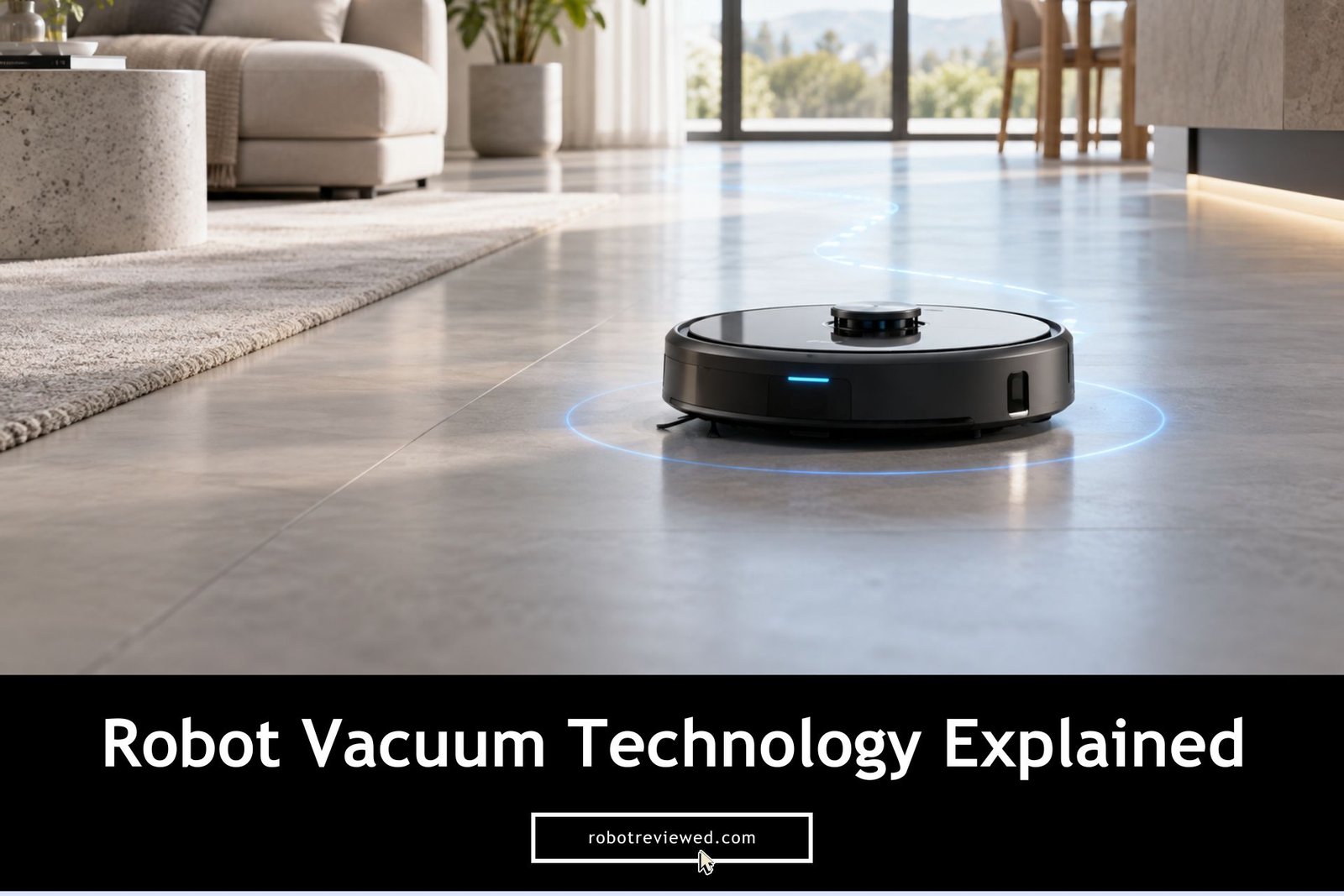
Robot vacuums look simple from the outside, but there is good technology inside that little round machine. Honestly, most people just push the button and forget about it, and that is totally fine too.
But once you understand how robot vacuum technology actually works, you start picking a machine based on real reasons, not just marketing words on a box. In this post, you will learn what robot vacuum cleaner technology is, exactly how these machines see your home, clean your floors, and even mop without you touching a thing.
TABLE OF CONTENTS Quickly jump to a section
- What Is Robot Vacuum Technology?
- How Do Robot Vacuums Work?
- Top Products With Advanced Robot Vacuum Technology
- How Does Robot Vacuum Mapping Technology Work?
- Robot Vacuum Technology: Navigation vs. Mapping vs. Obstacle Avoidance
- Robot Vacuum Technology: What Sensors Do They Use?
- How Does AI Work in Modern Robotic Vacuums?
- How Robotic Vacuum Cleaning Technology Works
- FAQ: Technology Behind Robotic Vacuum Cleaners
What Is Robot Vacuum Technology?
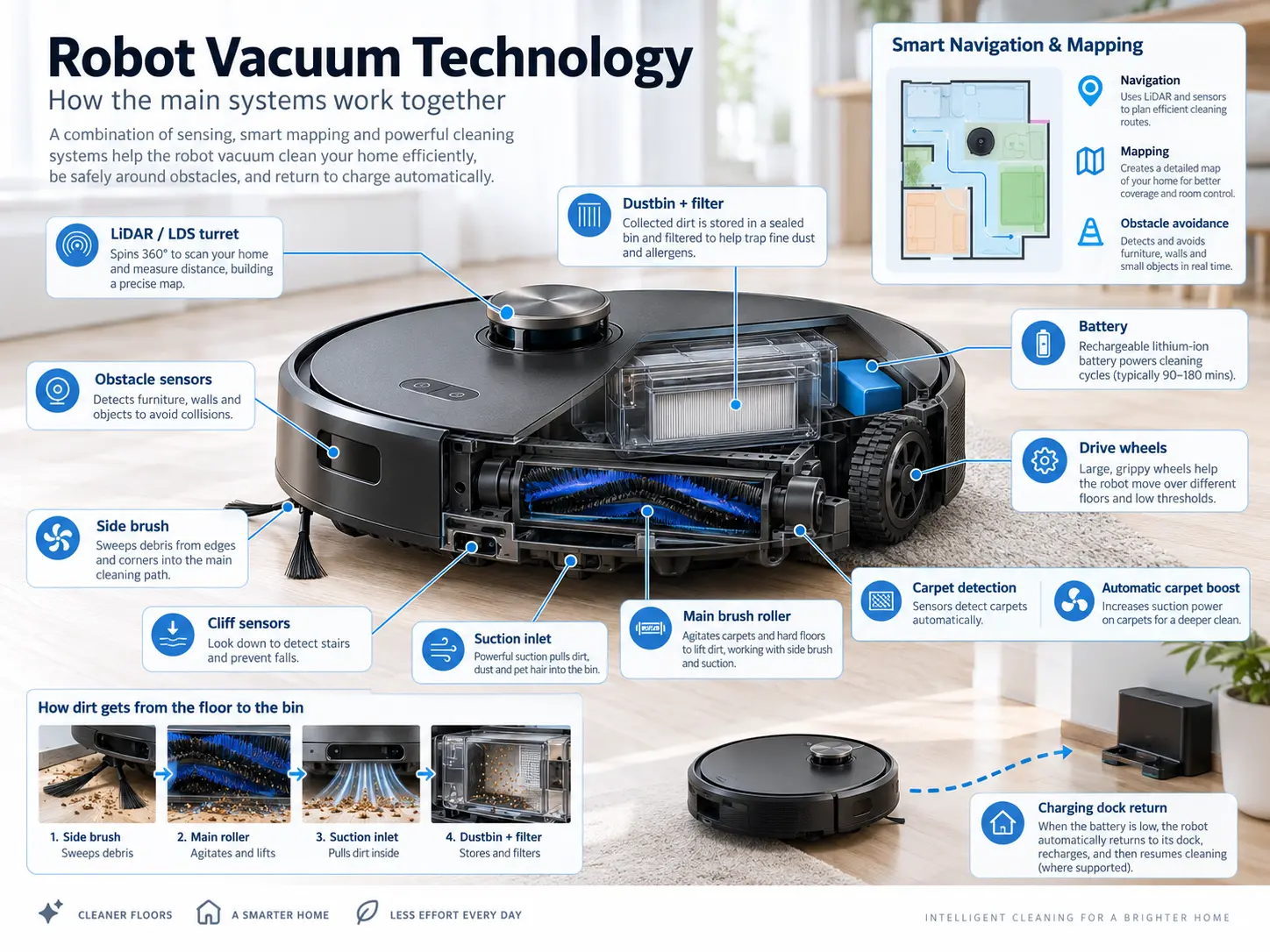
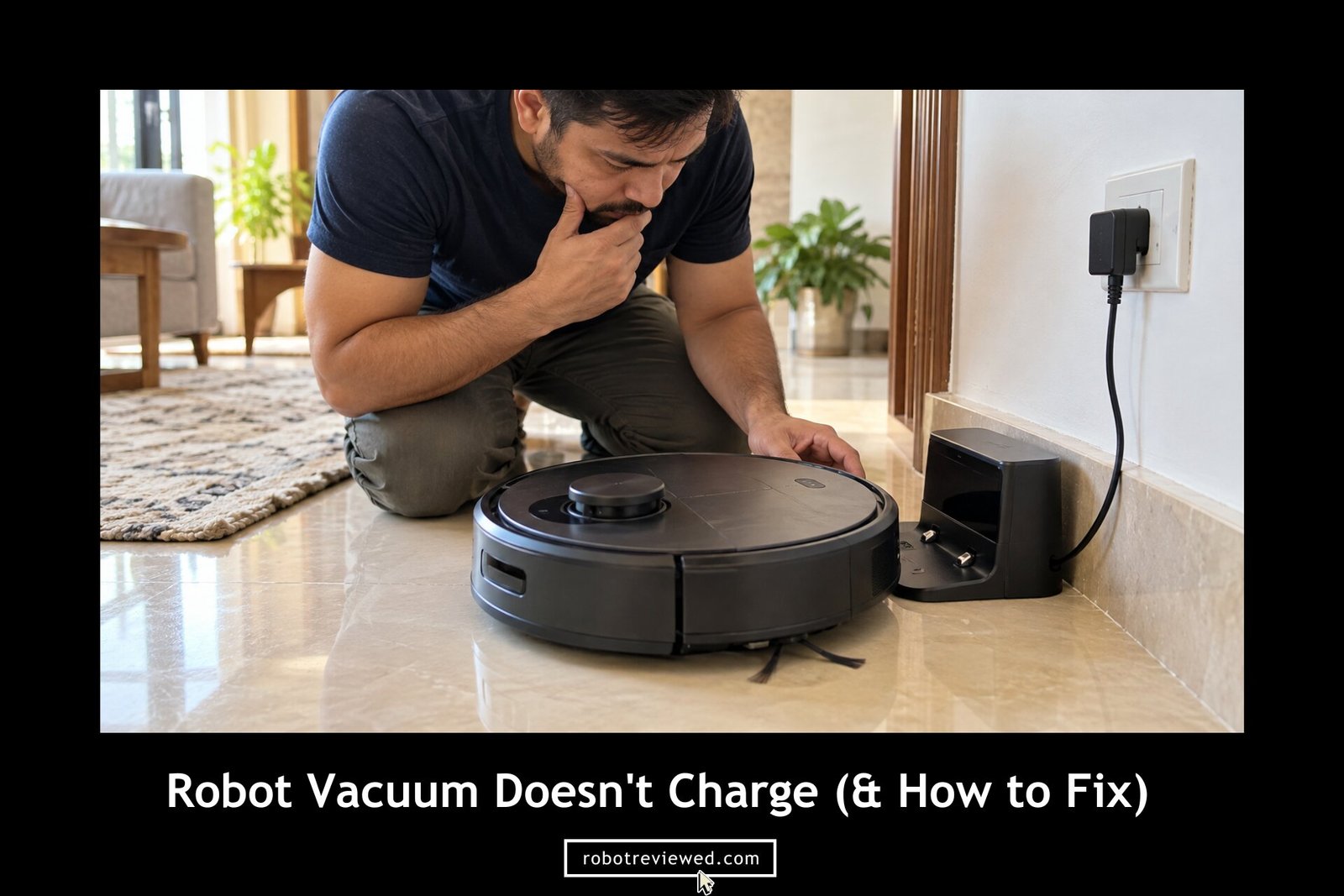
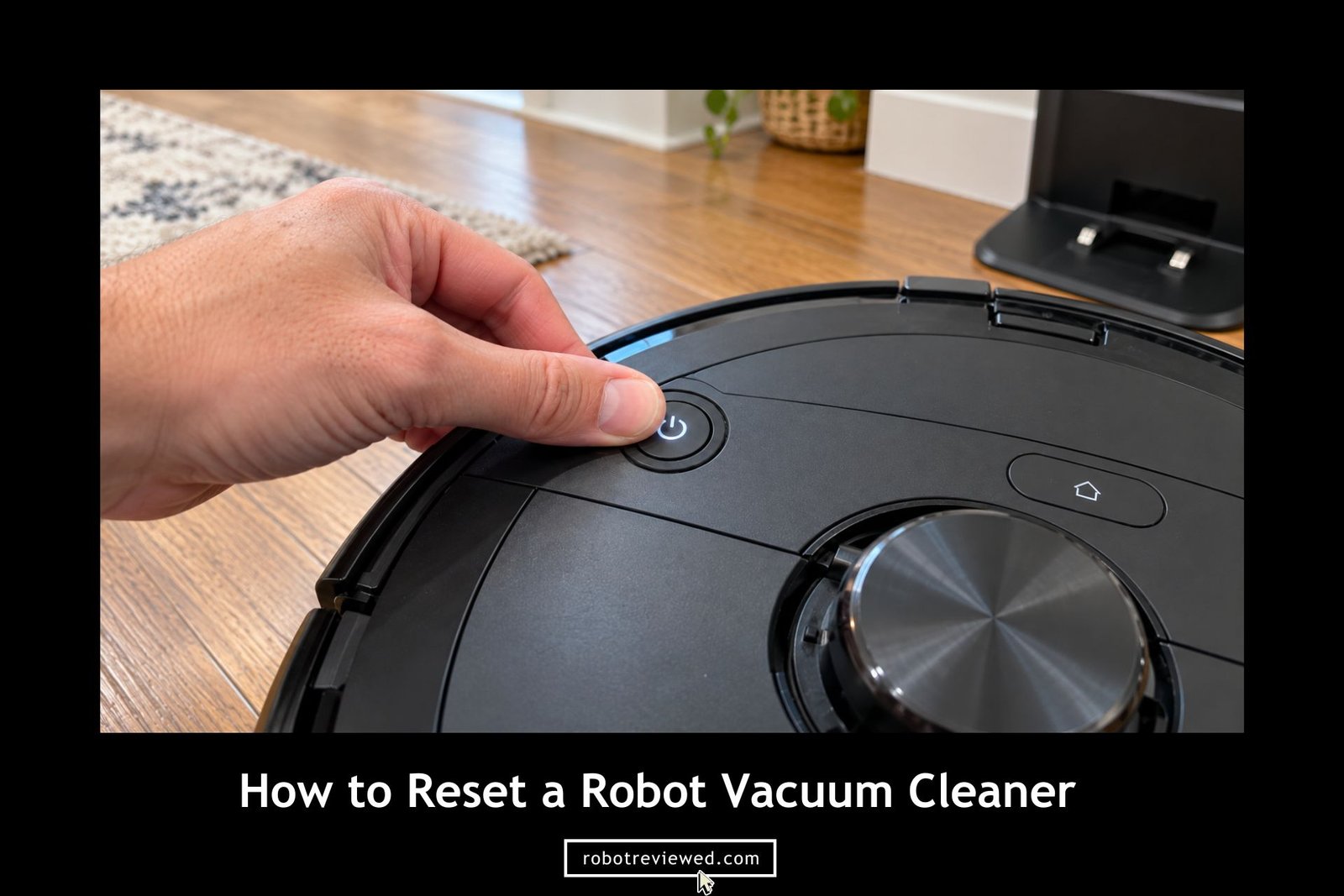
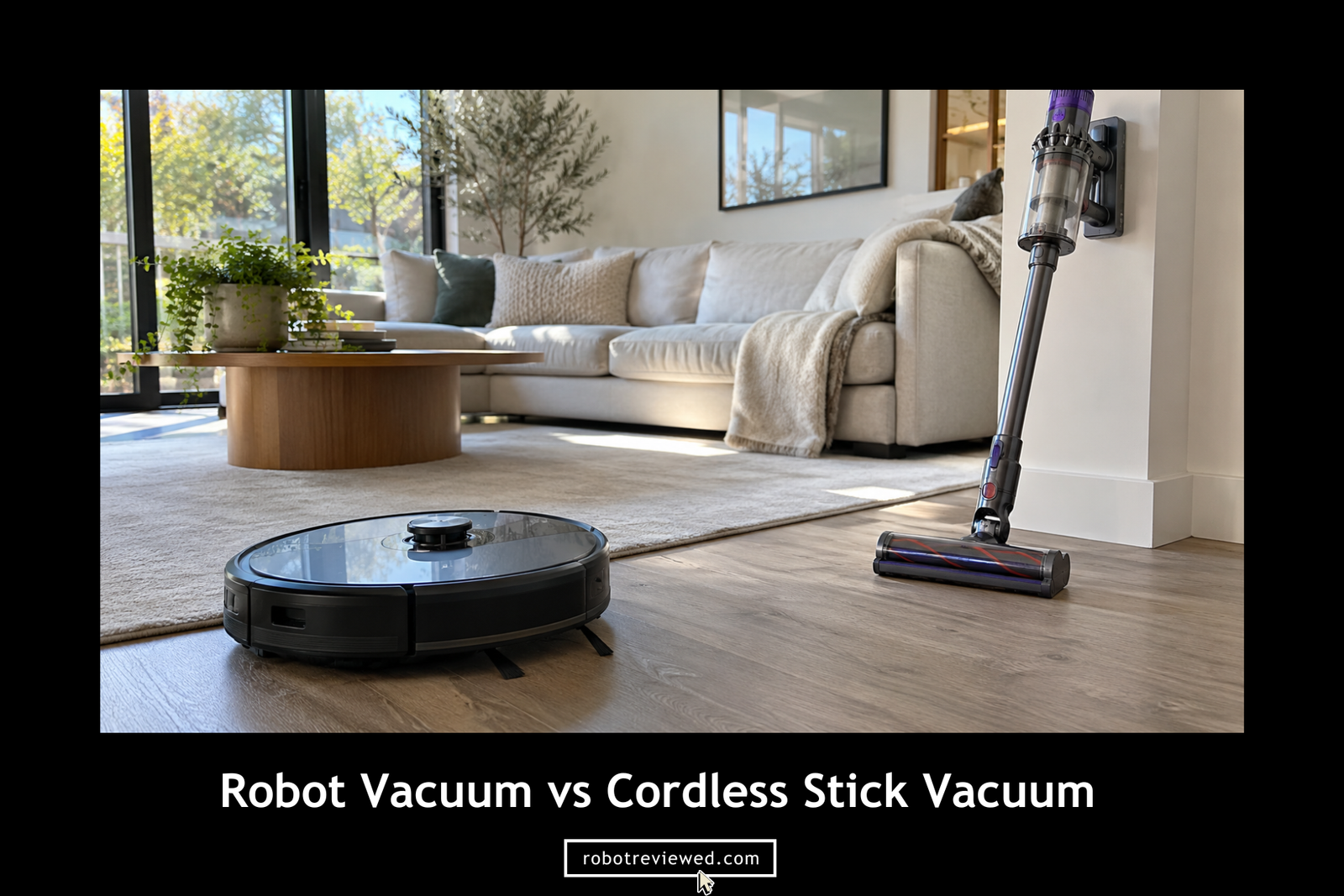
Robot vacuum technology is basically the combination of sensors, motors, software, and cleaning parts that let a machine clean your floor on its own. Actually, it is not one single technology; it is a mix of many small systems working together at the same time.
A robot vacuum needs a brain to think, wheels to move, sensors to see, and a suction system to actually pick up dirt. Generally, all these parts send signals to each other hundreds of times per minute so the robot can react fast to walls, furniture, pets, and even your shoes lying around.
How Do Robot Vacuums Work?
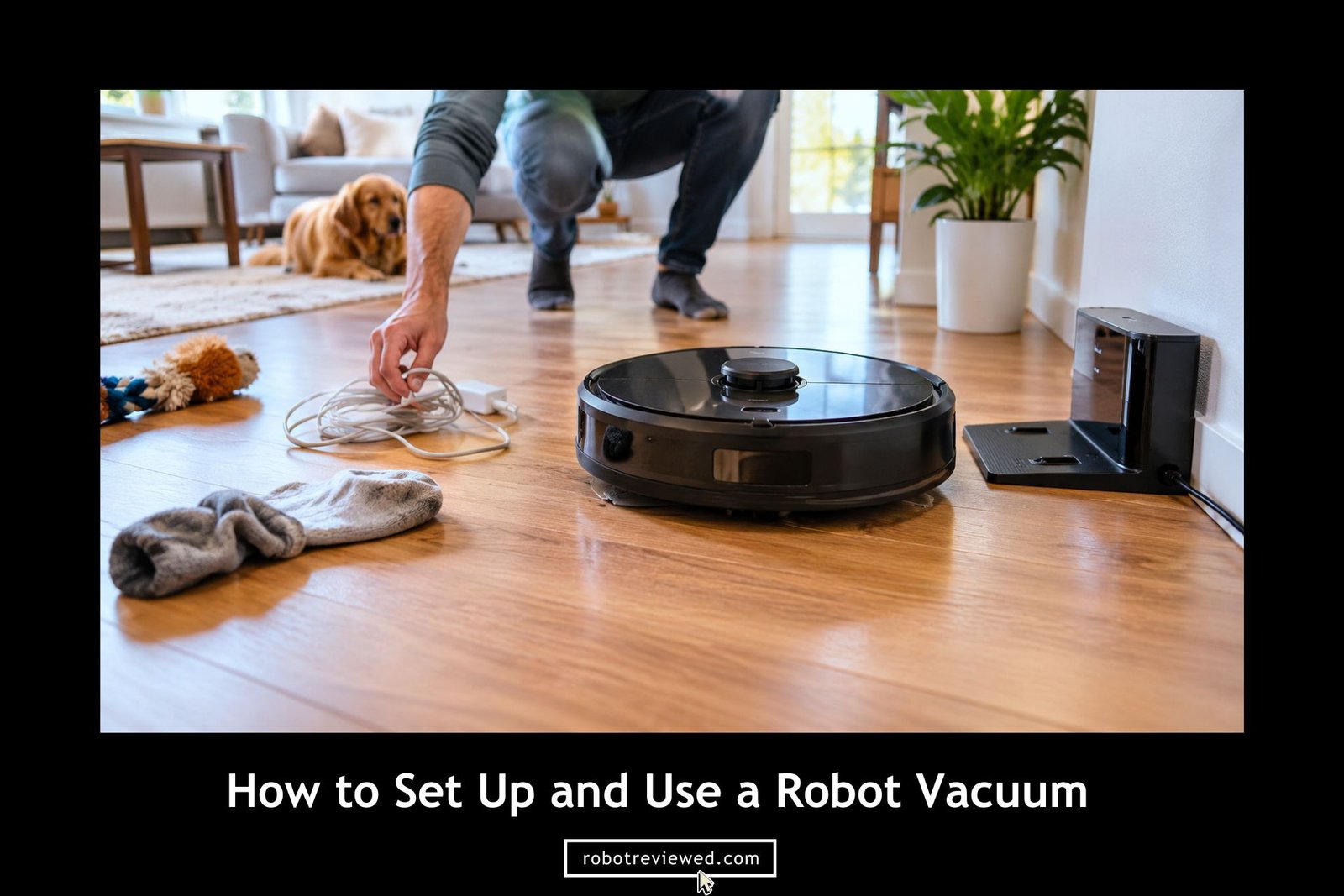
Robot vacuums work by scanning the room, planning a path, and then cleaning that path while avoiding stuff in the way. The process sounds simple, but three things happen at once here: mapping, movement, and cleaning.
First, sensors and cameras collect data about the room shape, walls, and furniture. Then, the onboard computer chip turns that data into a path, usually in straight rows like a lawnmower pattern, since that covers more floor in less time.
Next, wheels move the robot using small motors, and the main brush along with side brushes push dirt toward the suction inlet. Suction motors pull air, and dirt with it, into the dustbin, and this whole cycle repeats until the room is done or the battery runs low. Eventually, the best robot vacuums finish an average size room in about 20 to 40 minutes, depending on how much furniture is around and how big the space actually is.
Top Products With Advanced Robot Vacuum Technology


How Does Robot Vacuum Mapping Technology Work?
Mapping technology works by building a virtual floor plan of your home using sensors, lasers, or cameras. Basically, the robot moves around the first time, scans the surroundings, and creates a digital map that it saves for future cleaning runs.
That map isn’t just a rough sketch either; it usually shows room borders, doorways, and even furniture placement with decent accuracy. Once the map is ready, you can set no-go zones, name rooms, and tell the robot to clean just the kitchen or just the bedroom. There are three common ways robot vacuums build this map, and each one works a little differently.
1. Camera-Based vSLAM Mapping
Camera-based vSLAM mapping technology uses a small camera on the robot to visually recognize rooms; it’s just like how your eyes work. vSLAM stands for visual Simultaneous Localization and Mapping, and it captures around 20 to 30 images every second while moving.
The robot compares these images with each other to figure out where it is and where it has already cleaned. That method needs decent lighting to work properly, so it can struggle a bit in dark rooms or at night.
It’s kind of a trade-off here: camera mapping is usually cheaper to build into a robot, but it needs good light and clear landmarks like furniture edges or wall patterns to stay accurate.
2. Gyroscope and IMU Navigation
Gyroscope and IMU navigation tracks the robot’s movement and orientation using tiny internal motion sensors. IMU stands for Inertial Measurement Unit, and it usually combines a gyroscope with an accelerometer inside one small chip.
Now, that system checks rotation, speed, and direction changes many times every second, so the robot always knows which way it’s facing.
Mainly, cheaper robot vacuums often rely mostly on this method alone, without lasers or cameras, which is why they sometimes bump into things more or repeat cleaning the same spot. This is not the most accurate navigation on its own, but paired with LiDAR or cameras, it makes movement tracking a lot more reliable.
3. LiDAR and LDS Mapping
LiDAR mapping technology in robot vacuums uses a spinning laser sensor placed on top of the robot to measure distances around the room. The sensor usually spins around 5 to 6 times every second, shooting out laser beams and measuring how long it takes for the light to bounce back off walls and objects. Based on that timing, the robot calculates exact distances, often accurate within a few centimeters.
LDS, which stands for Laser Distance Sensor, works on a similar idea but is a slightly older and simpler version of the same laser scanning method.
Mainly, LiDAR mapping works really well in the dark since it does not depend on light or cameras at all. Robots using LiDAR generally build very accurate maps on the first try, which is why a lot of premium models still use this method.
Robot Vacuum Technology: Navigation vs. Mapping vs. Obstacle Avoidance
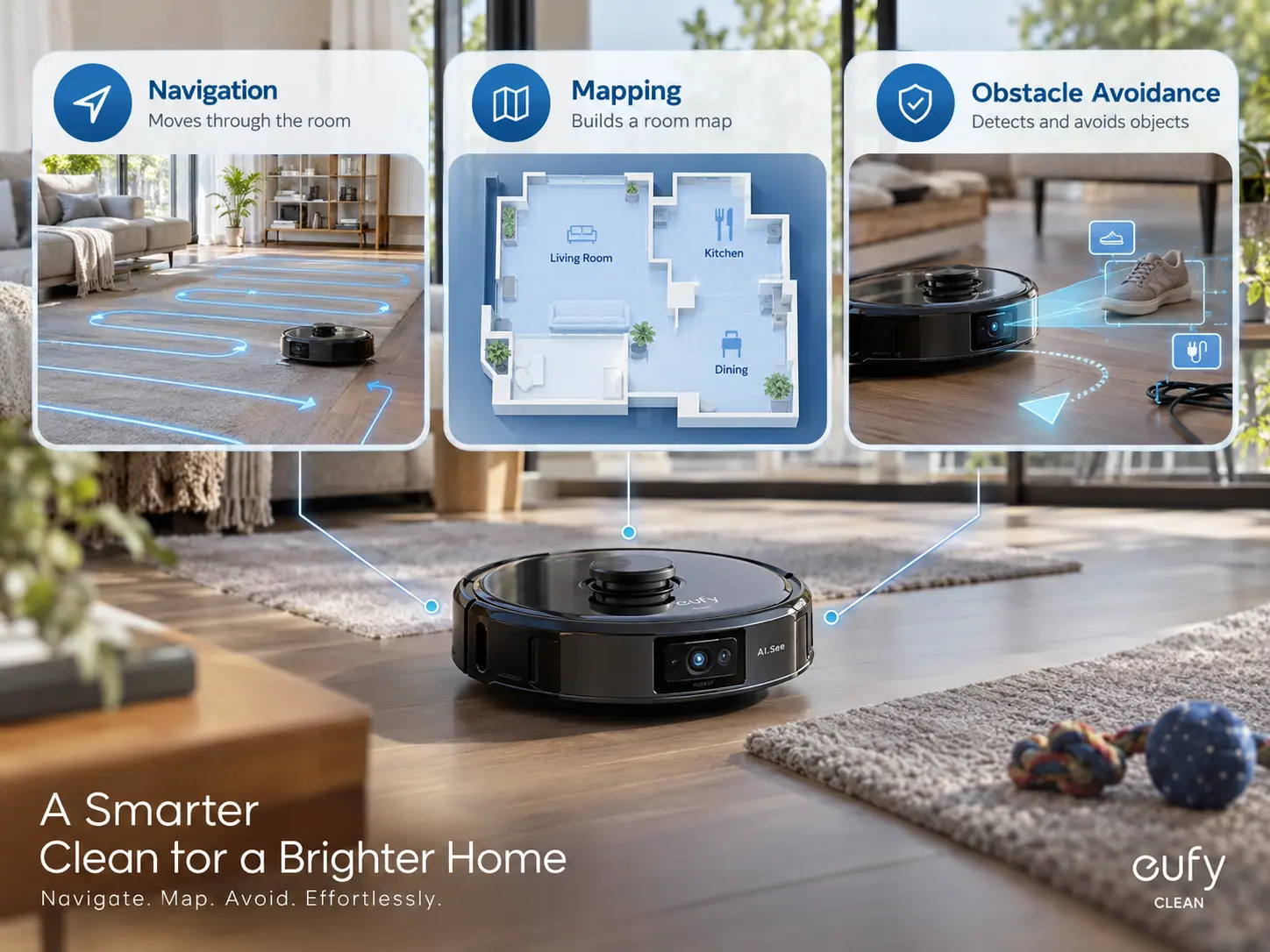
- Mapping is about building the floor plan of your home, so the robot knows the overall layout, rooms, and walls.
- Navigation is about the robot deciding which path to take across that map, usually in neat rows to save time and battery.
- Obstacle avoidance is a completely different job, and it is mostly about detecting things in real time, like a shoe, a phone cable, or your dog lying on the floor.
Robot Vacuum Technology: What Sensors Do They Use?
Cliff Sensors
Cliff sensors stop your robot vacuum from falling down stairs or off raised platforms. These sensors are mainly attached to the bottom of the robot and then use infrared light that bounces back off the floor below.
Now, once the sensor detects a bigger gap than usual, meaning the floor is farther away, like at the edge of a staircase, it tells the robot to stop or turn immediately. Most robot vacuums have four to six cliff sensors placed around the front and sides for full coverage. Honestly, this is one of the most important safety features, especially if you have stairs or a raised deck at home.
Bump Sensors
Bump sensors detect physical contact when the robot vacuum touches furniture, walls, or other objects. A small spring-loaded bumper sits on the front of the robot, and once it makes contact, a sensor inside registers the touch and sends a signal to slow down or change direction.
Wall and Distance Sensors
Wall and distance sensors help the robot vacuum follow along walls and measure gaps between itself and nearby objects. These sensors usually use infrared light or ultrasonic waves to calculate distance without any actual touching involved. Wall-following mode uses this exact sensor to clean edges properly, since regular vacuums often miss corners and baseboards.
Distance sensors also help slow the robot down before it gets close to fragile items, like vases or decor pieces on the floor. That’s a pretty useful feature honestly, especially in homes with a lot of open shelving or low furniture legs.
Wheel Encoders and Motion Sensors
Wheel encoders track how many times each wheel rotates. It helps the robot calculate distance traveled and speed accurately.
Basically, tiny sensors count wheel rotations, and the chip uses that data along with IMU readings to know exactly how far the robot has moved from its starting point. That combination becomes really important on uneven floors or rugs, where wheels might slip a little and throw off normal distance tracking.
Motion sensors also detect when a wheel is stuck or lifted off the ground, like if the robot gets caught on a rug edge. Eventually, this data helps the robot self-correct its path instead of driving in the wrong direction without knowing it.
Carpet and Floor Sensors
Carpet and floor sensors detect the surface type under the robot, whether it’s hardwood, tile, or carpet. These sensors usually measure resistance or reflection changes as the robot moves from one surface to another.
Once carpet is detected, the robot can automatically boost suction power or switch cleaning modes without you doing anything manually.
Floor sensors also help decide when to lift the mop pad, since you obviously don’t want a wet mop dragging across your carpet. Actually, this sensor type is one reason hybrid vacuum and mop robots have gotten so much better over the past few years.
How Does AI Work in Modern Robotic Vacuums?
AI in robot vacuums works by helping the machine recognize objects, learn cleaning patterns, and make smarter decisions on its own.
Today, modern robot vacuums use small onboard chips along with camera data to identify common household items, sometimes recognizing more than 40 to 70 different object types, like shoes, cables, pet waste, and even small toys.
Machine learning models get trained on thousands of images beforehand, so the robot can compare what it sees in real time with patterns it already knows. Now, over weeks of use, the AI also studies your cleaning habits, dirtier zones, and daily traffic areas, then adjusts cleaning frequency for those spots automatically.
Basically, this is why newer robot vacuums avoid pet waste or charging cables way better than models from just a few years back.
Read: Vacuum cleaner preferences
How Robotic Vacuum Cleaning Technology Works
Side Brush Technology
Side brushes sweep dirt from edges and corners into the path of the main brush. These small spinning brushes usually sit at an angle on the front corners of the robot and rotate around 60 to 80 times per minute.
Since the main brush can’t reach tight corners or wall edges properly, side brushes basically act like little arms pulling dirt inward. Some newer models even retract the side brush automatically near walls to avoid scratching furniture or paint.
Main Brush and Roller Technology
The main brush or roller does most of the heavy lifting by agitating and lifting dirt from the floor surface. That brush usually spins between 500 and 600 times per minute, depending on the model and floor setting.
Bristle brushes work well on hard floors, while rubber roller brushes handle pet hair and carpet better since hair doesn’t wrap around them as easily.
A lot of premium robot vacuums now use dual-material rollers, mixing rubber fins with soft bristles for both power and hair resistance. Anyway, this brush type is honestly the biggest difference between a mediocre robot vacuum and a genuinely good one.
Robot Vacuum Suction Technology
Suction robot vacuum technology pulls dirt, dust, and debris off the floor and into the dustbin using motor-powered airflow. Suction strength gets measured in Pascals, and it ranges from around 2000Pa on basic models up to 8000Pa or higher on premium ones.
Higher suction generally means better performance on carpet, since carpet fibers trap dust deeper than hard floors do. Motors also adjust suction power automatically in some models, saving battery on hard floors and boosting power only when needed.
But again, I totally agree that suction numbers alone don’t tell the whole story, since brush design and airflow path matter just as much as raw motor power.
FAQ: Technology Behind Robotic Vacuum Cleaners
Are robot vacuum cameras and maps private?
Camera and map data mostly stays stored locally or gets encrypted before syncing to the cloud, depending on the brand and privacy settings you choose. Also, most companies allow you to turn off cloud storage completely and keep everything only on the app or device itself.
What robot vacuum technology actually matters most?
Mapping accuracy and obstacle avoidance matter the most out of all robot vacuum technologies, way more than raw suction numbers alone. A robot that maps your home accurately and avoids cables or pet waste properly will clean better overall, even with moderate suction power
Can robot vacuums work in the dark?
LiDAR-based robot vacuums work perfectly fine in the dark since they use laser distance measurement instead of visible light. Camera-based vSLAM robots, though, generally struggle in low light and need at least some ambient lighting to map properly. Right, this is exactly why LiDAR models are usually recommended for night cleaning schedules or dim rooms.
Can a robot vacuum remember multiple floors?
Yes, most mapping-capable robot vacuums can store multiple floor maps, usually somewhere between 3 to 5 different maps at once. The robot automatically detects which floor it’s on using onboard sensors and then loads the correct saved map from memory.
Can robot vacuums detect stairs?
Yes, cliff-sensor robot vacuum technology specifically detects stairs and stops the robot before it falls over the edge. These infrared sensors constantly measure floor distance below the robot, and once that distance suddenly increases, the robot halts or reverses immediately.
Can robot vacuums detect carpet?
Yes, carpet and floor sensors detect surface changes almost instantly using resistance or reflection-based sensing technology. Now, once carpet gets detected, suction power usually increases automatically, and mop pads lift up if the robot has mopping features. Basically, this detection happens within a second or two of the robot moving onto the new surface.