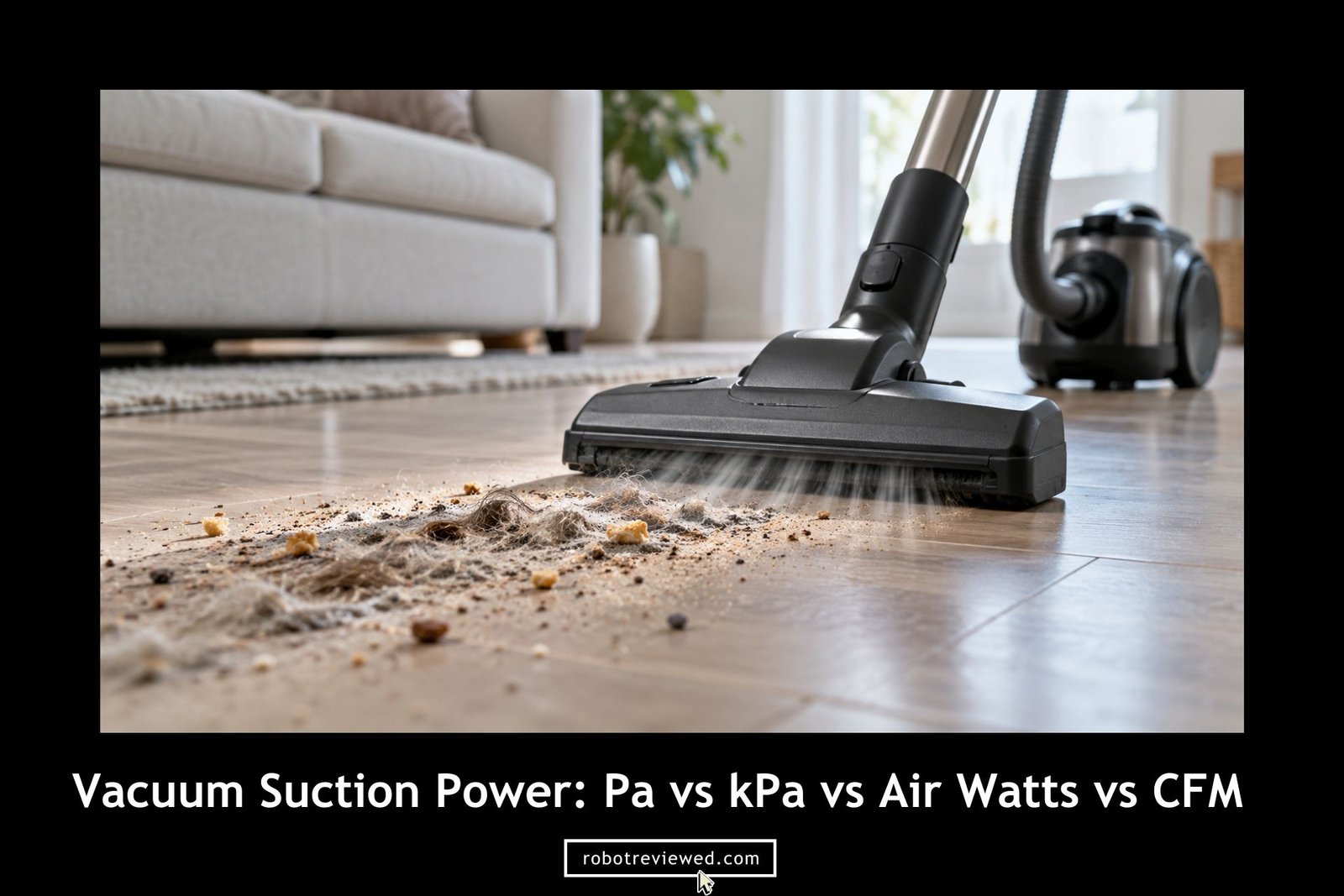
Vacuum suction power looks simple until you start comparing actual vacuum cleaners. You see, one brand shows 20,000 Pa, another shows 150 AW, while another talks about 90 CFM. Then, you may find a corded vacuum with none of these numbers. Instead, its product page may only mention motor watts or amps.
Well, the main problem is that these numbers do not measure the same thing. Pa and kPa measure suction pressure, CFM measures airflow, and air watts combine airflow with suction pressure. Regular watts usually tell you about electrical power consumption instead.
That is why understanding vacuum suction power matters before you buy or compare two reliable vacuum cleaners.
In this guide, you will learn what the common vacuum suction units actually mean. You will also learn which numbers deserve your attention when buying a robot, cordless, upright, canister, or wet-dry vacuum.
TABLE OF CONTENTS Quickly jump to a section
- Quick Answer: Pa, kPa, Air Watts, and CFM Explained
- What Is Vacuum Suction Power?
- What Does Pa (Pascal) Mean in a Vacuum Cleaner?
- What Does kPa Mean in a Vacuum Cleaner?
- What Is CFM in a Vacuum Cleaner?
- What Are Air Watts in a Vacuum Cleaner?
- Pa vs kPa vs Air Watts vs CFM: What’s the Difference?
- Why a Higher Suction Number Does Not Always Mean Better Cleaning
- What Is Water Lift, and How Does It Relate to Vacuum Suction?
- How to Read Vacuum Suction Specifications Before Buying
- In a nutshell…
Quick Answer: Pa, kPa, Air Watts, and CFM Explained
| Vacuum Specification | What It Measures | Easy Meaning | Useful for Comparing |
|---|---|---|---|
| Pa | Pressure difference | How strongly the vacuum can create suction pressure | Robot vacuums and some cordless vacuums |
| kPa | Pressure difference | Same measurement as Pa, just divided by 1,000 | Cordless, handheld, wet-dry vacuums |
| CFM | Airflow | How much air moves through the vacuum | Shop vacs, central vacuums, some full-size vacuums |
| Air Watts (AW) | Air power | Pressure and airflow working together | Many cordless vacuums and full-size vacuums |
| Water Lift | Pressure difference | Another way of measuring suction pressure | Shop and central vacuums |
| Motor Watts | Electrical input | Electricity used by the motor | Not a direct suction measurement |
What Is Vacuum Suction Power?
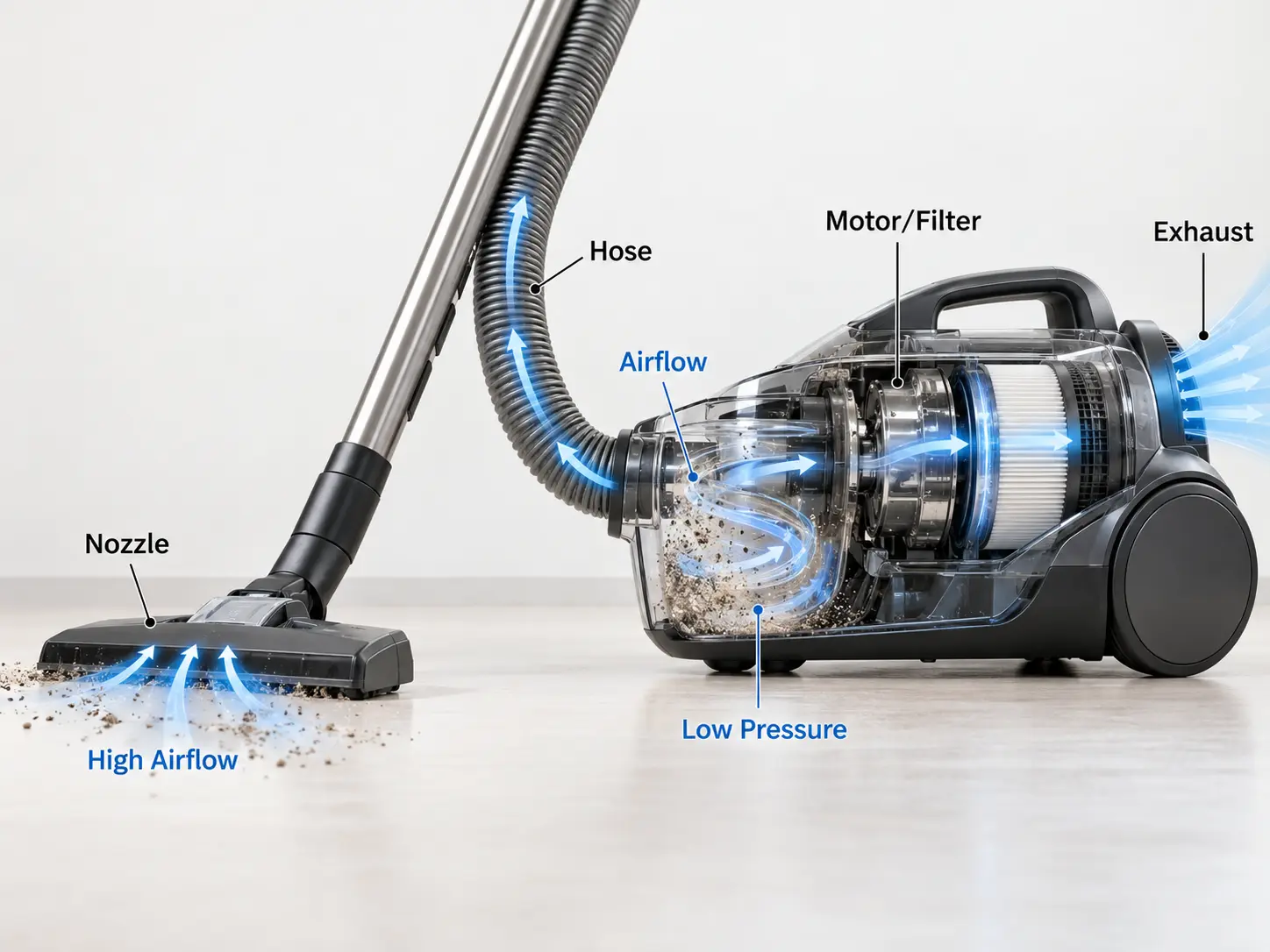
Vacuum suction power is basically the force a vacuum uses to pull air, dust, and debris off your floor and into its dustbin. First, this is how it works: a motor spins a fan inside the machine, and that fan pushes air out one side, which lowers the air pressure on the other side. Air from outside the vacuum rushes in to fill that low-pressure area, hence dragging dirt along with it.
Now, the tricky part is that “suction power” isn’t one single thing you can measure with one number. It’s actually a mix of pressure and airflow working together, and brands measure these two pieces separately, then sometimes combine them into other numbers entirely.
That’s exactly why you see so many different units printed on vacuum boxes: Pa, kPa, air watts, CFM, and even old-school water lift. Each one tells you something different, and none of them tell you the whole story by itself.
What Does Pa (Pascal) Mean in a Vacuum Cleaner?
Pa stands for Pascal, the standard scientific unit for pressure. One Pascal equals one newton of force pressing on one square meter. Well, that sounds technical, but here’s what it means for your vacuum…
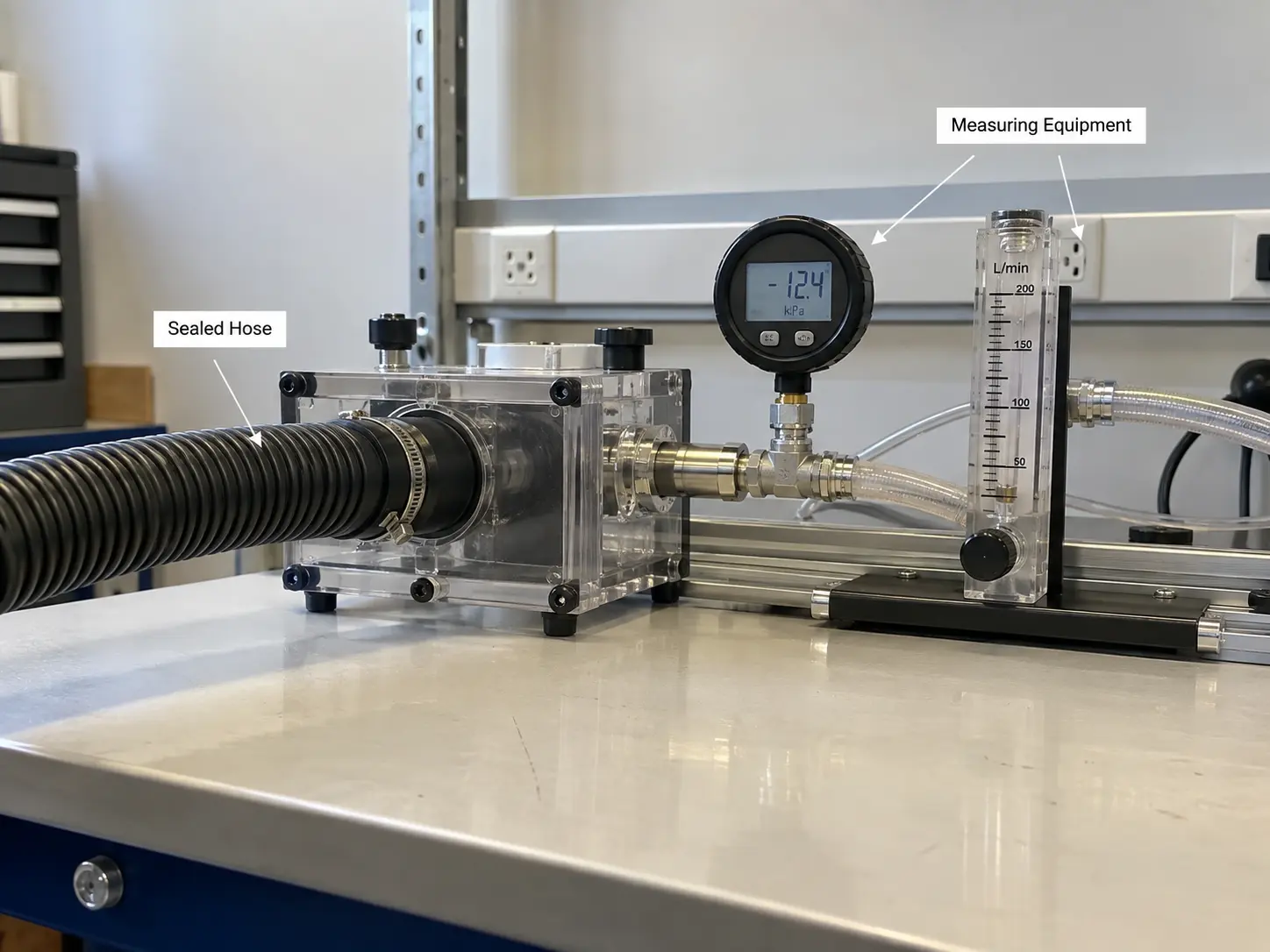
Okay, picture sealing the end of a hose completely with your hand. The motor keeps trying to pull air through, but nothing’s coming in, so pressure builds up behind that block. That maximum pressure difference is what gets measured in Pascals, under lab conditions. So when a box says “22,000 Pa,” that’s sealed suction pressure tested in a controlled setting, not what actually reaches your carpet at home.
Now, this number matters most for jobs like pulling dirt out of carpet fibers or lifting pet hair off a couch cushion. Both need real pulling force, not just moving air around. So, if you’ve ever wondered what does Pa mean in a vacuum listing, just remember: it’s about force, not speed, and definitely not volume.
Read more guides: Robot Vacuum Technology Explained
Does Higher Pa Mean Stronger Suction?
Generally, yes. A higher Pa rating means stronger suction pressure at the nozzle, assuming everything else stays equal. But that last part is where things get messy fast.
You see, the moment you attach a brush head, run the machine over thick carpet, or let dust build up in the filter, real pressure drops noticeably. A vacuum rated at 25,000 Pa in a lab might deliver only a fraction of that once it’s pushing through a long hose and a half-full dustbin.
A few things quietly reduce that lab number every single time you clean:
- Hose length and bends – longer, curvier hoses lose pressure along the way
- Nozzle width – wider openings drop pressure even as airflow goes up
- Filter condition – a clogged filter chokes the whole system
- Bin fullness – a packed dustbin restricts airflow before it even reaches the motor
What Does kPa Mean in a Vacuum Cleaner?
kPa stands for kilopascal, and it’s just a bigger version of the same unit. One kPa equals 1,000 Pa. Manufacturers use kPa mostly on larger machines, since “20 kPa” looks cleaner on a spec sheet than “20,000 Pa,” even though both mean exactly the same thing.
You’ll usually spot kPa on shop vacs, wet-dry vacuums, and some higher-end cordless models built for tougher jobs. It’s the identical pressure measurement as Pa.
What Is CFM in a Vacuum Cleaner?
CFM stands for cubic feet per minute, and it measures airflow, not pressure. Actually, this tells you how much air the motor and fan push through the whole system in 60 seconds.
Pressure and airflow are two totally separate qualities, even though people mix them up constantly. Pressure is how hard the vacuum pulls at one specific point. Vacuum CFM is how much total air moves through at once. A vacuum can have strong pressure but weak airflow, or the reverse, and both combinations affect cleaning in different ways.
Generally, airflow matters most for larger debris, like cereal on a hard floor or dust bunnies under the couch. That job needs enough moving air to physically carry debris into the bin. Low CFM means dirt gets loosened but never actually makes it inside the machine, hence leaving you to go over the same spot twice.
High CFM vs High Suction Pressure
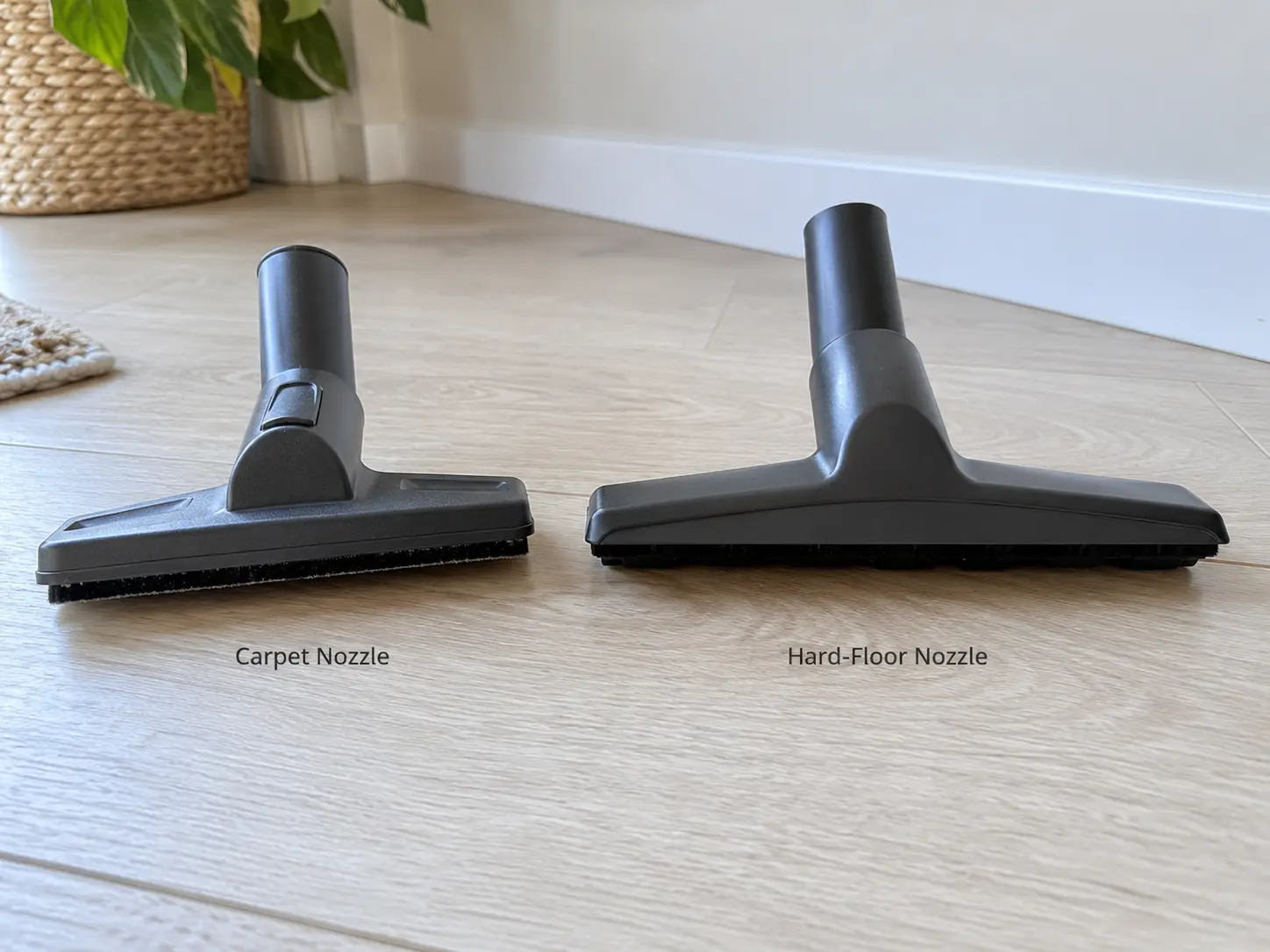
Okay, this is where a lot of buying decisions actually go sideways, because people assume more of either number always means better cleaning. It doesn’t work that way, since these two measurements actually pull against each other depending on the nozzle shape.
Now, think about a garden hose. Squeeze the nozzle tight, and water shoots out with more pressure but less total volume. Loosen it up, and water flows in a bigger volume but with noticeably less force. Vacuums behave the same way, since narrow nozzles boost pressure while wide openings boost airflow instead.
| Feature | High Suction Pressure | High CFM (Airflow) |
|---|---|---|
| Best for | Carpet, rugs, upholstery | Hard floors, larger debris |
| Nozzle type | Narrow attachments | Wide attachments |
| Common on | Cordless stick vacuums | Shop vacs, uprights |
| What it fixes | Dirt embedded deep in fibers | Loose debris sitting on the surface |
What Are Air Watts in a Vacuum Cleaner?
Air watts try to solve the whole pressure-versus-airflow confusion by combining both into one number. So, instead of forcing you to pick one or the other, air watts calculate real cleaning power by factoring in pressure and airflow together.
Now, if you’ve wondered what are air watts in a vacuum spec, you can think of it as the machine’s actual working power, tested under a standardized process rather than a marketing guess. This test was developed by AHAM. It is an appliance industry association, specifically so shoppers could compare vacuums fairly instead of guessing from Pa or CFM alone.
Air watts show up most often on upright and canister vacuums sold across North America, since that’s where AHAM testing is trusted and widely used. A vacuum rated at 200 air watts is generally doing more real cleaning work than one rated at 100, assuming both were tested under matching conditions.
Air Watts vs Regular Watts
- Regular watts measure electricity pulled from your wall outlet. That’s it. On its own, it says nothing about actual suction.
- Air watts measure the output side, meaning real cleaning power reaching the nozzle after pressure and airflow get factored in together.
A motor rated at 1,400 watts is simply drawing 1,400 watts to run, regardless of how efficiently that turns into usable suction. Some motors waste a chunk of that power as heat and noise. Better-engineered motors convert far more of it into real airflow and pressure.
A vacuum with lower regular watts can genuinely outperform a higher-watt competitor, simply because it converts electricity more efficiently. So, you should never assume higher wattage automatically means stronger cleaning.
How Are Air Watts Calculated?
Air watts are calculated by multiplying airflow by suction pressure, then dividing by a fixed constant used throughout the AHAM test:
Air Watts = (Airflow in CFM × Suction Pressure in inches of water lift) ÷ 8.5
Can You Convert Pa or kPa Directly to Air Watts?
No. Air watts need two separate pieces of data: suction pressure and airflow rate. Pa only gives you the pressure half. Without also knowing the CFM figure for that same vacuum, there’s no reliable way to back out an air watts number from a Pa rating alone.
So, if a listing shows only Pa or kPa, with no air watts or CFM anywhere nearby, that usually means the brand tested pressure alone and skipped the more thorough AHAM process. It’s not automatically a red flag, but it does mean you’re only seeing half the performance story.
Pa vs kPa vs Air Watts vs CFM: What’s the Difference?
| Unit | Measures | Best Suited For | Commonly Found On |
|---|---|---|---|
| Pa | Suction pressure | Carpets, pet hair, deep fibers | Cordless stick vacuums |
| kPa | Suction pressure (larger scale) | Same jobs as Pa, bigger machines | Shop vacs, high-end models |
| CFM | Airflow volume | Hard floors, larger debris | Shop vacs, uprights |
| Air Watts | Pressure + airflow combined | Overall real-world performance | Uprights, canisters (AHAM-tested) |
Why a Higher Suction Number Does Not Always Mean Better Cleaning
Basically, this one catches almost everyone off guard when preferring vacuum cleaners, because bigger numbers feel like they should mean better results. But real-world cleaning depends on far more than raw suction power, no matter which unit you’re staring at on the box.
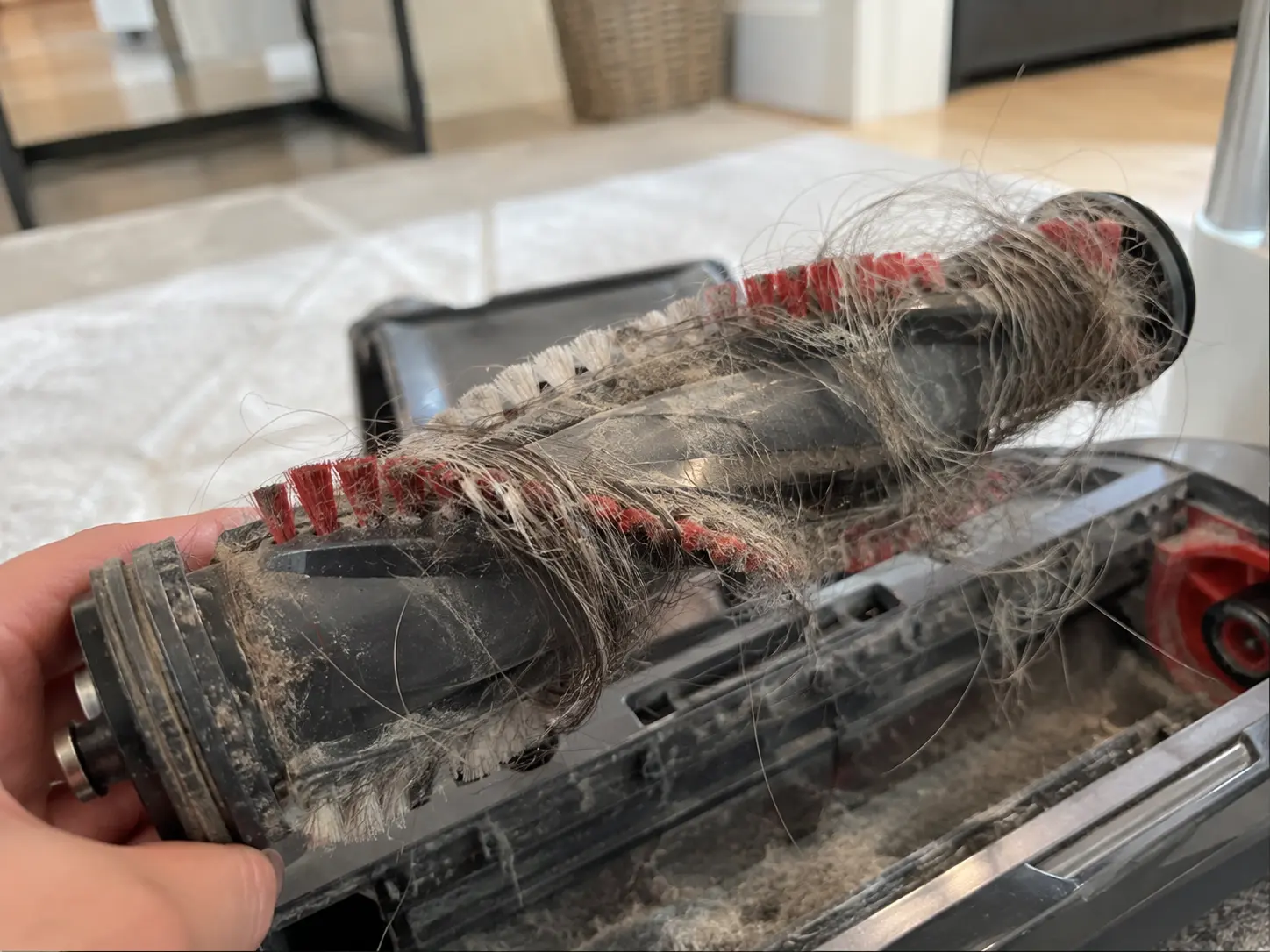
- Brush roll design matters just as much as suction strength, since a stiff, well-spaced brush agitates carpet fibers and loosens dirt before suction even kicks in.
- Filter quality and seal integrity matter too, since any small gap lets outside air leak in and instantly kills pressure at the nozzle.
- Dustbin fullness chokes airflow no matter how powerful the motor claims to be on paper.
- Nozzle shape and hose diameter quietly steal away performance that no spec sheet ever mentions.
A vacuum with modest Pa and air watts numbers, but excellent brush design and tight sealing, often beats a flashier “more powerful” competitor in daily use.
What Is Water Lift, and How Does It Relate to Vacuum Suction?
Water lift is an older suction measurement still used today, especially on American-made and commercial vacuums. It measures suction pressure by checking how many inches high a vacuum can lift a column of water inside a sealed test tube.
Okay, here’s how the test works. Technicians seal the vacuum hose against a water-filled tube, then switch the motor on and watch what happens. The stronger the suction, the higher the water column rises. A vacuum rated at 100 inches of water lift creates noticeably stronger sealed suction than one rated at only 60 inches.
| Water Lift (inches) | Approximate Pa Equivalent |
|---|---|
| 40 inches | ~9,960 Pa |
| 60 inches | ~14,940 Pa |
| 80 inches | ~19,920 Pa |
| 100 inches | ~24,900 Pa |
Water lift and Pa measure the exact same underlying concept, sealed suction pressure, just using different units from different testing traditions.
Actually, one inch of water lift equals roughly 249 Pascals, so you can convert between the two whenever needed. It’s also the exact measurement sitting inside that air watts formula from earlier, showing just how connected all these vacuum suction units really are underneath the surface.
How to Read Vacuum Suction Specifications Before Buying
Now that you understand what each unit measures, here’s how to actually use that knowledge next time you’re comparing vacuums in a store or scrolling through listings online.
- Check which units are listed: A vacuum cleaner showing only Pa or kPa with nothing else nearby means you’re only seeing half the picture.
- Match unit types before comparing: You should never stack a Pa number directly against a CFM or air watts number from a different model.
- Look for AHAM-certified air watts when shopping for uprights or canisters sold in North America, since it’s the most standardized real-world figure available.
- Consider the vacuum type first: A robot vacuum’s Pa rating and a shop vac’s CFM rating simply aren’t meant to sit on the same scale.
- Read beyond the printed number: Brush roll quality, filter type, and seal design shape real performance just as much as any suction spec.
In a nutshell…
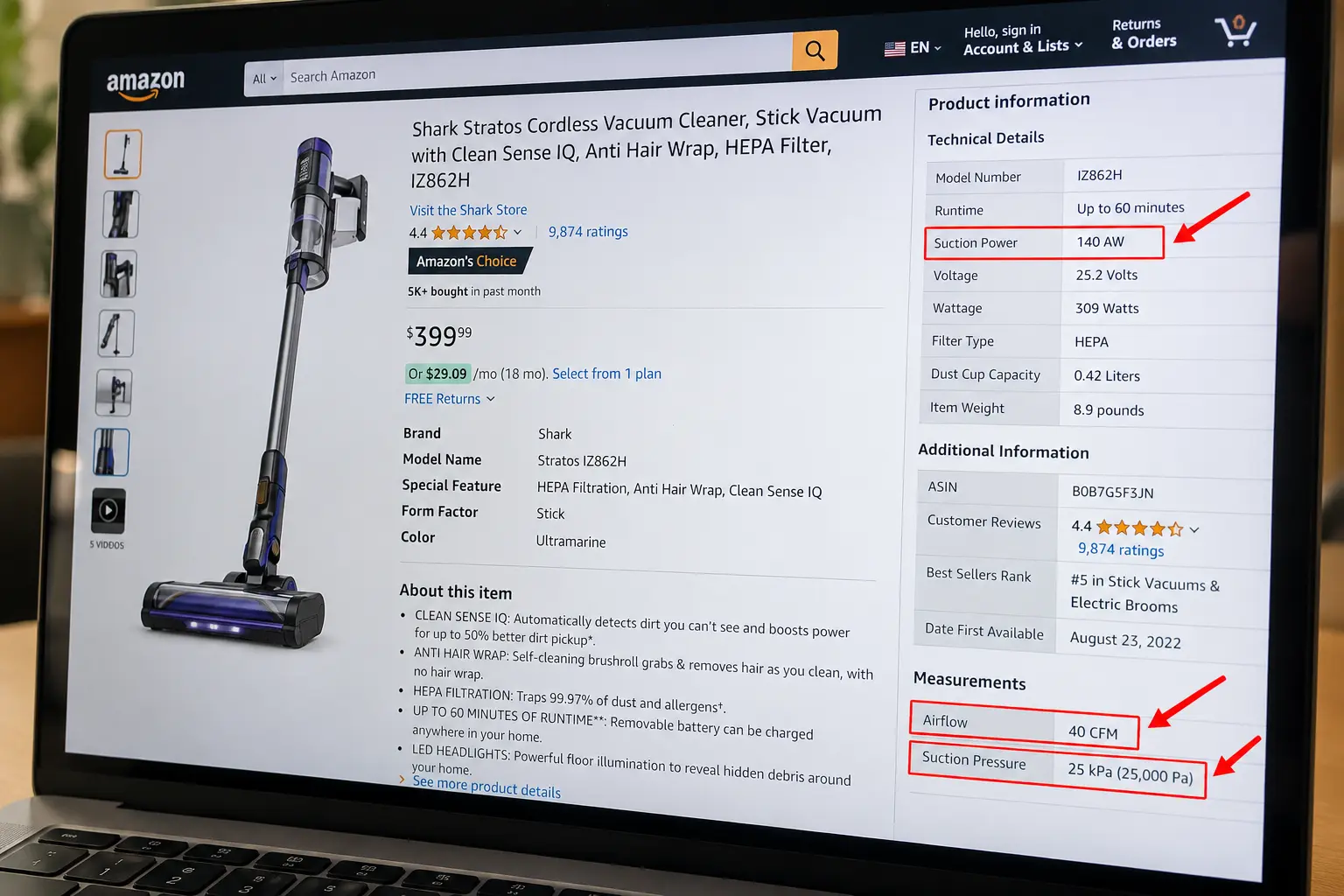
Vacuum suction power isn’t one clean number, no matter how badly marketing teams want it to look that way. Pa and kPa measure pressure. CFM measures airflow. Air watts try to combine both into one honest figure. Water lift is simply an older way of measuring that same pressure concept from decades ago.
Hence, none of these numbers alone tells you everything about how a vacuum cleaner will perform on your actual floors. The smartest thing for you is checking multiple units when they’re available, and then sticking to comparisons within the same vacuum type, and remembering that brush design and sealing matter just as much as any figure on the box.
Read more: Best bagless vacuum cleaners and best handheld vacuum cleaners