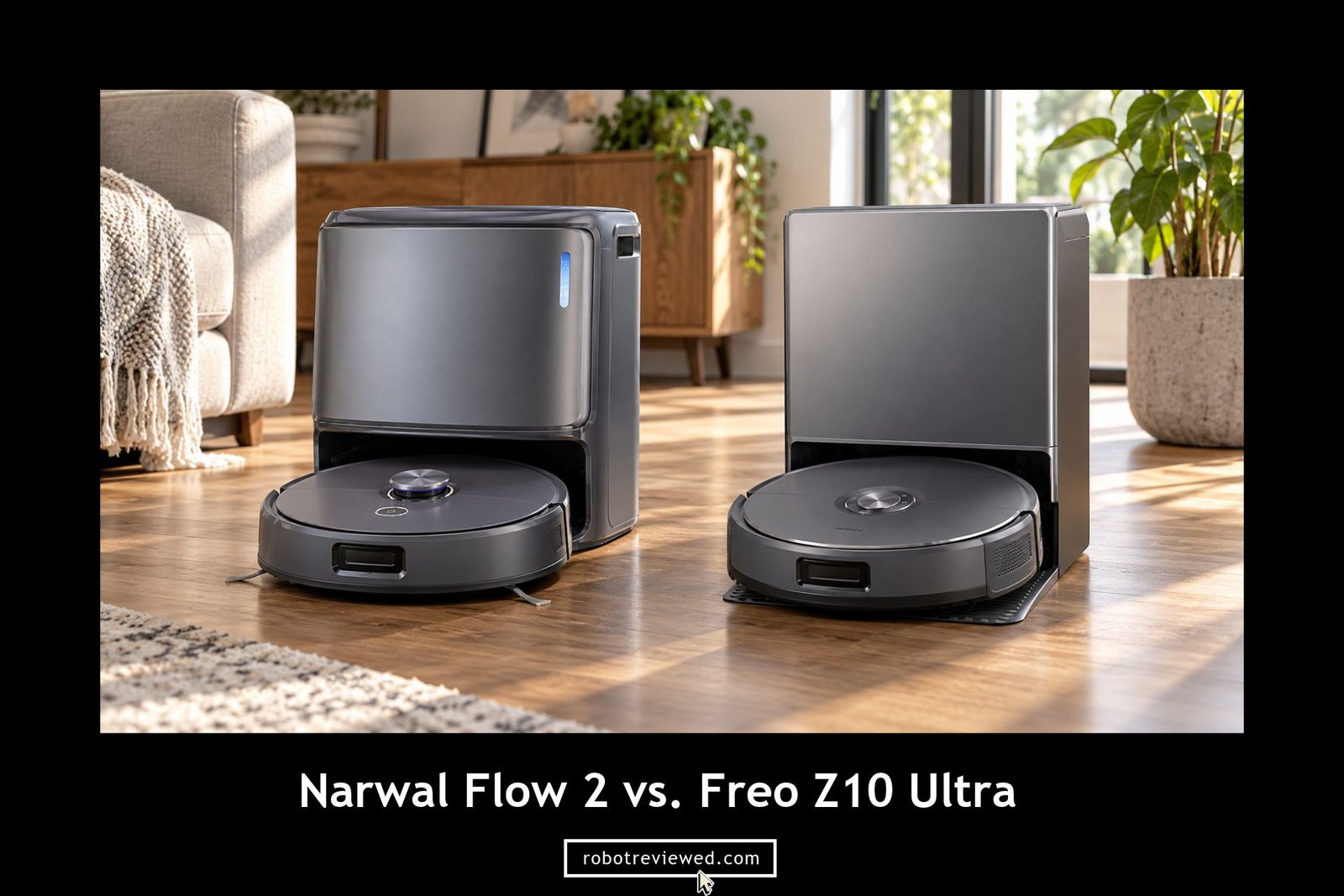
The Narwal Flow 2 vs Narwal Freo Z10 Ultra comparison comes down to one question: should you pay more for newer technology or save money on the previous flagship? Both are premium robot vacuums with powerful suction, AI obstacle avoidance, advanced mopping, and self-cleaning docks.
The newer Flow 2 has some nice updates. It has a track mop that cleans itself as it goes, stronger suction, and it can climb over higher door sills more easily. But the Freo Z10 Ultra still has plenty of cleaning power and smart features. It is still a very good choice, especially if you can get it for a lower price.
So, in this Narwal Flow 2 vs. Freo Z10 Ultra, I’ve compared their cleaning performance, features, and overall value to help you choose the better deal.
TABLE OF CONTENTS Quickly jump to a section
Narwal Flow 2 vs Freo Z10 Ultra: Quick Verdict
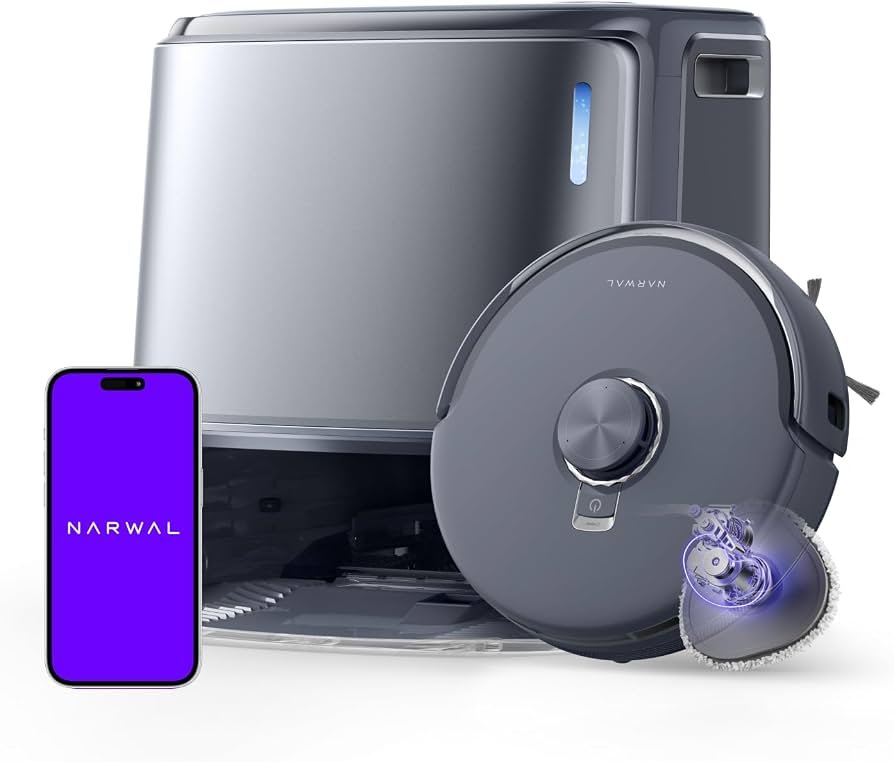
I would choose the Narwal Flow 2 for a home with carpets, raised door thresholds, and low furniture. Its suction is 31,000 Pa, its body is slimmer, and it is better at getting over things. These give it real practical perks. Plus, the FlowWash track mop is another good reason to look at the new model, mostly if your house has big hard floor spaces.
Now, on the other hand, the Narwal Freo Z10 Ultra is my pick for getting more value for your money if it is on a big sale. You still get great object avoidance, solid daily cleaning, and two spinning mops that clean tough stains well. Also, both robotic vacuum cleaners have advanced docking stations. This means you do not lose out on things like automatic dust emptying or mop washing just because you pick the older one.
Compare Robot Vacuums: Narwal Flow 2 vs. Narwal Freo Z10 Ultra

Quick Verdict
What it is: A fast summary of which selected robot leads in the buyer areas that usually change a purchase decision.When it matters: It matters when you want the practical differences first. The picks use editorial scores built from verified specifications and measured performance, not one headline number.Price & Buying Basics
What it is: The core buying details that tell you what the robot costs, when it launched, what it can do, and whether you can realistically buy it.When it matters: It matters when you want to compare two models in the same budget and avoid paying flagship money for features you do not need.| Comparison point | Narwal Flow 2 | Narwal Freo Z10 Ultra |
|---|---|---|
| Typical Current PriceWhat it is: The typical US selling price you can expect to see now, including common direct discounts when they are consistently available.When it matters: It matters because the real street price can change which robot gives you better value even when the original list prices were similar. | $1,299.99; currently listed out of stock on Narwal US. | $999.99 current Narwal US price.Best |
| MSRP / Launch PriceWhat it is: The manufacturer’s original suggested retail or launch price for the robot vacuum.When it matters: It matters when you want to judge how far a model has fallen in price and how the brand originally positioned it. | $1,499.99 | $1,299.99 |
| Release Generation / YearWhat it is: The year or product generation in which the model first reached the market.When it matters: It matters because newer generations often improve obstacle avoidance, docking, software support, and long-term parts availability. | 2026 | 2025 |
| Vacuum TypeWhat it is: Whether the robot only vacuums or combines vacuuming with an active mopping system.When it matters: It matters if you have hard floors and want one machine to handle both dry debris and routine floor washing. | Vacuum + mop | Vacuum + mop |
| US AvailabilityWhat it is: Whether the model is currently sold and supported through normal US retail or official channels.When it matters: It matters because a great specification sheet is less useful if you cannot easily buy the robot, consumables, or warranty support where you live. | Current; temporarily out of stock on Narwal US at verification. | Current |
| Included AccessoriesWhat it is: The brushes, mop pads, dust bags, filters, cleaning solution, spare parts, and other extras included in the box.When it matters: It matters when you compare total purchase value because one bundle can save you from buying common replacement items immediately. | Robot, basic station and standard installed cleaning components. | Robot, base station, 2.5 L dust bag, floor detergent, mop cloths, side brushes, zero-tangle roller brush, power cord, ramp, dustbin filter and manual. |
Vacuuming Hardware & Performance
What it is: The brush, suction, filtration, hair-control, and real pickup factors that determine how well the robot handles dry cleaning.When it matters: It matters most if you have carpet, pets, long hair, heavy crumbs, or rooms where vacuuming performance is more important than mopping.| Comparison point | Narwal Flow 2 | Narwal Freo Z10 Ultra |
|---|---|---|
| Maximum Claimed SuctionWhat it is: The manufacturer’s highest claimed suction level, usually measured in pascals (Pa).When it matters: It matters as one hardware reference, but you should not assume the robot with the largest Pa number automatically cleans carpet better. | 31,000 Pa | 18,000 Pa |
| Main Brush DesignWhat it is: The primary roller or roller pair underneath the robot that agitates flooring and feeds debris into the suction path.When it matters: It matters because brush shape and contact can change carpet pickup, hard-floor pickup, hair handling, and maintenance. | Zero-Tangling Floating Roller Brush | Zero-tangling floating roller brush |
| Anti-Tangle SystemWhat it is: The combs, cutting elements, tapered rollers, or brush geometry designed to stop hair from wrapping around moving parts.When it matters: It matters if you have pets or long hair because a good system can reduce how often you need to cut hair from the brush. | DualFlow Tangle-Free system; 0% wrap with 7-inch hair in the test. | DualFlow Tangle-Free System; 0% hair tangling in certification testing. |
| Side Brush / Extending Side BrushWhat it is: The side-sweeping brush and any extension mechanism used to pull debris away from walls and corners.When it matters: It matters when dust, crumbs, and pet hair collect along baseboards or around furniture legs. | Dynamic Auto De-Tangling side brushes | Dynamic auto-detangling side brushes |
| Main Brush LiftWhat it is: Whether the main vacuuming brush can lift away from the floor for certain cleaning modes or wet-only passes.When it matters: It matters if you want the robot to avoid dragging a dirty brush across freshly mopped areas or adapt more cleanly between tasks. | Not confirmed | Not confirmed |
| Automatic Carpet Suction BoostWhat it is: Whether the robot detects carpet and automatically increases suction or changes its vacuuming behavior.When it matters: It matters if you have mixed flooring and want stronger carpet cleaning without running maximum power on every hard-floor section. | Yes | Yes; up to 160% suction boost on carpet. |
| Filtration SystemWhat it is: The type of filter and internal air path used to capture fine dust after debris enters the robot.When it matters: It matters if you care about fine-particle control, have allergies, or want less dust blown back into the room. | Replaceable filter | Replaceable dustbin filter |
| Onboard Dustbin CapacityWhat it is: The amount of dry debris the robot can hold before it needs to empty into the dock or be emptied manually.When it matters: It matters if you have pets, a large home, or a model without auto-emptying because a small bin can fill during one cleaning run. | Capacity not listed | 300 mL |
| Hard Floor CleaningWhat it is: How effectively the robot picks up dust, crumbs, hair, and mixed debris from tile, hardwood, laminate, vinyl, and similar floors.When it matters: It matters if most of your home is hard flooring and you want consistently clean floors without repeated passes. | Very good; strong routine debris pickup with good hair handling. | Very good; strong everyday pickup with adaptive wet/dry cleaning. |
| Carpet CleaningWhat it is: How well the robot removes normal surface and embedded debris from rugs and carpet.When it matters: It matters if a meaningful part of your home is carpeted and you need more than basic surface pickup. | Very good; above-average embedded-debris removal. | Good; 18,000 Pa suction, carpet boost and four carpet modes handle mixed-floor homes well. |
| Deep Carpet PerformanceWhat it is: How well the robot removes heavier or more deeply embedded debris from medium- and high-pile carpet.When it matters: It matters if you have thick carpet, shedding pets, or rooms where debris tends to settle below the surface fibers. | 84% embedded-sand pickup on medium-pile carpet. | No comparable test |
| Pet Hair PickupWhat it is: How effectively the robot collects dog or cat hair from hard floors and carpet while keeping brush wrap under control.When it matters: It matters if pets shed daily and you want frequent automated cleaning without constant brush maintenance. | 88% pickup of flattened 2.5-inch pet hair on carpet. | Very good; the tangle-free brush system keeps hair maintenance low. |
| Long Hair HandlingWhat it is: How well the robot collects long human hair and prevents it from winding around the main brush, side brush, and axles.When it matters: It matters if anyone in your home has long hair because hair wrap can quickly reduce performance and increase maintenance. | Excellent; 0% wrap with 7-inch hair. | Excellent; 0% brush tangling in certification testing. |
| Edge & Corner VacuumingWhat it is: How closely the robot can collect dry debris along walls, baseboards, cabinet edges, and inside corners.When it matters: It matters because round robots often leave visible debris at room boundaries even when the open floor looks clean. | Very good; tangle-resistant side brushes and EdgeReach improve corner and wall coverage. | Good; dynamic side brushes handle wall edges while EdgeReach mainly improves mopping coverage. |
Mopping & Floor Care
What it is: The mop hardware, water control, carpet protection, edge reach, and stain-cleaning behavior that determine how useful the robot is as a floor washer.When it matters: It matters if you want the robot to do more than wipe dust and actually reduce how often you need to mop hard floors yourself.| Comparison point | Narwal Flow 2 | Narwal Freo Z10 Ultra |
|---|---|---|
| Mop System / Mop TypeWhat it is: The physical mopping design, such as spinning pads, a vibrating plate, roller mop, track mop, or passive cloth.When it matters: It matters because different systems vary widely in scrubbing strength, fresh-water use, carpet handling, and edge reach. | FlowWash self-cleaning rolling track mop | Dual triangular spinning mop pads with EdgeReach |
| Mop Speed / PressureWhat it is: The stated scrubbing speed, downward pressure, or other mechanical force applied by the mop system.When it matters: It matters when you regularly deal with dried footprints, kitchen residue, or stains that need more than a light wet wipe. | 7–12 N adaptive downward pressure. | 180 RPM with up to 8 N downward pressure. |
| Edge Mop ExtensionWhat it is: Whether the mop can move outward to reach closer to walls, cabinet toe-kicks, and furniture edges.When it matters: It matters if you want fewer narrow dry strips left around the perimeter of your rooms. | EdgeReach extendable track mop | EdgeReach triangular extendable mop |
| Mop Edge Reach / Extension DistanceWhat it is: How far the active mop can physically extend toward walls or beyond the normal robot body.When it matters: It matters when you compare two extending systems because both may say “edge mopping” while reaching noticeably different distances. | Millimeter-level edge cleaning. | 0 mm claimed edge gap along supported edges. |
| Mop Lift HeightWhat it is: How far the mop can lift above the floor when the robot detects carpet or switches cleaning modes.When it matters: It matters if you have low- or medium-pile rugs and want the robot to cross them without leaving the carpet damp. | Up to 12 mm; about 10 mm was observed in carpet testing. | 12 mm |
| Automatic Mop Removal / Carpet StrategyWhat it is: Whether the robot removes, lifts, shields, avoids, or otherwise manages its wet mop when it encounters carpet.When it matters: It matters if your home mixes carpet and hard flooring because the strategy determines how safely one run can clean both surfaces. | Mop lifts over carpet; automatic dock-side mop removal is not supported. | No; the mop pads lift on carpet. |
| Water Flow ControlWhat it is: How the robot controls the amount of clean water delivered to the mop during a cleaning pass.When it matters: It matters if you have delicate wood floors, very dirty tile, or rooms that need different moisture levels. | AI-adaptive water control with real-time mop rinsing. | Adaptive water control with DirtSense 2.0. |
| Onboard Clean-Water CapacityWhat it is: The amount of clean water the robot carries internally for mopping between dock visits.When it matters: It matters in large hard-floor areas because a larger or continuously supplied tank can reduce interruptions. | 130 mL | Auto-refilled |
| Self-Cleaning Mop During OperationWhat it is: Whether the robot returns to the dock or refreshes the mop during a cleaning job instead of using the same dirty surface everywhere.When it matters: It matters if you clean large or dirty areas and want to reduce the chance of spreading grime from one room to another. | Yes; the track mop continuously refreshes itself with clean water while mopping. | Returns to the dock during longer jobs to rewash the mop pads. |
| Dirt Detection & Automatic Rewash / RemopWhat it is: Whether the system detects unusually dirty water or stubborn areas and automatically washes the mop or cleans the area again.When it matters: It matters if you want the robot to react to real floor conditions instead of following the same fixed pass everywhere. | Yes; smart stain detection can adjust cleaning for dirtier areas. | Yes; visual dirt detection can trigger repeated washing and cleaning cycles. |
| Active Mopping Width / Floor ContactWhat it is: The approximate width or amount of floor the active mop cleans on each pass.When it matters: It matters because broader consistent contact can improve coverage efficiency and reduce narrow missed strips. | Track mop | Dual triangular pads + extendable side mop. |
| Cleaning Solution CompatibilityWhat it is: Which cleaning solutions the manufacturer allows you to use in the robot or dock without risking damage or warranty issues.When it matters: It matters if you want more than water-only mopping or prefer to use a specific approved floor-cleaning solution. | Automatic detergent dispensing. | Automatic detergent dispensing. |
| Mopping / Stain Removal PerformanceWhat it is: How well the robot removes fresh and dried residue in real use rather than simply wetting the floor.When it matters: It matters if you expect the robot to meaningfully replace routine manual mopping instead of only maintaining already-clean floors. | Mixed in the standardized stain test; 68-point dried-stain result with very low dirty-water carryover. | Excellent for hard-floor stain removal, edge scrubbing and adaptive re-cleaning.Best |
Navigation & Obstacle Avoidance
What it is: The sensors, mapping logic, object recognition, and route planning that determine how reliably the robot moves through your home.When it matters: It matters if your rooms are cluttered, you have pets or children, or you want the robot to finish jobs without frequent rescues.| Comparison point | Narwal Flow 2 | Narwal Freo Z10 Ultra |
|---|---|---|
| Navigation SystemWhat it is: The main mapping and positioning technology the robot uses, such as LiDAR, structured light, cameras, or sensor fusion.When it matters: It matters because good navigation helps the robot clean systematically, return to its dock reliably, and avoid wasting time on repeated paths. | NarMind Pro with vision-language-model navigation | LiDAR 4.0 + dual RGB cameras + dual AI chips + structured-light sensing |
| LiDAR / Navigation Sensor DesignWhat it is: Whether the navigation sensor is fixed, retractable, side-mounted, solid-state, or absent.When it matters: It matters if you need a low robot for furniture clearance or want to understand how it keeps accurate position in different rooms. | Camera-led TrueView 3D mapping; no raised spinning LiDAR turret. | Top-mounted LiDAR turret |
| Obstacle-Avoidance HardwareWhat it is: The cameras, lasers, structured-light sensors, 3D sensors, or other hardware used to detect objects in the robot’s path.When it matters: It matters if cables, shoes, toys, pet bowls, and other small items are often left on your floor. | Dual 1080p RGB cameras + side structured light | Dual 136° RGB cameras + dual AI chips + structured-light depth sensing |
| Small-Object Avoidance PerformanceWhat it is: How reliably the robot recognizes and steers around small household objects rather than pushing, tangling, or climbing onto them.When it matters: It matters if you do not want to fully tidy the floor before every automated cleaning run. | Very good; 20/24 obstacles avoided in the test. | Excellent; recognizes 200+ object types and detects objects down to about 5 mm. |
| Camera / Visual RecognitionWhat it is: Whether the robot uses a camera or visual system to identify obstacles, rooms, stains, pets, or other scene information.When it matters: It matters if you want stronger object recognition, while also being relevant if you prefer a robot without an onboard camera. | TwinAI visual recognition with a vision-language model. | TwinAI visual recognition with on-device processing. |
| Recognized Object TypesWhat it is: The number or range of object categories the manufacturer says the robot can identify, such as shoes, cables, toys, or pet waste.When it matters: It matters when comparing obstacle systems because broad recognition can reduce avoidable tangles and interruptions in busy homes. | Unlimited recognition model | 200+ types |
| Low-Light / Dark-Room NavigationWhat it is: How well the navigation and obstacle system continues working when the room is dim or completely dark.When it matters: It matters if you schedule cleaning at night, have dark hallways, or want reliable cleaning without keeping lights on. | Very good; side structured light assists object detection in darker areas. | Very good; LED headlights assist obstacle recognition in dim rooms. |
| Pet Waste AvoidanceWhat it is: Whether the robot is designed to recognize and avoid pet waste or similarly risky floor objects.When it matters: It matters especially if you have indoor pets because one avoidance failure can turn a small accident into a much larger mess. | Yes; Pet Care 2.0 and AI object recognition support pet-area and waste avoidance. | Yes; AI object recognition supports pet-waste avoidance. |
| Navigation & Coverage EfficiencyWhat it is: How logically the robot plans routes, covers rooms, minimizes unnecessary overlap, and finishes a cleaning job.When it matters: It matters in larger homes because efficient routing saves battery, reduces cleaning time, and lowers the chance of missed areas. | Fast; the test floor plan was completed in 38 minutes. | Quick mapping takes about 6 minutes; route planning is systematic across rooms. |
| Map Accuracy & Room RecognitionWhat it is: How accurately the robot creates room boundaries, recognizes spaces, and keeps its map stable over repeated cleaning runs.When it matters: It matters if you rely on room-specific schedules, no-go zones, or precise zone cleaning. | Very good; TrueView 3D mapping with detailed room and object information. | Very good; 4-layer 3D maps with multi-floor support and detailed room controls.Best |
| Carpet Detection & RecognitionWhat it is: How the robot identifies rugs and carpet and uses that information to change suction, mopping, or route behavior.When it matters: It matters in mixed-floor homes because poor carpet detection can reduce vacuuming performance or cause wet-mop mistakes. | Yes; Avoid, Cross, Carpet Boost and Vacuum-and-Mop carpet modes. | Yes; four carpet modes plus 12 mm mop lift. |
Mobility, Dimensions & Home Fit
What it is: The robot and dock dimensions plus the chassis features that determine where the system can physically travel and fit in your home.When it matters: It matters if you have low furniture, tall thresholds, tight spaces, multiple floors, or limited room for a large dock.| Comparison point | Narwal Flow 2 | Narwal Freo Z10 Ultra |
|---|---|---|
| Robot HeightWhat it is: The maximum height of the robot, including any raised navigation sensor in its normal operating position.When it matters: It matters if you want the robot to clean under beds, sofas, cabinets, or other low furniture. | 3.74 in / 95 mm | 4.31 in / 109.6 mm |
| Robot Width / DiameterWhat it is: The overall width or diameter of the robot body.When it matters: It matters if you have narrow chair gaps, tight passages, or furniture layouts where a wider robot may not fit. | 13.8 × 14.3 in / 351.2 × 363.5 mm | 13.98 × 13.78 in / 355 × 350 mm |
| Robot WeightWhat it is: The approximate weight of the robot itself without the dock.When it matters: It matters if you plan to carry the robot between floors or frequently move it for maintenance. | Weight not listed | 9.92 lb / 4.5 kg |
| Maximum Threshold CrossingWhat it is: The tallest single or multi-step threshold the manufacturer claims the robot can cross.When it matters: It matters if you have raised transitions, sliding-door tracks, thick rug edges, or room dividers that stop ordinary robots. | Official: 30 mm single / 40 mm tiered. A 38 mm single threshold was cleared in the test. | 20 mm |
| Chassis Lift / Suspension SystemWhat it is: Whether the robot can raise or actively adjust its body, wheels, or suspension to clear obstacles and floor transitions.When it matters: It matters in homes with uneven flooring or tall transitions where ordinary fixed-wheel robots may become stuck. | No dedicated chassis-lift system. | No dedicated chassis-lift system. |
| Dock DimensionsWhat it is: The physical width, depth, and height of the charging and maintenance station.When it matters: It matters if your charging area is tight or you want the dock to fit cleanly beside cabinets, furniture, or an outlet. | 17.7 × 14.2 × 20.9 in / 450 × 360 × 530 mm | 16.96 × 18.19 × 15.29 in / 430.8 × 462 × 388.3 mm |
| Low-Furniture Cleaning AbilityWhat it is: How the robot’s height and sensor design affect its ability to enter and clean beneath low furniture.When it matters: It matters if dust collects under beds and sofas that you do not want to move during normal cleaning. | Good; 95 mm body with no raised spinning LiDAR turret.Best | Average; 109.6 mm body is taller than many current low-profile flagships. |
Dock & Hands-Off Maintenance
What it is: The dock features that empty debris, wash and dry mops, manage water, dose detergent, and reduce routine hands-on cleaning.When it matters: It matters if you are paying for a premium robot mainly because you want days or weeks of cleaning with minimal intervention.| Comparison point | Narwal Flow 2 | Narwal Freo Z10 Ultra |
|---|---|---|
| Automatic Dust EmptyingWhat it is: Whether the dock removes dry debris from the robot’s onboard dustbin after cleaning.When it matters: It matters if you want to avoid emptying a small robot bin after every run, especially in homes with pets. | Yes | Yes |
| Bagged or Bagless DockWhat it is: Whether collected dust is stored in a disposable bag, reusable cyclone/bin, or another dock system.When it matters: It matters because bagged docks are cleaner to empty while bagless systems can reduce ongoing consumable costs. | Bagged | Bagged |
| Dock Dust Storage CapacityWhat it is: How much dry debris the dock can hold, or the manufacturer’s claimed time between dust-container changes.When it matters: It matters if you want longer hands-off periods before you need to replace a bag or empty a dock bin. | 2.5 L dust bag; up to 120 days between changes under light-use conditions. | 2.5 L; up to about 120 days between changes under light-use conditions. |
| Automatic Mop Washing + TemperatureWhat it is: Whether the dock washes the mop automatically and the maximum stated wash-water temperature when heat is used.When it matters: It matters if you clean greasy or dirty floors because hotter washing can help clean the mop itself between runs. | 113–176°F / 45–80°C adaptive wash | Adaptive 113°F–167°F / 45°C–75°C |
| Heated Mop DryingWhat it is: Whether the dock dries wet mop components with warm or heated air and, when stated, how long or how hot the cycle runs.When it matters: It matters if you want to reduce damp odors and avoid leaving wet mop material sitting in the dock for hours. | Yes; warm-air drying. | 104°F / 40°C warm-air drying |
| Automatic Water RefillingWhat it is: Whether the dock automatically refills the robot’s onboard clean-water supply for continued mopping.When it matters: It matters if you have a large hard-floor area and do not want to refill a small tank during a cleaning job. | Yes | Yes |
| Automatic Detergent DispensingWhat it is: Whether the dock can automatically meter approved cleaning solution into the mopping system.When it matters: It matters if you want consistent detergent use without manually measuring solution for every cleaning cycle. | Yes; automatic dosing | Yes; automatic dispensing |
| Dock Self-CleaningWhat it is: How much of the wash tray or dock interior can rinse or clean itself after dirty mop-water cycles.When it matters: It matters because even a highly automated dock can become unpleasant maintenance if grime collects in areas you must scrub by hand. | Yes; active water-tank self-cleaning and hot-water maintenance cycle. | Yes |
| Clean-Water Tank CapacityWhat it is: The amount of clean water the dock stores for washing mops and refilling the robot.When it matters: It matters if you mop frequently or have a large home because larger tanks generally need fewer manual refills. | Capacity not listed | Capacity not listed |
| Dirty-Water Tank CapacityWhat it is: The amount of used mop water the dock can hold before you need to empty it.When it matters: It matters if you want several mopping runs between maintenance visits without risking an unexpectedly full dirty-water tank. | Capacity not listed | Capacity not listed |
| Removable Wash Tray / BaseWhat it is: Whether the part of the dock that collects mop grime can be removed for deeper manual cleaning.When it matters: It matters because removable parts are usually easier to rinse thoroughly when automatic dock cleaning is not enough. | Tray not specified | Tray not specified |
| Automatic Water & Drain Plumbing OptionWhat it is: Whether the dock supports an optional direct clean-water supply and wastewater drain kit instead of refillable tanks.When it matters: It matters if you can install the dock near plumbing and want the closest thing to truly hands-off water management. | Optional auto-refill and drainage version. | Optional automatic water exchange system |
Battery & Coverage
What it is: The battery size, runtime, charging behavior, and resume features that determine how comfortably the robot can cover larger homes.When it matters: It matters if a single floor is large, you use high-power modes often, or you do not want long charging pauses in the middle of a cleaning job.| Comparison point | Narwal Flow 2 | Narwal Freo Z10 Ultra |
|---|---|---|
| Battery CapacityWhat it is: The rated capacity of the rechargeable battery, usually stated in milliamp-hours (mAh).When it matters: It matters as a useful hardware reference for larger homes, although software efficiency and cleaning power also strongly affect real runtime. | 7,000 mAhBest | 6,400 mAh |
| Claimed RuntimeWhat it is: The manufacturer’s maximum stated operating time under its specified test mode.When it matters: It matters if you have a large floor plan, but you should compare it with the cleaning mode because maximum runtime is often measured at low power. | Up to 275 min; up to about 4,800 ft² claimed coverage. | Up to about 240 min |
| Recharge & ResumeWhat it is: Whether the robot can return to the dock when low, recharge, and continue the unfinished cleaning job automatically.When it matters: It matters if your home is too large to finish on one battery or you regularly use stronger suction and mopping settings. | Yes | Yes |
| Approximate Charging TimeWhat it is: How long the battery typically needs to recharge from low power to a usable or full charge when the manufacturer states it.When it matters: It matters if the robot frequently needs a mid-job recharge or you run multiple cleaning sessions in the same day. | No official time | About 3.5 hours |
| Fast / Smart ChargingWhat it is: Whether the robot supports accelerated charging, partial recharge logic, off-peak charging, or other battery-management features.When it matters: It matters if you want shorter interruptions, lower energy costs, or faster completion of large cleaning jobs. | Charging is boosted during mop-washing dock visits. | No fast-charge claim |
App, Mapping & Smart Home
What it is: The software controls that let you edit maps, automate rooms, watch the robot remotely, and connect it with the rest of your smart home.When it matters: It matters if you want detailed routines and room-by-room control instead of treating the robot as a simple start-and-stop appliance.| Comparison point | Narwal Flow 2 | Narwal Freo Z10 Ultra |
|---|---|---|
| App & Core Mapping FeaturesWhat it is: The main app tools for maps, rooms, zones, schedules, no-go areas, cleaning settings, and map editing.When it matters: It matters if you want precise control over where, when, and how the robot cleans each part of your home. | Freo Mind 4.0, TrueView 3D maps, room editing, no-go zones, schedules and scenario-based cleaning. | 3D maps, room controls, no-go zones, DirtSense settings, pet zones and cleaning history. |
| Multi-Floor MappingWhat it is: Whether the app can save and manage separate maps for more than one level of your home.When it matters: It matters if you carry the robot between floors and want room names, zones, and cleaning settings preserved on each level. | Yes | Yes |
| Routines & Room-Level CustomizationWhat it is: How deeply you can customize suction, mop settings, cleaning order, passes, and schedules by room or routine.When it matters: It matters if different rooms need different cleaning behavior and you want those choices to run automatically. | Room order, cleaning intensity, Pet Care 2.0, Baby Care and custom floor strategies. | Room schedules, carpet modes, pet-area cleaning, wet/dry strategies and adaptive cleaning. |
| Remote Camera / Pet FeaturesWhat it is: Whether the robot offers live viewing, two-way audio, pet finding, snapshots, patrols, or similar camera-based features.When it matters: It matters if you want the robot to double as a simple home or pet-monitoring device and you are comfortable using its camera features. | Yes; video calling and Find Pet features. | Yes; video calls, pet snapshots and pet-area monitoring. |
| Voice Assistant & Smart-Home SupportWhat it is: The voice assistants and smart-home ecosystems the robot officially supports, such as Alexa, Google Home, or Siri shortcuts.When it matters: It matters if you want cleaning to start from voice commands, routines, or other smart-home automations you already use. | Hey Nawa with NarGPT, Alexa, Siri and Google Assistant. | Built-in Narwal voice control plus Alexa, Siri and Google Home. |
| Matter SupportWhat it is: Whether the robot officially supports the Matter smart-home standard and which controls are available through it.When it matters: It matters if you want broader cross-platform automation and prefer not to depend entirely on one brand’s app ecosystem. | No Matter confirmation | No Matter confirmation |
Ownership, Noise & Value
What it is: The long-term factors that affect how pleasant and economical the robot is to live with after the initial purchase.When it matters: It matters if you plan to keep an expensive robot for several years and want predictable maintenance, parts, noise, and overall value.| Comparison point | Narwal Flow 2 | Narwal Freo Z10 Ultra |
|---|---|---|
| WarrantyWhat it is: The manufacturer’s stated warranty period and basic coverage for the robot and, where specified, its dock.When it matters: It matters more on premium models because batteries, sensors, motors, and complex docks can be expensive to repair or replace. | 1-year limited warranty in the US | 1-year limited warranty in the US |
| Noise LevelWhat it is: How loud the robot and dock are during vacuuming, auto-emptying, mop washing, and drying when reliable measurements or observations are available.When it matters: It matters if you clean while working, have sleeping children, live in an apartment, or run the robot at night. | Under 56.5 dB; Baby Care mode targets about 56 dB. | About 53 dB in basic cleaning mode. |
| Consumables & Replacement PartsWhat it is: How easy it is to buy genuine or compatible bags, filters, brushes, mop components, detergent, batteries, and other wear items.When it matters: It matters if you want to keep the robot useful for years without hunting for discontinued or unusually expensive consumables. | Replaceable 2.5 L dust bags, roller mop, brushes, filter and detergent. | Replaceable 2.5 L dust bags, triangular mop pads, filter, roller brush, side brushes and detergent. |
| Overall Value for MoneyWhat it is: Our buyer-focused judgment of how much useful cleaning performance, automation, and ownership convenience you receive for the real selling price.When it matters: It matters when two robots are both good but one gives you the features you will actually use for substantially less money. | Good at $1,299 if you prioritize AI obstacle avoidance, long runtime and hands-off maintenance. | Good near $1,000 if obstacle avoidance, tangle resistance and hard-floor mopping matter more than a low-profile body.Best |
What Does the Narwal Flow 2 Actually Do Better?
Rolling Track Mop vs Spinning Mop Pads
The biggest difference between these two robots is how they mop your floor. The Narwal Flow 2 uses a FlowWash rolling track mop. It keeps washing itself with clean water while it cleans the floor. It also pushes down with a pressure between 7 and 12 N to help lift dirt. Mainly, I like how this system works because the mop does not drag a dirty pad across the whole room.
The Freo Z10 Ultra does it differently. It has two triangular spinning mop pads. They spin at 180 RPM, push down with up to 8 N of pressure, and can move out toward walls using EdgeReach. Its DirtSense 2.0 system can also find dirty spots and clean them again if needed. When it does long cleaning jobs, the pads go back to the station to wash instead of rinsing while moving.
Does this mean the Flow 2 takes out stains better? Not really.
The Flow 2 got a 68-point score in the dried-stain test. That was a bit less impressive than its mopping design made it sound. But it was good that it left very little dirty water behind. Our comparison scores also point to the Freo Z10 Ultra for overall mopping, even though we do not have a test that matches dried stains directly for both models.
Verdict: I would pick the Flow 2 for its mop system that keeps rinsing, but I would not pay more money expecting it to get every single stain out better.
Read: Best robot vacuum with mop
31,000 Pa vs 18,000 Pa
The Flow 2 looks better on paper because it has 31,000 Pa suction. The Freo Z10 Ultra has 18,000 Pa suction. In the deep cleaning test, the Flow 2 took out 84% of sand stuck deep in medium-pile carpet. It also picked up 88% of pet hair that was flat on the floor, and its brush did not get tangled with seven-inch hair.
These results mean it is a strong choice for homes that have a lot of carpets and pets.
The Freo Z10 Ultra still cleans regular carpet dirt well because it has carpet boost and a brush that avoids tangles. Both robots use Narwal’s DualFlow system to stop tangles, so you do not have to clean the brush very often under normal use.
Verdict: I would pick the Flow 2 if you need heavy carpet cleaning, but I would not upgrade just for the suction if your house has mostly hard floors.
Read: Best robot vacuums for pet owners and best robot vacuums for carpet cleaning
Low Furniture and Door Thresholds: Where the Flow 2 Has an Advantage
The slimmer size of the Flow 2 makes a bigger difference than some of its software updates. It is only 95 mm tall. The Freo Z10 Ultra is 109.6 mm tall. That 14.6 mm difference can mean the robot goes under your sofa or has to skip the whole spot. The Flow 2 also does not have the raised LiDAR tower that is on the Z10 Ultra.
How well robot vacuum climbs over door sills is also a big upgrade. The Flow 2 is rated for 30 mm on a single door sill and 40 mm for stepped ones. In a recorded test, it even went over a 38 mm single door sill, though how it works can change based on the shape of the obstacle.
The Freo Z10 Ultra has a lower limit of 20 mm for door sills. So, if your home has high door sills, uneven floors between rooms, or low furniture, I think these changes give you a better reason to spend the extra money.
What Do You Give Up by Buying the Older Freo Z10 Ultra?
You’re mainly giving up the Flow 2’s newer mopping design, slimmer body, stronger suction, and improved threshold crossing. Plus, the older Z10 Ultra also has a smaller 6,400 mAh battery, compared with 7,000 mAh on the Flow 2.
Still, both models offer plenty of hands-off cleaning features, including:
- Automatic dust emptying into a 2.5 L dock bag.
- Hot-water mop washing and warm-air drying.
- Automatic detergent dispensing and water refilling.
- AI obstacle avoidance, room mapping, and customized cleaning schedules.
- Both robot vacuums can also raise their mops over carpets and support pet-focused cleaning features.
Final Verdict: Buy the Narwal Flow 2 or Save on the Freo Z10 Ultra?
The Narwal Flow 2 is obviously the more advanced robot vacuum cleaner, but I don’t consider it the automatic winner for every home.
Its stronger suction, lower body, and higher threshold clearance make it the better choice for demanding floor plans. The continuously rinsing track mop is also useful, although its recorded stain-removal performance leaves room for improvement.
Now, on the other hand, the Freo Z10 Ultra still delivers strong cleaning, excellent obstacle avoidance, and a capable self-maintaining dock. My recommendation is to buy the Freo Z10 Ultra when it’s around $300 cheaper, provided your home doesn’t need the Flow 2’s extra clearance.
I would say: the Flow 2 becomes much more attractive once the price difference drops, particularly for homes with carpets, raised thresholds, or low furniture.
Check out: Most reliable vacuum cleaners