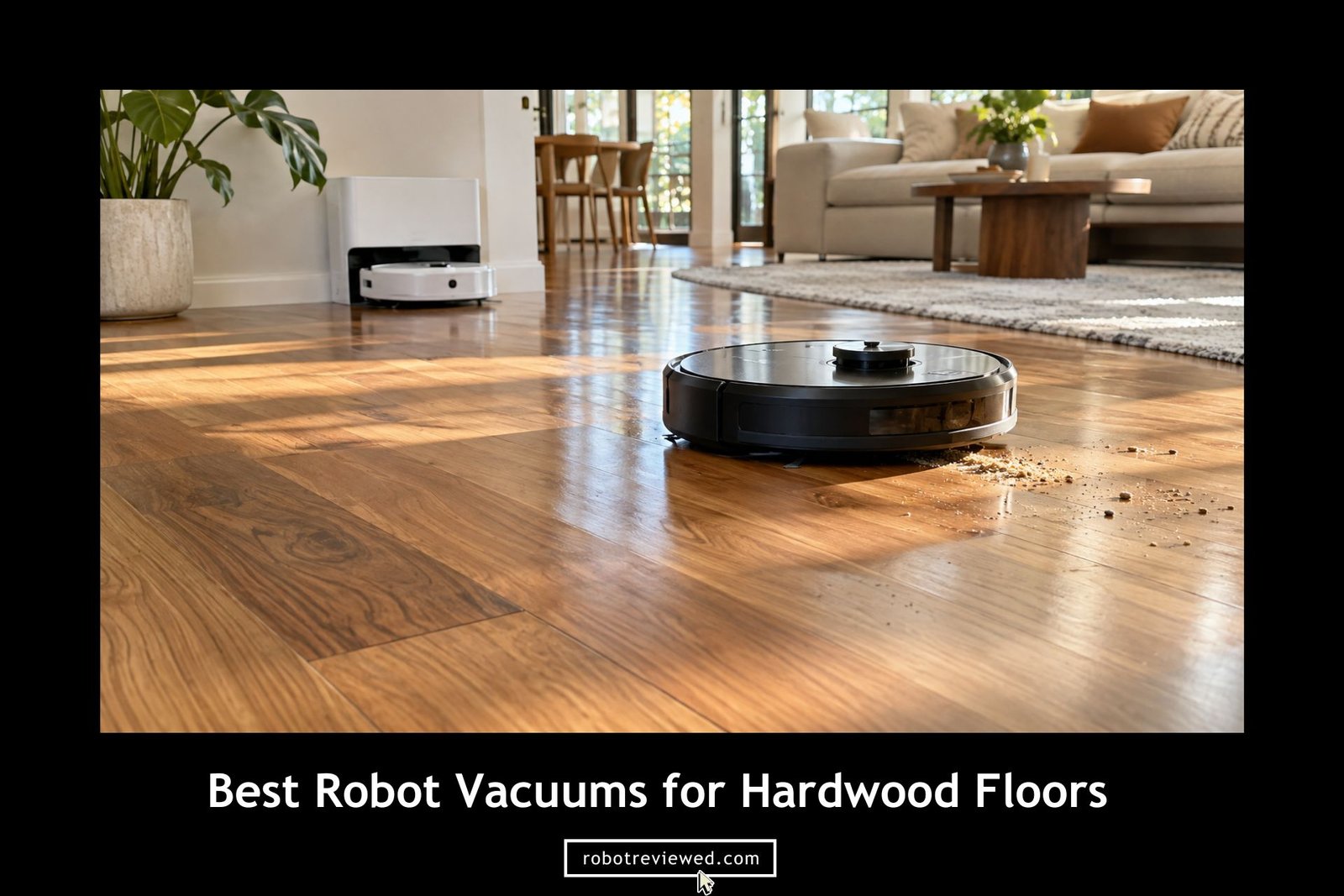
I reviewed and compared popular models to find the best robot vacuums for hardwood floors based on fine-dust pickup, edge cleaning, mopping performance, obstacle avoidance, and hardwood-to-rug transitions. Plus, I also looked at which robotic floor cleaners for hardwood floors need the least daily maintenance.
So, whether you want the best hardwood floor vacuum mop, a budget robot, or a model that handles pet hair and rugs, these five picks cover the most common needs. Here are the robot vacuums I would actually consider for wood floors in 2026.
TABLE OF CONTENTS Quickly jump to a section
- Top-Rated 5 Best Robot Vacuums for Hardwood Floors: I Recommend
- Best Robot Vacuums for Hardwood Floors: Quick Comparison
- Best Robot Vacuum Cleaners for Hardwood Floors Reviews
- 1. Best Robot Vacuum for Hardwood Floors Overall: Roborock Qrevo Curv 2 Pro
- 2. Best Hardwood Floor Robot Vacuum-Mop Combo: Dreame L10s Ultra Gen 2
- 3. Best Robotic Vacuum for Pet Hair on Hardwood Floors: Roborock Q7 M5+
- 4. Most Affordable Robot Vacuum Cleaner for Hardwood Floors: eufy RoboVac 115 Max
- 5. Top-Rated Robotic Vacuum Cleaner for Wood Floors with Area Rugs: Dreame X50 Ultra
- What Makes a Robot Vacuum Good for Hardwood Floors?
- Robot Vacuum Only vs Robot Vacuum-Mop: Which Is Better for Wooden Floors?
- How Much Suction Do You Actually Need on Hardwood Floors?
- Will a Robot Vacuum Scratch Hardwood Floors?
- FAQs
Top-Rated 5 Best Robot Vacuums for Hardwood Floors: I Recommend
I have tested 30+ hardwood floor robot vacuums based on fine-dust pickup, edge cleaning, mopping performance, rug transitions, and daily maintenance. Here are my top 5 best robot vacuums for hardwood floors…
- Best Robot Vacuum for Hardwood Floors Overall: Roborock Qrevo Curv 2 Pro
- Best Hardwood Floor Robot Vacuum-Mop Combo: Dreame L10s Ultra Gen 2
- Best Robotic Vacuum for Pet Hair on Hardwood Floors: Roborock Q7 M5+
- Most Affordable Robot Vacuum Cleaner for Hardwood Floors: eufy RoboVac 11S Max
- Top-Rated Robotic Vacuum Cleaner for Wood Floors with Area Rugs: Dreame X50 Ultra
Best Robot Vacuums for Hardwood Floors: Quick Comparison
Here is a quick comparison between the best robot vacuum cleaners for hardwood floors based on criteria that actually matter for buyers:
| Robot Vacuum | Hardwood Cleaning | Mopping | Edge Cleaning | Rugs/Carpet Handling | Daily Maintenance |
|---|---|---|---|---|---|
| Roborock Qrevo Curv 2 Pro | Excellent fine dust + crumb pickup | Dual spinning, 200 RPM | Extendable side brush + mop | Mop lift + auto mop removal | Very low; full-service dock |
| Dreame L10s Ultra Gen 2 | Very good; strong fine-debris pickup | Dual spinning + MopExtend | Excellent mop reach at edges | 10.5 mm mop lift | Very low; washes, dries, refills |
| Roborock Q7 M5+ | Very good; strong pet hair + dust pickup | Basic fixed mop | Standard side brush | No automatic mop lift | Low; self-empty dock |
| eufy RoboVac 11S Max | Good; best for dust and small crumbs | None | Dual side brushes | Basic automatic surface adjustment | High; manual bin/brush cleaning |
| Dreame X50 Ultra | Excellent fine dust + debris pickup | Dual spinning + MopExtend | Excellent edge mopping | 10.5 mm lift + auto mop removal | Very low; highly automated dock |
Recommended Guide: Overall best robotic vacuum cleaners reviewed
Best Robot Vacuum Cleaners for Hardwood Floors Reviews
1. Best Robot Vacuum for Hardwood Floors Overall: Roborock Qrevo Curv 2 Pro
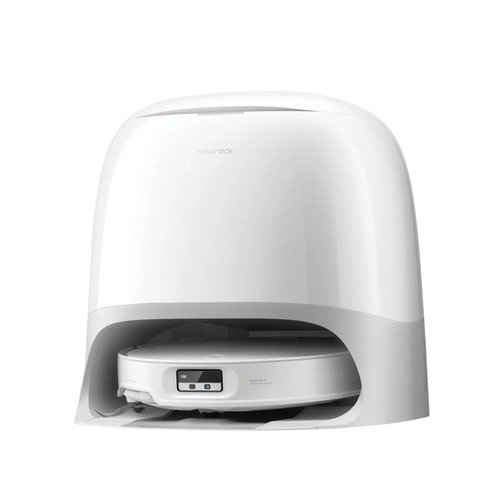
I picked the Roborock Qrevo Curv 2 Pro as my top choice overall because it takes care of almost every annoying issue you see on wood floors. It handles small dust, crumbs by the baseboards, hair getting stuck in the roller, dirty edges, and moving back and forth between bare wood and rugs.
It has a good 25,000 Pa suction rating, but big suction numbers are not the main reason I like it. What really helps on wood is the DuoDivide anti-tangle main brush and the FlexiArm side brush. You see, on hard floors, dirt cannot hide inside carpet threads, so you easily notice any mess left behind. The Curv 2 Pro is really good at vacuuming hard surfaces, and its side brush and mopping pad pop out to clean right up against walls and corners.
The mop is also much better than just dragging a wet cloth around. It uses two spinning pads that turn up to 200 RPM and press down with 12N of force. Now, if you have sealed wood floors, you can set it to use less water for daily footprints and thin dirt so you do not get the floor too wet.
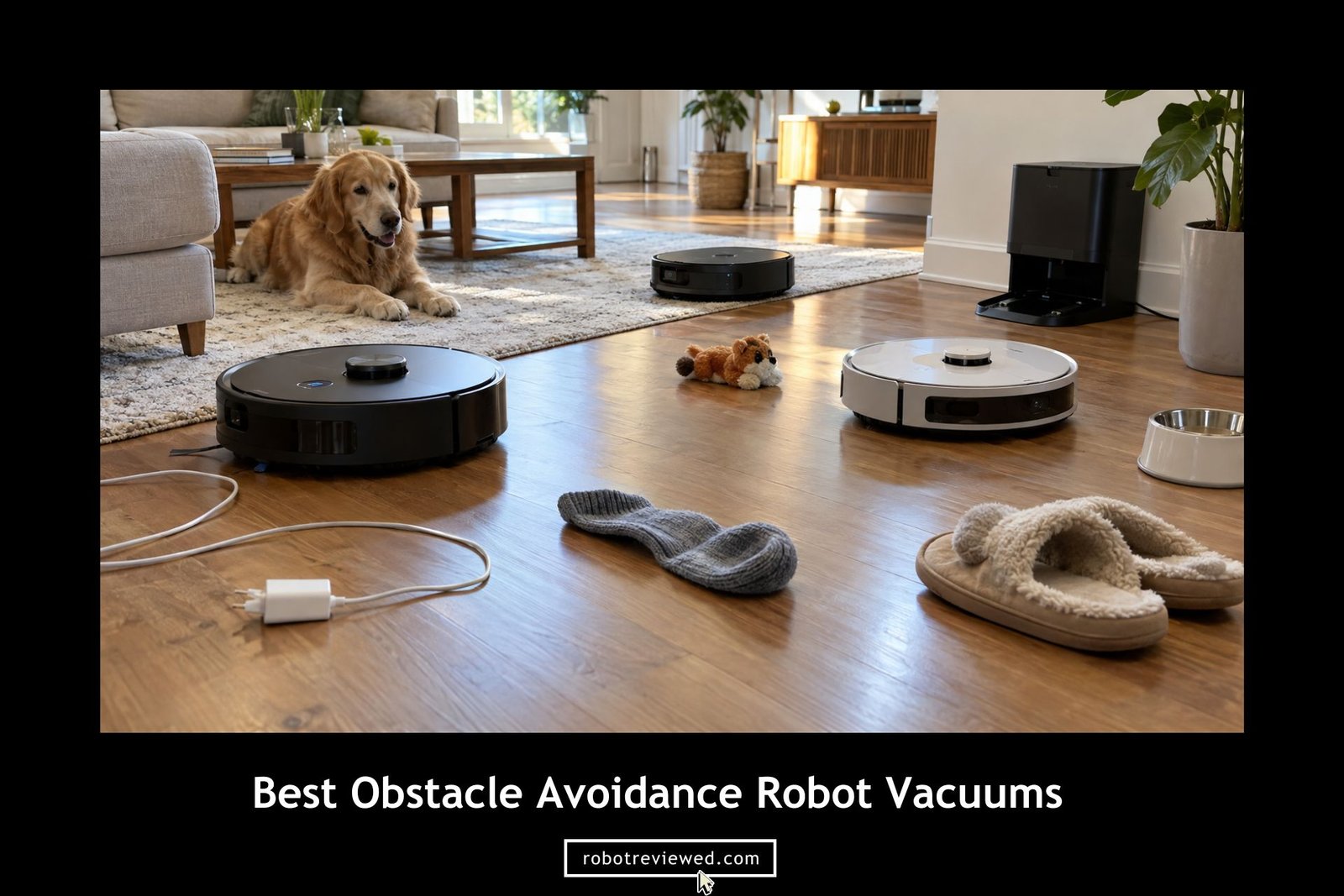
It works great around rugs too. The robot can pop off its mop pads automatically when it vacuums or cleans carpets first, and the AdaptiLift body lifts up so it can move better over thick rugs. This keeps it from dragging wet mop pads over your rug just because it is next to your wood floor. Also, its obstacle avoidance is another big win for daily use. It uses RetractSense LiDAR, structured light, an RGB camera, and VertiBeam side sensors to spot more than 200 different objects. Obviously, tiny cords or small toys might trip it up once in a while, but you do not have to pick up the floor nearly as much as you do with basic robots.
What Could Be Better
- Sticky stains can require extra mop passes.
- Small cables and toys can occasionally escape obstacle detection.
- There is no automatic detergent dispenser.
- The multifunction dock takes considerable floor space.
Key Specifications
| Maximum suction | 25,000 Pa |
| Main brush | DuoDivide anti-tangle brush |
| Mop type | Dual spinning pads, up to 200 RPM |
| Mop lift/removal | Lifts and automatically detaches |
| Water control | App-adjustable; automatic warm-water refill |
| Navigation | RetractSense LiDAR + Reactive AI + VertiBeam |
| Runtime | About 180 minutes advertised; 6,400mAh battery |
| Dock functions | Auto-empty, 100°C mop wash, 55°C drying, refill, self-clean, rewash/remop |
2. Best Hardwood Floor Robot Vacuum-Mop Combo: Dreame L10s Ultra Gen 2
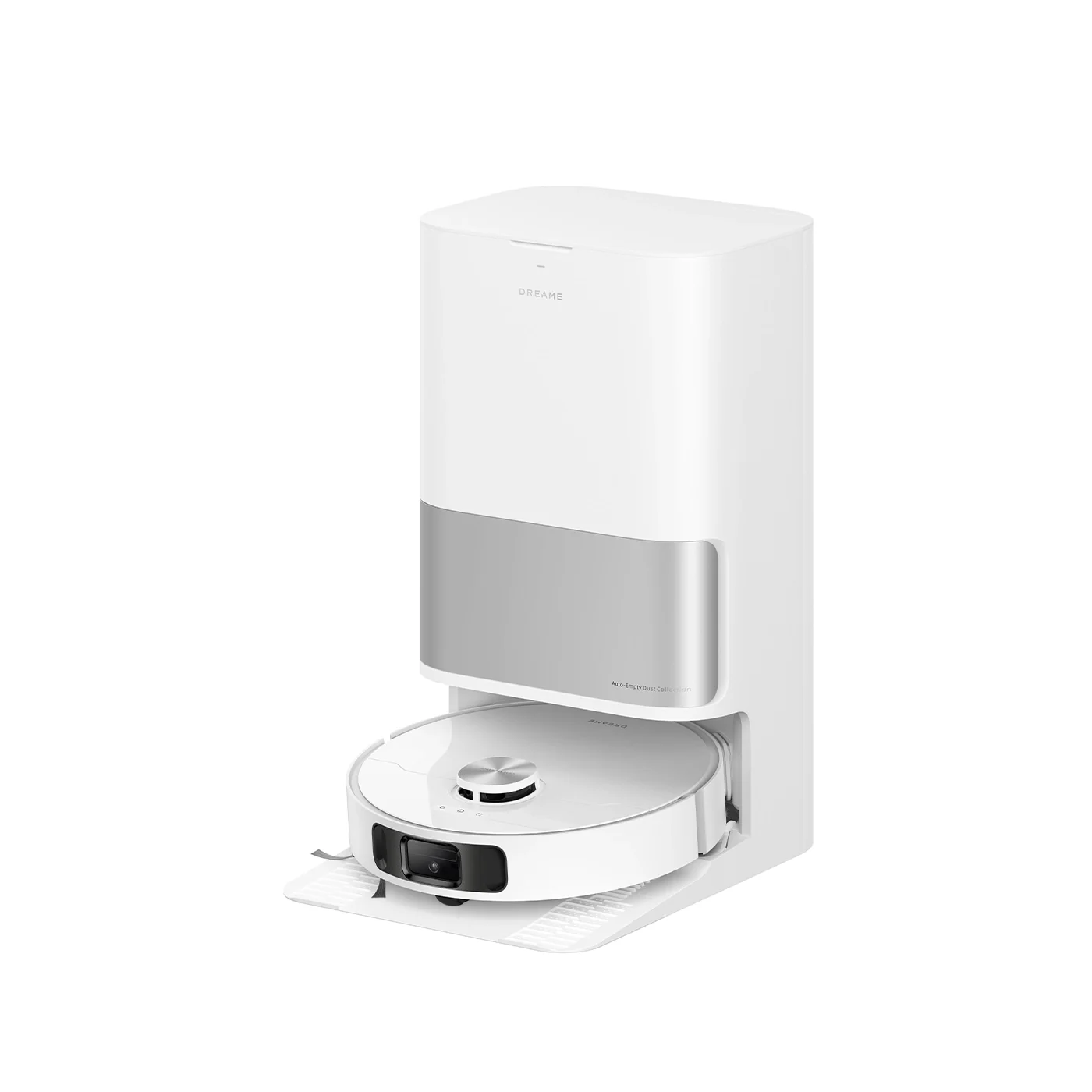
The Dreame L10s Ultra Gen 2 is a better fit than a vacuum-only robot cleaner if you hate seeing dull streaks, shoe footprints, kitchen spills, and dry spots on your wood floor after vacuuming. Its vacuuming power is already pretty good. Dreame built it with 10,000 Pa Vormax suction and a floating rubber brush. Now, in independent tests on hard floors, it picked up about 98% to 99% of salt, rice, and coffee grounds. So it can handle tiny dust along with regular food crumbs on the floor.
Actually, I picked it for the best vac-mop combo category because of its DuoScrub system. It uses two spinning mop pads that actively scrub the floor instead of just wiping it. One pad can reach out using MopExtend RoboSwing to clean right next to baseboards and under furniture edges. This is super helpful on wood floors because cheap robot vacuums usually miss dust and marks along the edges and cabinets.
You can also control the water levels easily. You can change how much water it uses in the app, and the dock fills up the internal tank automatically so it does not run out. On sealed wood, I recommend setting the water level low for normal cleaning, and only using more water on tile floors or messy kitchen spots.
Now, It does have a few drawbacks. A test found that the side brush can sometimes flick light trash around before picking it up, and the extending arm only helps the mop reach edges, not the vacuum brush. The obstacle avoidance works fine, but it is not as smart as expensive robots with high-end cameras.
What Could Be Better
- The side brush can occasionally flick larger lightweight debris.
- The vacuum brush itself does not extend into corners.
- Mop washing is not hot-water washing.
- Very small cables and clutter are still worth removing first.
Key Specifications
| Maximum suction | 10,000 Pa |
| Main brush | Floating rubber brush |
| Mop type | DuoScrub dual rotating pads + MopExtend |
| Mop lift/removal | Lifts up to 10.5 mm |
| Water control | App-adjustable; automatic tank refill |
| Navigation | Smart Pathfinder LiDAR + 3DAdapt |
| Runtime | Up to 240 minutes in Quiet mode |
| Dock functions | Auto-empty, mop wash/dry, water refill, detergent dosing |
3. Best Robotic Vacuum for Pet Hair on Hardwood Floors: Roborock Q7 M5+
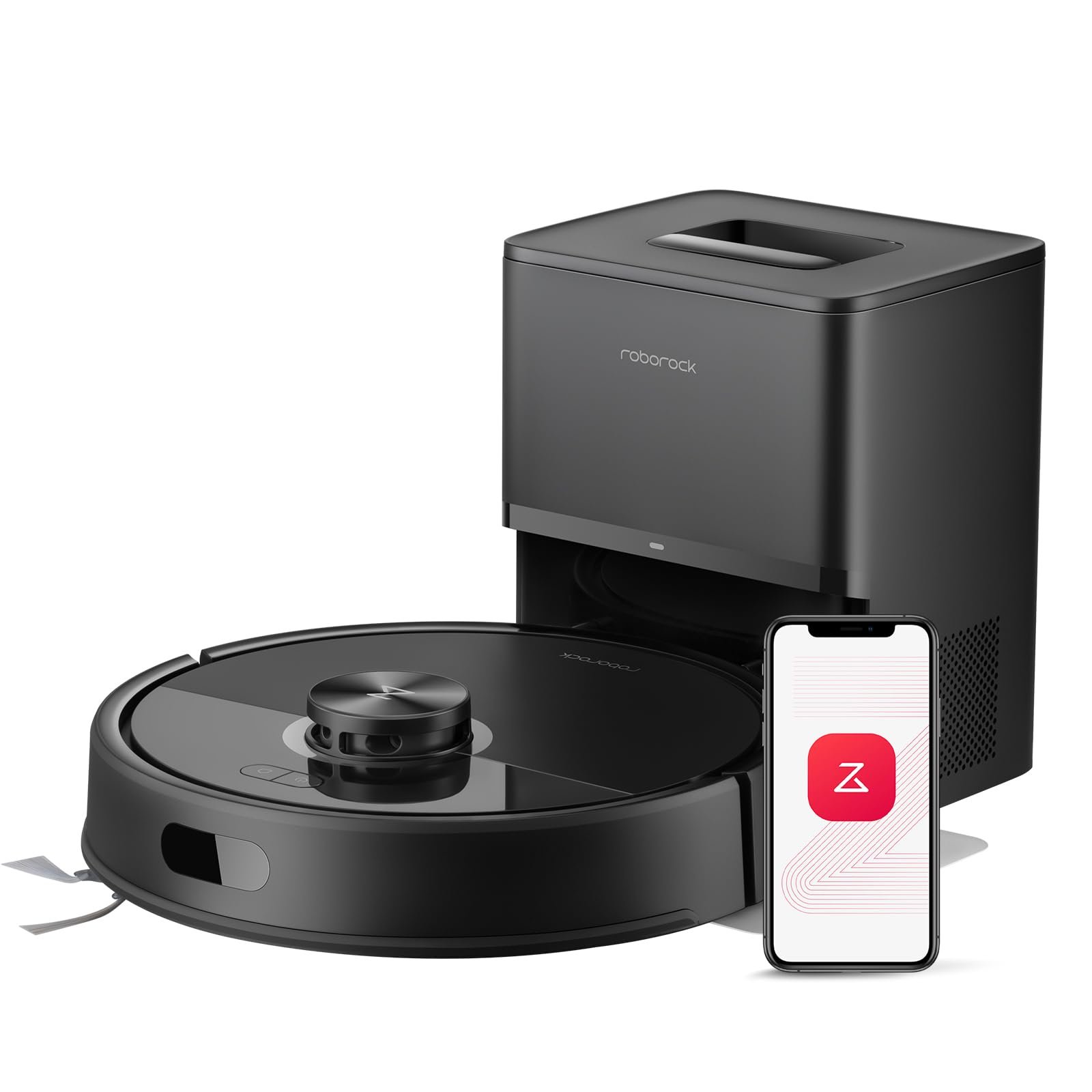
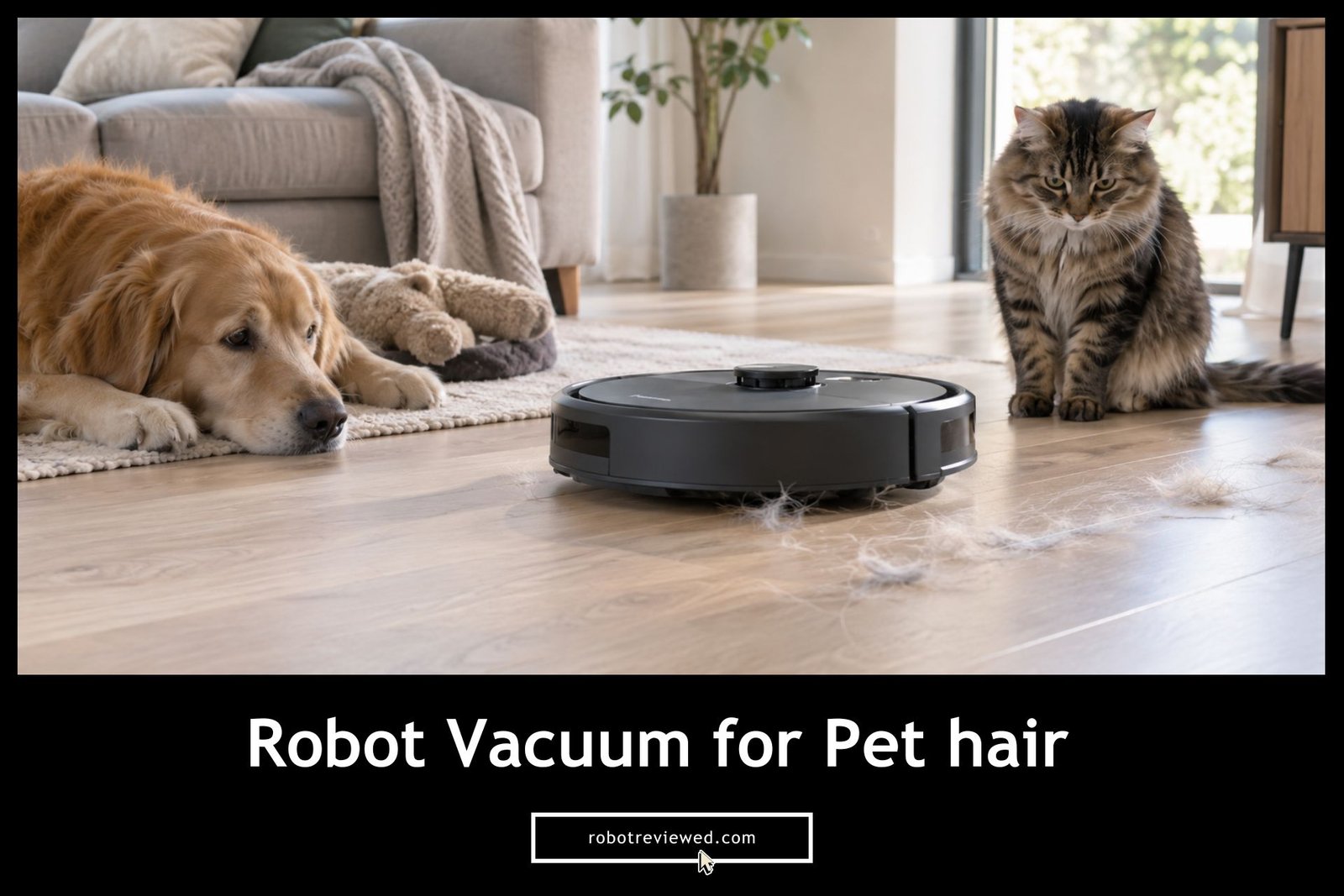
Pet hair on wood floors is not like hair on carpet. It does not get stuck in fabric fibers, but instead blows around and piles up near walls, chair legs, and corners. You need a robot that picks up fur every day so you do not have to empty the dustbin constantly. That is why the Roborock Q7 M5+ is a great choice
This model has 10,000 Pa HyperForce suction along with Roborock’s Dual Anti-Tangle System. It comes with a JawScrapers Comb brush to keep hair from wrapping around the roller, and the side brush is also built to stop hair tangles.
Now, just keep your expectations realistic about the anti-tangle brush. I noticed long hair still gets tangled on the roller, and hair pickup was a slight weak point as well. It works fine for short dog or cat hair on wood. But if you have multiple long-haired pets that shed a lot, you will still need to clean the brush manually sometimes.
The obstacle sensing is also fairly simple. It uses LiDAR to map rooms accurately, but it does not have a smart camera to see small objects. You should pick up pet toys, cords, and pet waste before turning it on. You can also check out my specific guide for the best robot vacuums for pet hair.
What Could Be Better
- Long hair can still wrap around the brush.
- No camera-based object or pet-waste avoidance.
- The fixed mop does not scrub actively.
- The mop does not automatically lift over rugs.
Key Specifications
| Maximum suction | 10,000 Pa |
| Main brush | JawScrapers Comb anti-tangle brush |
| Mop type | Fixed detachable mop pad |
| Mop lift/removal | No auto-lift; manually detachable |
| Water control | 3 adjustable water levels |
| Navigation | PreciSense 360° LiDAR |
| Runtime | Up to about 150 minutes |
| Dock functions | Auto-empty only; 2.7L bag, up to 7 weeks |
4. Most Affordable Robot Vacuum Cleaner for Hardwood Floors: eufy RoboVac 115 Max
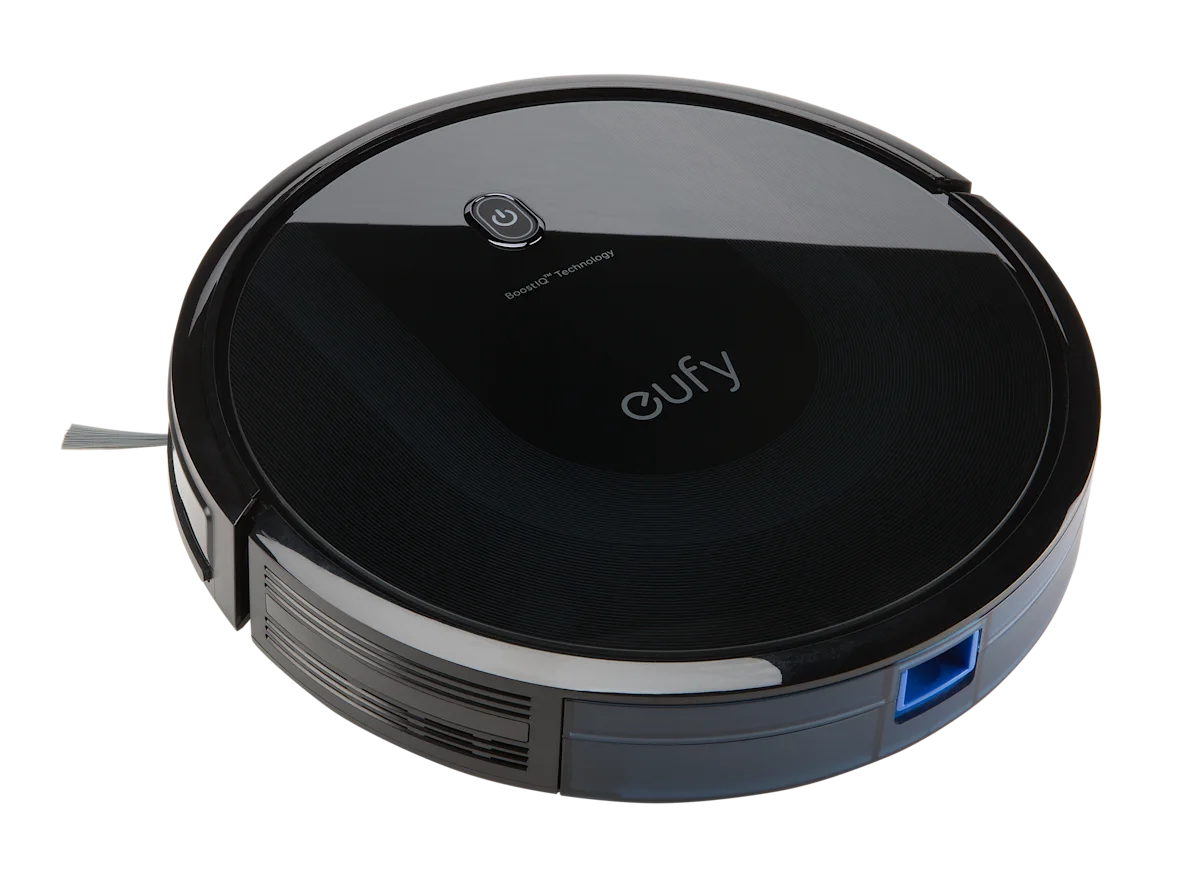
The eufy RoboVac 115 Max uses an older, basic design by 2026 standards, but its simple build is why it is still a great budget pick. Now, it offers a 2,000 Pa suction rating, which sounds really low compared to 20,000 Pa flagship vacuums. But on hardwood, massive suction is not that critical since there are no carpet fibers holding dirt down. It handled fine sand really well and spent extra time cleaning along the edges of the room.
It has two side brushes that push dirt into the main brush and suction hole. Sometimes light crumbs get scattered around before the robot picks them up on another pass, and bigger messes might take a couple of tries, but it cleans up regular dirt, sand, hair, and small crumbs easily.
It also has one advantage that expensive robots lack: it is super thin at only 2.85 inches tall. It fits easily under low couches, beds, and cabinets where dust piles up on wood floors, whereas taller LiDAR robots are too tall to go underneath.
Well, the downside is pretty clear. It does not have LiDAR, room maps, an app, cameras, a self-empty base, or a mop. It navigates by bumping into things and bouncing around the room. Also,iIt will clean a small or medium room eventually, but it takes longer and can miss spots or clean the same area twice. Its obstacle detection is basic too, so you need to pick up socks and cables before starting it.
What Could Be Better
- Random navigation is slow and inefficient.
- No smart obstacle recognition or mapping.
- No mopping function.
- No self-empty dock, so maintenance is manual.
Key Specifications
| Maximum suction | 2,000 Pa |
| Main brush | Rolling brush + dual side brushes |
| Mop type | None |
| Mop lift/removal | Not applicable |
| Water control | None |
| Navigation | Infrared/bump/drop sensors; random path |
| Runtime | Up to 100 minutes on hardwood |
| Dock functions | Charging only |
5. Top-Rated Robotic Vacuum Cleaner for Wood Floors with Area Rugs: Dreame X50 Ultra
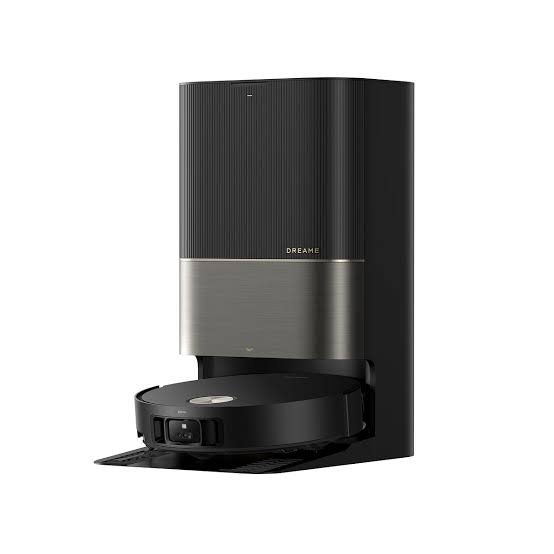
You know, having both wood floors and area rugs is trickier than having just bare floors. The vacuum has to clean the wood, mop without wetting the rugs, climb over rug edges easily, and switch up its settings when it hits carpet. The Dreame X50 Ultra has one of the best setups to handle all of that.
The main reason it wins this category is how it handles rugs. The X50 Ultra can raise its mop pads by 10.5 mm for thin carpets. If you have rugs where you do not want wet pads anywhere near them, it can drop off the mop pads at the base station and vacuum carpet completely dry. Its Carpet Boost feature ramps up suction, and an intensive carpet setting slows the vacuum down to make extra passes.
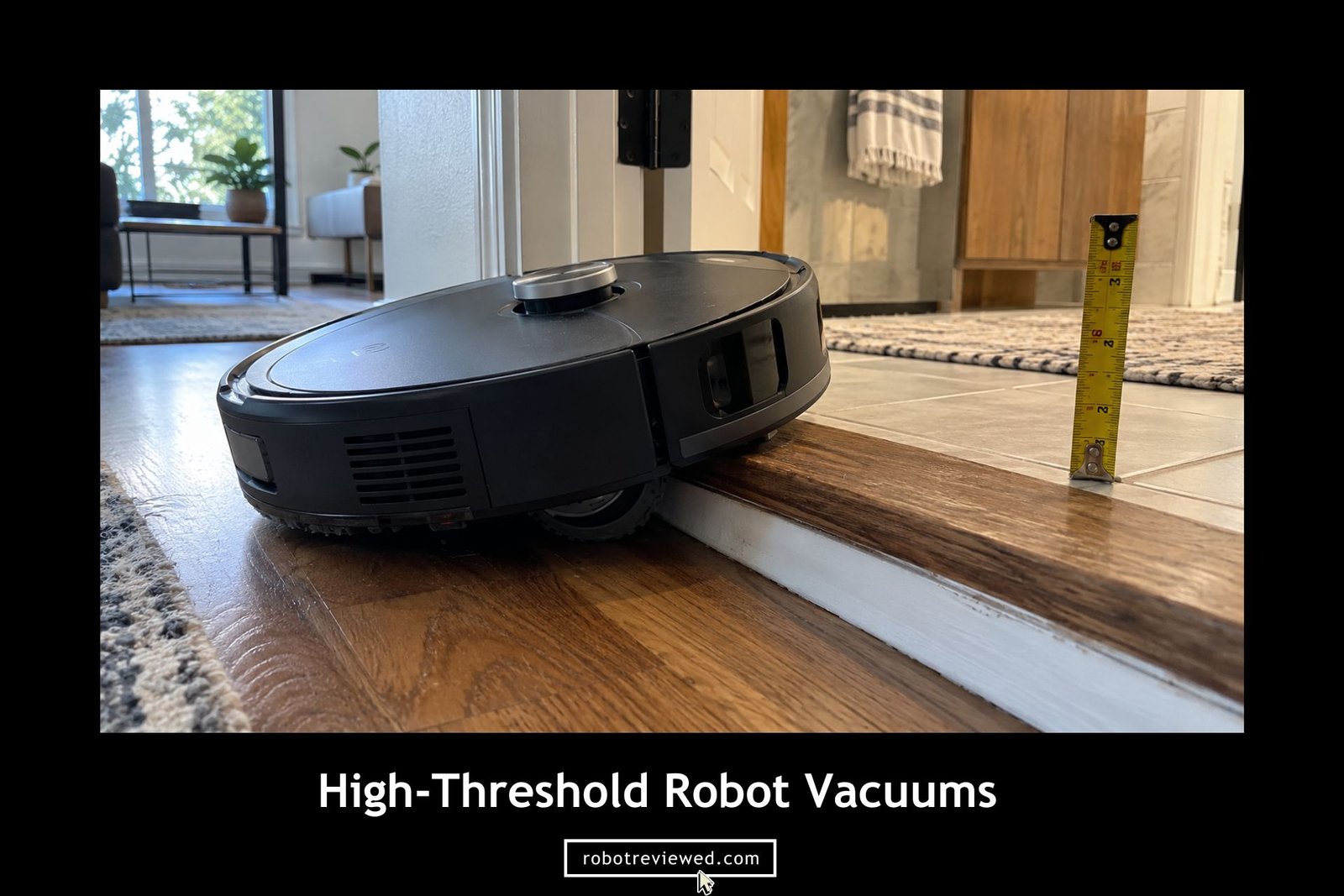
Okay, its “ProLeap” feature helps it climb thresholds too. It can climb steps up to 42 mm high in one go, and up to 60 mm across a two-step bump, so high floor dividers will not stop it. The VersaLift sensor lowers down to fit under low furniture, while the RGB camera and 3D light give it much better obstacle avoidance than standard LiDAR vacuums.
The base station handles almost every task for you: emptying the dirt, refilling water, adding cleaning liquid, washing pads with 80°C hot water, drying with hot air, cleaning its own washboard, and re-washing dirty mops. The dust bag can last up to 100 days before needing a change. (Check out my guide on the best robot vacuums for carpet)
What Could Be Better
- Thin lightweight rugs can move under high suction.
- Carpet detection can occasionally need manual correction in the app.
- Very small cables can still escape object detection.
- It is expensive and the full-service dock is large.
Key Specifications
| Maximum suction | 20,000 Pa |
| Main brush | HyperStream Detangling DuoBrush |
| Mop type | Dual rotating pads + MopExtend |
| Mop lift/removal | 10.5 mm lift + automatic removal |
| Water control | App-adjustable; auto refill and detergent dosing |
| Navigation | VersaLift DToF + RGB camera + 3D structured light |
| Runtime | Up to 220 minutes; 6,400mAh battery |
| Dock functions | Auto-empty, 80°C wash, hot-air dry, refill, detergent, self-clean |
What Makes a Robot Vacuum Good for Hardwood Floors?
A good robot vacuum for hardwood floors does three main things well. It picks up both fine dust and bigger crumbs, it moves around your home without crashing into things, and it leaves the surface unmarked. Everything else on the spec sheet is a bonus, and some of it you will never use.
Here are the features that matter most:
- Rubber roller brush: Bristle rollers often flick crumbs across smooth floors instead of pulling them in. Rubber or silicone rollers keep dirt moving toward the suction opening, and they tangle less with long hair.
- Soft rubber wheels: Hard plastic wheels can pick up grit and drag it across your finish. Softer wheels grip better and are usually gentler on the surface of your floor.
- Smart navigation (LiDAR or camera): Cheap random-bounce models hit walls and furniture all day long. LiDAR mapping robots clean in neat rows and bump far less, which protects your baseboards and chair legs.
- Cliff and obstacle sensors: Cliff sensors stop the robot at stairs, while obstacle sensors help it steer around cords, socks, and pet accidents.
- Low profile and soft bumper: A slim body reaches under beds and sofas, where dust bunnies like to hide.
Now, here is the honest part: hardwood is easy on suction, so you rarely need the most expensive model on the shelf. Where cheap robots fall short is navigation, brush design, and app reliability, so you must spend your money there.
Robot Vacuum Only vs Robot Vacuum-Mop: Which Is Better for Wooden Floors?
A vacuum-only robot cleans up dry dirt such as dust, hair, and crumbs. A robot vacuum-mop combo does that too, then wipes the floor with a damp pad or a spinning mop. Both types can work on hardwood, but they carry different risks and costs.
| Feature | Vacuum only | Vacuum-mop combo |
|---|---|---|
| Typical price | Lower | Higher, sometimes much higher |
| Dry cleaning | Strong | Strong on most models |
| Sticky or dried spills | Cannot handle them | Light wiping only |
| Water risk to wood | None | Possible if set too wet |
| Upkeep | Empty bin, clean brush | Also wash pads, refill tank, clean dock |
| Best for | Waxed, oiled, or older floors | Sealed floors in kitchens and halls |
Now, here is the thing most people skip: robot mops rarely scrub; they mostly glide a damp pad over the floor. Well, that handles light film and footprints, but dried juice or sticky spots usually need you to wipe them by hand.
Also, water is the real enemy of wood, so the mop side of a combo robot deserves more attention than the vacuum side. Too much moisture can seep into seams, cause cupping or warping, and slowly dull the finish. Most modern hardwood floors have a sealed top layer, such as polyurethane, which handles light dampness well.
If you choose a combo, look for these things:
- Adjustable water flow: You want the lowest setting available, since a barely damp pad is much safer than a wet one.
- Pad lifting on carpet: This keeps a wet pad away from your area rugs.
- Washable, replaceable pads: A dirty pad pushes grit around, and that can dull or scratch the finish.
- A dock that washes and dries the pads: This costs more, but it keeps mold and bad smells from building up.
How Much Suction Do You Actually Need on Hardwood Floors?
Suction is measured in pascals, written as Pa, and a higher number means a stronger pull. Actually, that number tells only part of the story, though, because brush design and airflow matter just as much.
| Situation | Rough suction guide |
|---|---|
| Dust and light crumbs on sealed hardwood | 2,000 to 3,000 Pa |
| Pet hair and daily family mess | 3,000 to 5,000 Pa |
| Hardwood mixed with area rugs | 5,000 Pa or more |
| Deep carpet | 6,000 Pa or more |
Okay, treat these ranges as rough guides rather than lab standards, because every brand measures suction a little differently. A 10,000 Pa claim from one company does not always beat a 6,000 Pa claim from another. Read my guide on how suction power works in vacuum cleaners.
Will a Robot Vacuum Scratch Hardwood Floors?
Rarely, but it happens. The robot itself is light, usually only three or four kilograms, so its weight is not the problem. The real risk comes from grit, such as sand, tiny stones, and hard crumbs. These get stuck in the wheels, brushes, or mop pad and then drag across the floor like sandpaper.
Now, cheaper bump-style robots can also leave scuff marks on baseboards and furniture legs. Stiff side brushes made of hard bristles may mark soft finishes if they are worn out. Here is how you keep that from happening:
- Wipe the wheels every week or two with a dry cloth, since grit often hides in the tread.
- Check the underside once a month for trapped pebbles, hair wraps, and stuck debris.
- Wash or swap mop pads often, because a gritty pad can do real damage.
- Pick up small hard objects like toy pieces and loose screws before each run.
- Use doormats at entrances, because most sand and gravel come in on your shoes.
- Set no-go zones in the app around potted plants and other trouble spots.
FAQs
Do robot vacuums work well on hardwood floors?
Yes, they do, and hardwood is among the easiest surfaces for them. Smooth floors let the wheels roll freely, and the debris sits right on top where suction can grab it. Still, they have limits: round models miss some corners, they struggle with dried-on messes, and they cannot fully clean the gaps between boards.
Are Roomba vacuums good for hardwood floors?
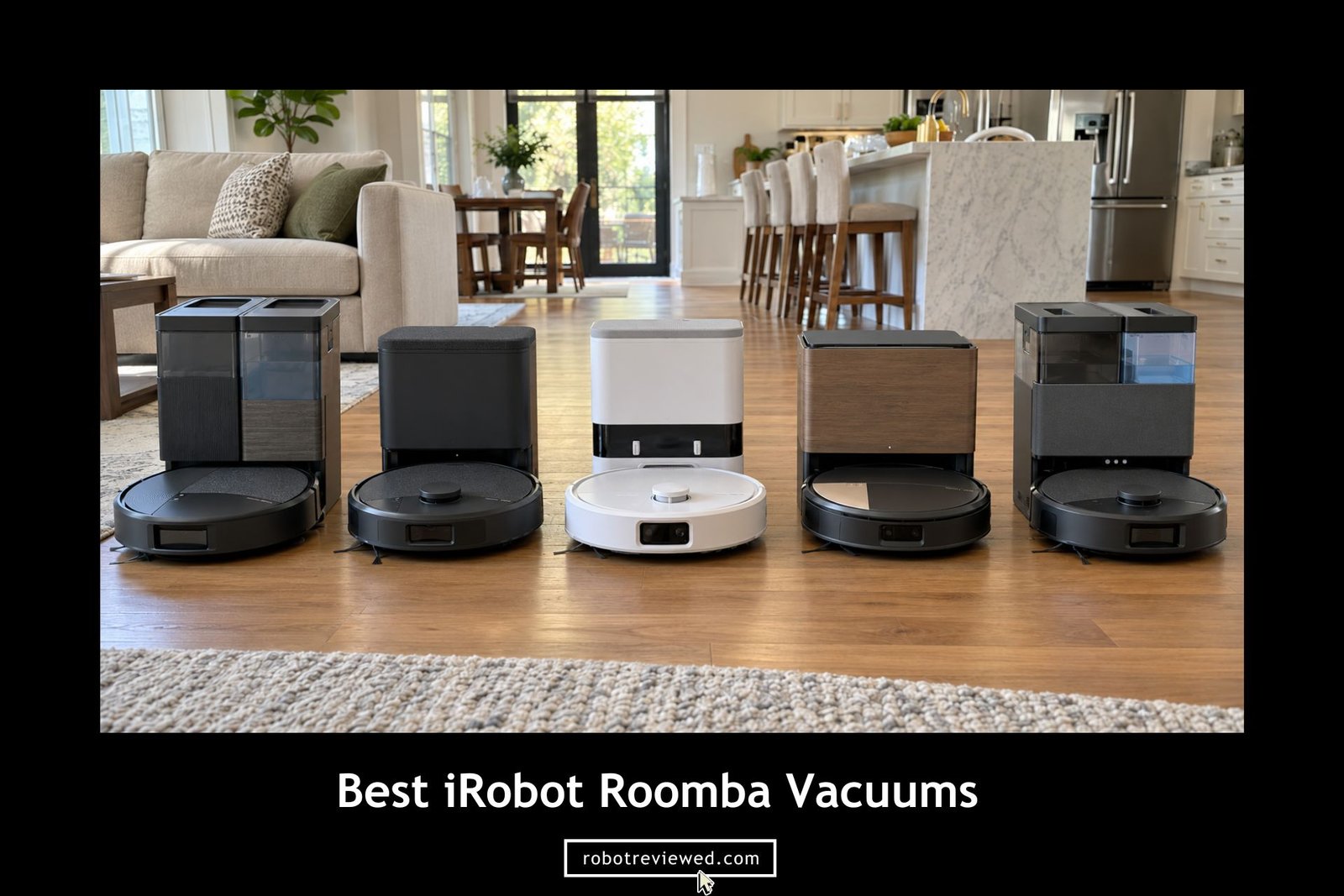
Generally yes, since most Roomba models use rubber brushes that suit hardwood and they have a long track record. The catch is that they often cost more than rivals with similar features, and quality changes from model to model.
How often should you run a robot vacuum on hardwood floors?
Most homes do well with a run every day or every other day. But again, if you have pets, kids, or a lot of foot traffic, daily runs keep dust and hair from building up. A quiet home with two adults can get by with two or three runs per week. If your robot mops, once or twice a week is usually enough for sealed hardwood.
Frequent runs also mean frequent upkeep, so plan for it.
| Part | How often to handle it |
|---|---|
| Dust bin | Empty after each run or when full |
| Main brush | Clear hair every week |
| Filter | Replace every 2 to 3 months |
| Side brush | Replace every 6 to 12 months |
| Mop pads | Wash after each use |